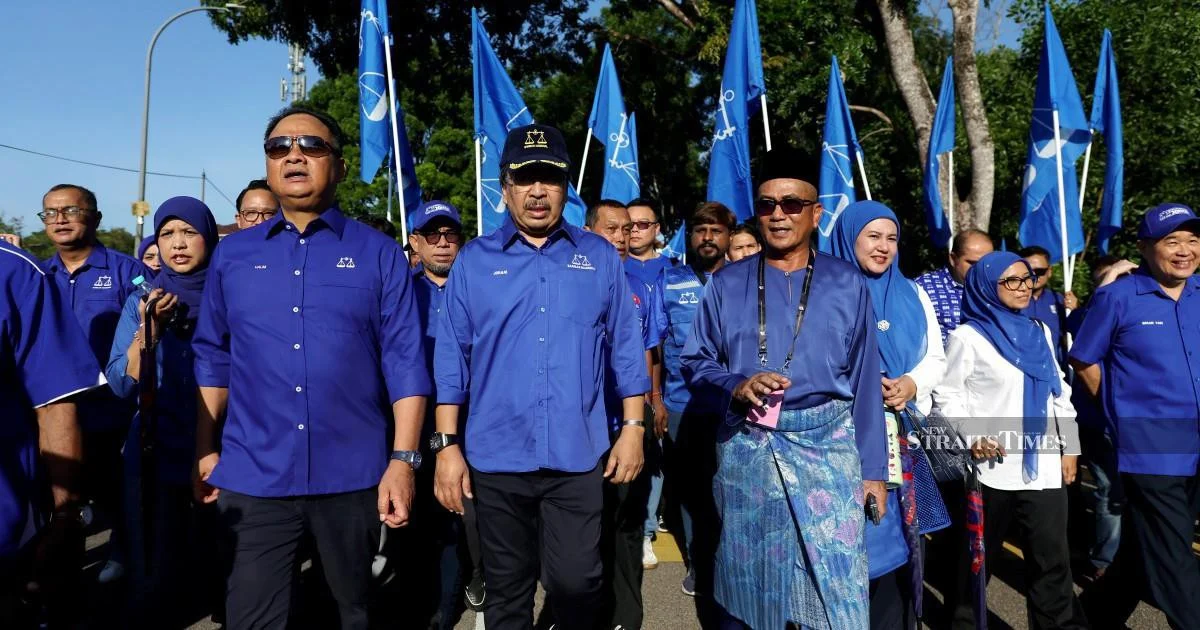
Umno vice-president Datuk Seri Johari Abdul Ghani has thrown his political weight behind Barisan Nasional's campaign effort in the Tiram state constituency, appearing at the Taman Pelangi Indah community hall to rally support for the coalition's chosen candidate as the contest intensifies.
The appearance reflects the broader strategy being deployed by Barisan Nasional across Johor, where the coalition has long held considerable sway but faces renewed competitive pressures in an increasingly dynamic electoral landscape. The Tiram seat has emerged as a focal point of contest, making the presence of senior Umno figures essential to sustaining voter momentum and reinforcing the coalition's appeal across different demographic segments.
Johari's intervention carries particular significance given his standing within Umno's hierarchy. As the party's second-ranking official, his personal participation signals the depth of organizational commitment being channeled into retaining this particular seat. Such visible endorsements from senior leadership typically serve to boost candidate morale, energize grassroots machinery, and communicate to voters that the party views the contest as sufficiently important to warrant direct involvement from national figures.
The Taman Pelangi Indah gathering represents a classic element of Malaysian electoral strategy, where community halls serve as venues for direct politician-voter engagement. These sessions allow candidates and their supporting figures to present their vision for local development, respond to constituent concerns, and build the personal connections that often prove decisive in state-level races. The choice of location suggests an attempt to reach middle-income and working-class residents, demographics whose support frequently determines electoral outcomes in such constituencies.
Barisan Nasional's approach in Johor reflects the coalition's recognition that controlling the southern state remains crucial to its overall political calculations. Johor has historically provided substantial representation within Parliament for Umno, and maintaining dominance at state level protects the party's organizational infrastructure and resource flows. The appearance of Johari and presumably other senior figures indicates that party leadership views this electoral cycle as one where complacency cannot be afforded.
The Tiram constituency exists within a broader Johor political context where competition has shifted markedly from earlier decades. While Barisan Nasional retains structural advantages including government resources and established networks, opposition coalitions have demonstrated capacity to capture seats previously considered secure. This dynamic has compelled the ruling coalition to intensify campaigning and deploy senior personalities more extensively than might have been necessary in earlier electoral periods.
For Johari personally, such campaign appearances serve multiple functions beyond immediate electoral impact. They maintain his visibility within the party, demonstrate commitment to organizational success, and create opportunities for media engagement that reinforces his national profile. Within Umno's competitive internal dynamics, maintaining an active and visible role in significant electoral contests helps sustain political capital and factional standing.
The mobilization of Umno vice-president resources also signals broader calculations about which seats represent priority targets. Not every candidate receives such senior-level support, meaning the decision to dispatch Johari to Tiram suggests party strategists have assessed the constituency as either genuinely contested or symbolically important for the coalition's overall narrative in the state election.
Electoral dynamics in Johor constituencies frequently hinge on local issues including infrastructure development, housing, employment opportunities, and community services. Candidates who effectively translate national coalition messaging into local-level promises and who demonstrate understanding of specific community concerns typically perform strongly. Senior figures like Johari provide platforms for amplifying such messages and adding credibility to commitments made by local candidates.
The timing and scale of campaign activities by senior party figures also communicate internal assessments about the election's trajectory. Intensive deployment of national leaders suggests parties either anticipate competitive contests or seek to prevent momentum building among opposition movements. Johari's presence in Tiram fits this pattern of strategic political investment aimed at consolidating Barisan Nasional's position across Johor's state assembly constituencies.
Looking forward, the intensity of campaigning across Johor constituencies will likely increase as polling day approaches, with both Barisan Nasional and opposition coalitions deploying their respective senior figures to maximize voter engagement. Constituencies like Tiram, where competitive contests appear likely, will probably receive disproportionate attention from national-level political machinery, setting the stage for closely contested races that could significantly influence the overall state election outcome and Malaysia's broader political balance.

