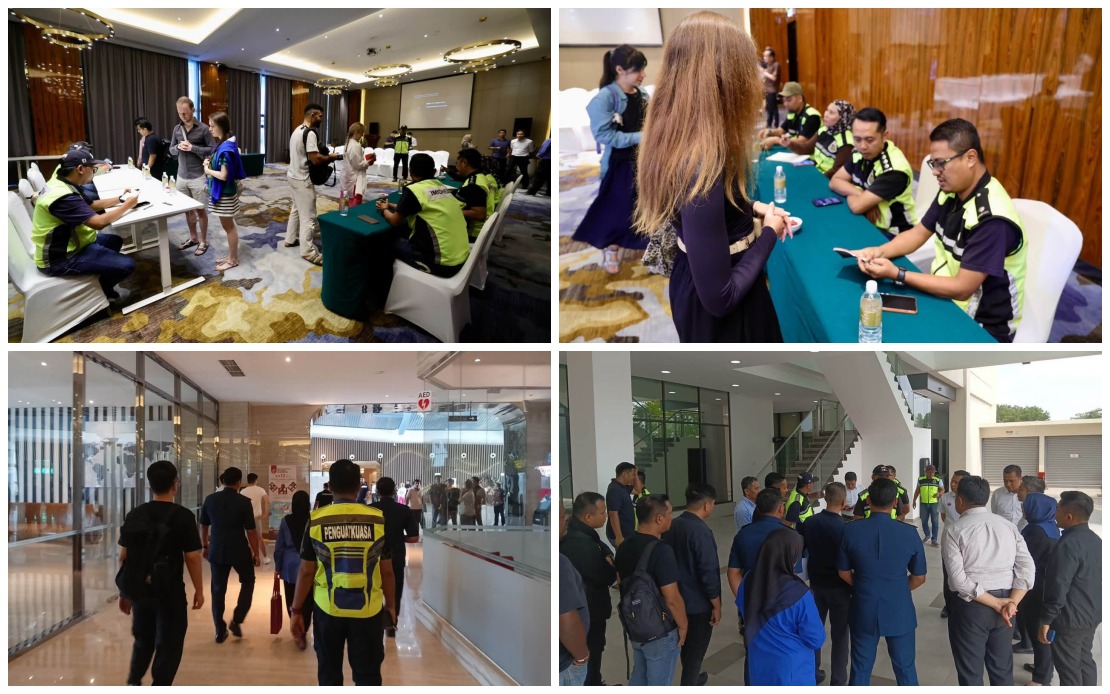
The Iskandar Puteri City Council (MBIP) has moved swiftly to halt operations at Network School in Forest City following a regulatory investigation that uncovered multiple breaches of business licensing conditions and misuse of approved premises. Johor Menteri Besar Datuk Onn Hafiz Ghazi announced the enforcement action on Wednesday, signalling the state government's commitment to strict compliance with local authority regulations and oversight of commercial activities within municipal boundaries.
The crackdown stems from council inspections that identified Network School operating from two separate locations with fundamentally different regulatory standings. One premises maintained valid business licensing documentation as an office facility, while the second location operated entirely without the requisite MBIP business licence despite being owned by a Malaysian citizen. This dual-location operation appears to have been deliberately structured, with the unlicensed premises potentially serving as the primary teaching facility while the licensed office space provided a veneer of legitimacy.
Beyond the fundamental licensing failure, investigators found the company had systematically violated permitted business categories. The premises licensed exclusively for office operations had been repurposed to accommodate classroom instruction and commercial promotional activities—a substantial misuse of approved use that required explicit regulatory approval. Such conversions involve potential implications for building safety standards, occupancy limits, and fire regulations that apply differently to educational versus office spaces.
In response to these violations, MBIP issued a formal Stop-Business Notice (IP012N260714001) targeting the unlicensed premises, effectively preventing further operations at that location. Simultaneously, the council issued an Advertisement Licence Notice under Section 107(2) of the Local Government Act 1976, addressing non-compliant signboards that displayed content inconsistent with approved permits and licensing conditions. These parallel enforcement actions represent a comprehensive regulatory response rather than a narrow focus on single violations.
Onn Hafiz emphasised that Johor authorities regard such infractions as serious matters warranting continued investigation across all regulatory domains falling under MBIP jurisdiction. The statement carried implicit warning that additional enforcement measures remain possible should further breaches emerge during the ongoing investigation, establishing a framework for potential escalation if the institution attempts circumvention or revival at alternative locations. This comprehensive approach suggests authorities remain vigilant against attempts to relocate or rebrand the operation.
The foreign national dimension of Network School's staffing and operations presents particular complexity, as such matters fall squarely under Home Ministry authority rather than state jurisdiction. Onn Hafiz indicated the Johor government has formally requested the Home Ministry to render a prompt and conclusive determination regarding the immigration and citizenship status of individuals connected to the institution, as well as the implications for the school's broader operating authority. This jurisdictional separation potentially delays full resolution pending federal-level decisions.
The enforcement action follows a period of heightened social media scrutiny, during which online posts alleged Network School maintained undisclosed connections to Israeli interests and currency investment schemes. While these social media allegations remained unsubstantiated and sparked considerable speculation, they appear to have prompted official investigation into the institution's regulatory compliance status. Malaysian authorities have historically maintained sensitivity regarding foreign influence in domestic institutions, particularly educational facilities.
For Malaysian education stakeholders and parents considering international schooling options, this case underscores the importance of verifying institutions' regulatory status through official channels rather than relying on promotional materials or social media representations. Legitimate educational facilities maintain transparent licensing documentation and operate from premises explicitly approved for educational use, with regulatory oversight from both municipal and federal education authorities. Network School's operation from office-licensed premises while conducting classroom instruction represented a fundamental regulatory red flag overlooked until official investigation.
The broader implications extend beyond this single institution to encompass how rapidly-developing areas like Forest City manage commercial and educational facility oversight. As integrated developments attract diverse businesses and services, maintaining clear regulatory boundaries between office, retail, and educational uses becomes increasingly important. Authorities must balance permissiveness toward new enterprises with rigorous enforcement when conditions are breached, particularly in education where safety and governance standards carry heightened significance.
Forest City, as a major development project in Iskandar Puteri, represents a high-profile location where regulatory compliance issues carry amplified visibility and consequences. The MBIP action sends a clear message that even prominent commercial areas remain subject to routine compliance inspections and rigorous enforcement, regardless of an institution's apparent scale or profile. This consistency proves essential for maintaining the jurisdiction's credibility and ensuring fair competitive conditions for legitimate businesses.
The case also highlights the intersection between local government enforcement and federal immigration authority in governing foreign-connected institutions. While MBIP successfully addressed the licensing violations within its mandate, complete resolution requires Home Ministry action on personnel status. Such multi-jurisdictional regulatory situations often create gaps where institutions exploit ambiguity between authorities, making coordination and clear communication essential for effective governance.
For investors and entrepreneurs establishing operations in Johor's development zones, this enforcement action reinforces that regulatory compliance requirements are enforced consistently and seriously. The transition from permitting to enforcement, once violations are identified, appears swift and comprehensive. Institutions and businesses should therefore treat licensing conditions as substantive operating parameters rather than administrative formalities, ensuring their activities remain strictly aligned with approved premises use and business classifications throughout their operational lifespan.

