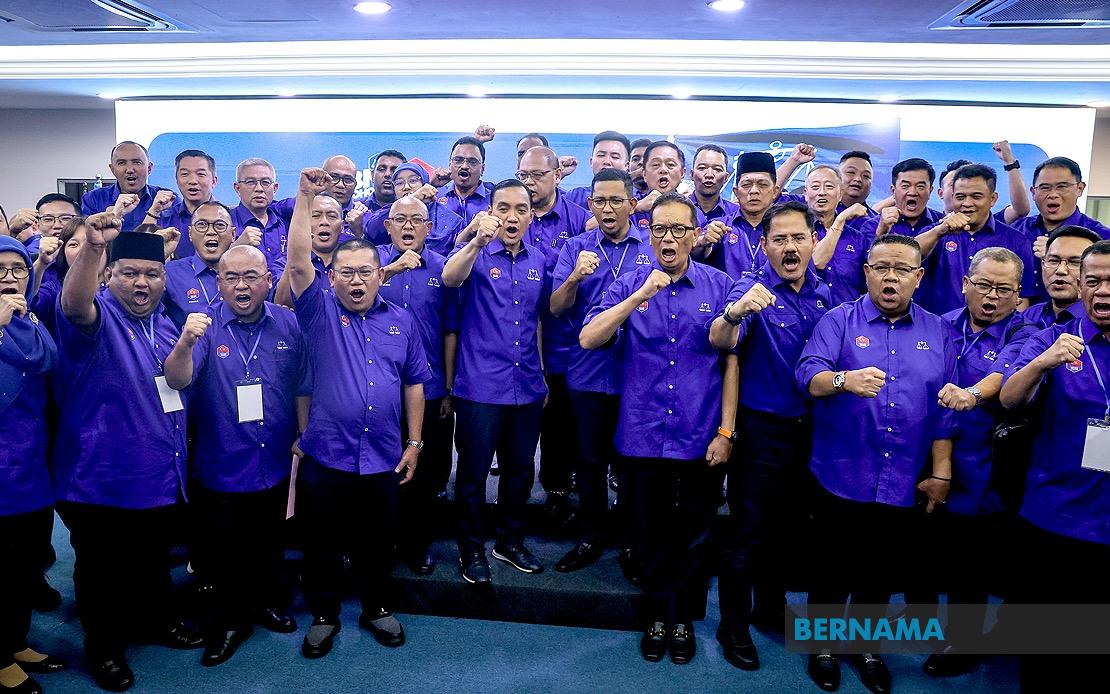
Johor Barisan Nasional has unveiled its complete roster of candidates for the upcoming 16th state election, fielding a mix of seasoned political operators and fresh contenders across all 56 state constituencies. The announcement, made at a ceremony in Johor Bahru on June 24, represents a strategic blend of incumbency protection and selective renewal as the coalition seeks to consolidate its hold over Malaysia's second-largest state. Johor BN chairman Datuk Onn Hafiz Ghazi presented the line-up, which comprises 37 UMNO candidates, 15 from MCA, and four from MIC, following approval from BN's national leadership under chairman Datuk Seri Dr Ahmad Zahid Hamidi.
One of the most significant decisions is the retention of incumbent Onn Hafiz to defend the Machap seat, which he secured in the 2022 state election. His renomination underscores BN's confidence in the Menteri Besar's ability to maintain the coalition's grip on the state administration and reflects the central importance of the top post to the coalition's overall campaign narrative. Machap has been a crucial seat in Johor politics, and Onn Hafiz's personal victory margin there is likely to be studied closely as an indicator of BN's grassroots support heading into the contest.
The return of Datuk Seri Dr Adham Baba to contest in Pasir Raja represents a significant rehabilitation of a senior UMNO figure in state electoral politics. Adham, who served as health minister in the federal government, previously held the Pasir Raja seat for two consecutive terms from 2008 to 2018 and represented the Tenggara parliamentary constituency across two separate periods—from 2004 to 2008 and again from 2018 to 2022. His reentry into state-level contests, now as Tenggara UMNO division chief, signals BN's attempt to leverage his national profile and administrative experience to strengthen its position in this southern Johor constituency. For Malaysian observers, Adham's candidacy also reflects how federal-level politicians cycle between different levels of elected office depending on strategic party requirements.
The candidate slate demonstrates considerable continuity in the coalition's approach to state representation. Nine of the ten former Johor executive councillors who participated in the 2022 state election have been renominated to defend their existing seats, indicating BN's satisfaction with their administrative performance and grassroots standing. This high retention rate suggests the coalition believes incumbency advantages, combined with local development track records, remain effective electoral assets in Johor's predominantly suburban and rural constituencies. The single exception is Khairin-Nisa Ismail @ Md On, the former State Women, Family and Community Development Committee chairman, who was not renominated for the Serom seat—a decision that may signal either internal party considerations or electoral assessments about vulnerability in that particular area.
One notable change involves the Benut constituency, where former Menteri Besar Datuk Seri Hasni Mohammad, despite being the incumbent assemblyman, was not selected as the BN candidate. Instead, the coalition has fielded UMNO working secretary Datuk Mohd Sumali Reduan to contest the seat. This decision represents a significant departure from the usual practice of retaining high-profile incumbents and may indicate either organisational reshuffling within UMNO's upper hierarchy or strategic calculations about constituency-level dynamics that party leadership believes favour a change in representation. The move underscores that even experienced state leaders are not automatically assured of renomination, particularly if broader party considerations suggest an alternative candidate might perform better.
Onn Hafiz used the candidate announcement ceremony to articulate the philosophical framework underlying BN's approach to the upcoming election. He cautioned all nominated candidates that their selection represented neither a reward nor a privilege, but rather a significant trust and responsibility requiring execution with integrity and adherence to proper ethical conduct. This messaging reflects ongoing concerns within BN about perceptions of corruption and misgovernance that have periodically challenged the coalition's electoral standing in recent years. By emphasising integrity and responsibility, the party leadership appears intent on repositioning BN's brand around competent administration rather than merely the distribution of patronage or political spoils.
The campaign conduct standards outlined by Onn Hafiz further reveal BN's strategic calculations about the electoral environment. His call for candidates to campaign in a courteous, respectful, and prudent manner, aligned with values upheld by Johor's population, suggests the coalition views the state's political culture as favouring dignified political competition over aggressive or divisive campaign tactics. This positioning may reflect both BN's desire to appeal to moderate, pragmatic voters and its assessment that Johor's voters reward parties that prioritise state development and administrative competence over identity-based or ideologically charged messaging. For Malaysian political analysts, Johor's electoral dynamics often serve as an important barometer for national political sentiment, making the coalition's campaign strategy in the state particularly significant.
The composition of BN's candidate roster also reveals the internal dynamics of Malaysia's dominant coalition. UMNO's dominance with 37 of 56 nominations reflects the party's continued centrality to Johor politics and BN's broader structure, while the 15 MCA seats and four MIC nominations underscore the ongoing, if subordinate, role of the coalition's Chinese and Indian component parties. These proportions suggest that BN sees Johor as fundamentally an UMNO-driven competition, with Chinese and Indian voters to be mobilised through their respective communal parties. This approach reflects historical patterns of communal political organisation in Malaysia, though it also raises questions about whether such structures remain optimally responsive to increasingly diverse, non-communal voter preferences in urban and suburban Johor constituencies.
The selection of candidates across all 56 seats demonstrates BN's intention to contest every state seat, leaving no constituency uncontested. This comprehensive approach contrasts with scenarios where coalitions might strategically cede certain seats to allied parties or focus resources on winnable constituencies. By fielding candidates across the board, BN signals confidence in its organisational capacity and its belief that even in challenging terrain, having a presence is electorally preferable to conceding ground. This also reflects the competitive pressure BN faces from opposition coalitions that have similarly expanded their electoral reach in recent years.
For Malaysia's broader political context, the Johor election represents a crucial test of whether BN can maintain its traditional stronghold in the face of evolving political dynamics. The state has historically been a BN bastion, but shifts in voter preferences and the emergence of competitive opposition formations have made even Johor more contested than in earlier decades. The coalition's candidate selection—emphasising experienced administrators, retaining most incumbents, and strategically incorporating prominent national figures like Adham Baba—reflects BN's calculation that demonstrable performance in government remains the most persuasive electoral argument. Whether this strategy will prove sufficient in an election environment where voter dissatisfaction with corruption and governance issues continues to resonate will provide important insights into BN's broader national viability.