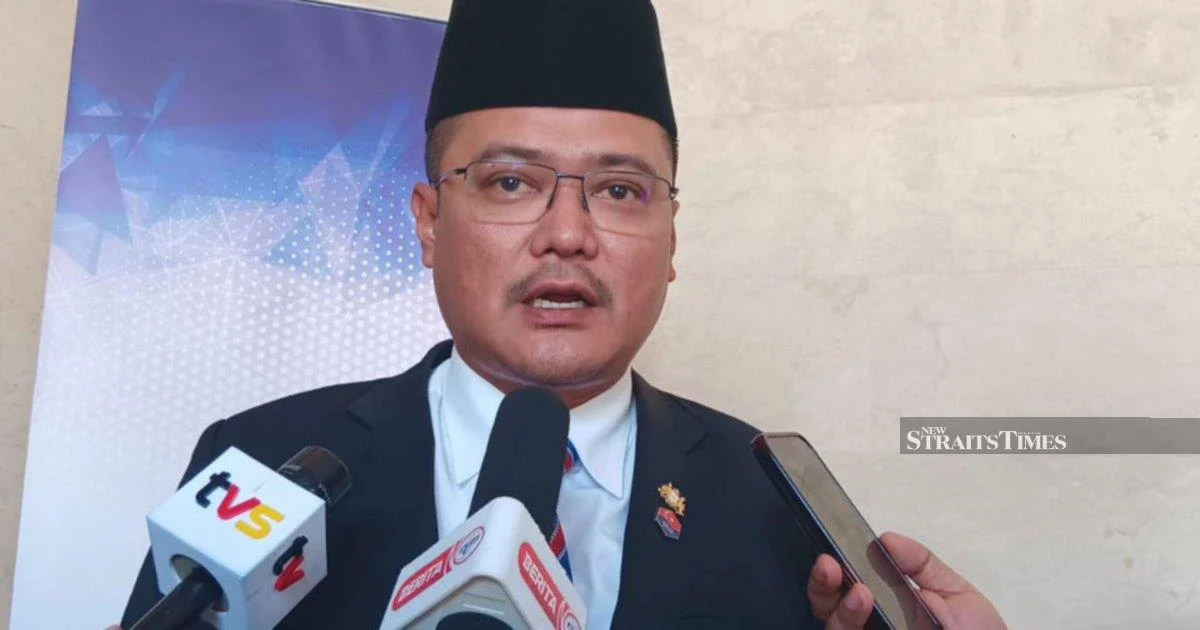
The Johor Barisan Nasional leadership has launched a forceful rebuttal against recent allegations made by Datuk Dr Mohd Puad Zarkashi, the former speaker of the Johor State Legislative Assembly, characterising his statements as baseless and potentially damaging to institutional credibility. The coalition views the former official's decision to publicly air grievances linking palace authority to state-level political manoeuvres as both grave and deeply irresponsible, representing an unprecedented breach of protocol in public discourse surrounding royal institutions.
Datuk Dr Mohd Puad Zarkashi, who previously held the position of speaker in Johor's legislature, has made claims that various political decisions taken in the state apparatus were influenced or directed by palace-level intervention. These allegations strike at the heart of constitutional arrangements in Malaysian states, where the relationship between traditional rulers and elected governments operates within carefully defined boundaries established by law and convention. The Johor BN leadership's condemnation suggests the coalition views these claims as threatening to the constitutional framework that has governed Malaysian federalism for decades.
The timing and nature of Puad's allegations have triggered responses extending beyond the state coalition itself. Umno Youth leadership has taken the unusual step of claiming that hundreds of complaints have been lodged with police authorities in connection with the former speaker's public statements. This coordinated mobilisation signals that the ruling party perceives the allegations as sufficiently serious to warrant systematic documentation and formal complaints, potentially laying groundwork for legal action or disciplinary measures against the former official.
In the Malaysian political context, allegations of improper palace involvement in state administration carry particular weight given the constitutional role of the Malay rulers. The Federal Constitution delineates specific powers and responsibilities for state rulers, while reserving executive authority to elected representatives and the state government. Any suggestion that political decisions have been made at the palace's behest rather than through legitimate governmental channels raises fundamental questions about the separation of powers and democratic accountability at the state level.
For Johor specifically, these developments occur against a backdrop where the state's Barisan Nasional administration holds commanding political influence. The coalition's robust rejection of Puad's claims underscores its confidence in its political position, yet also reveals sensitivity to narratives that might suggest illegitimacy or extra-constitutional influence in state governance. The former speaker's willingness to make such allegations publicly indicates internal fractures within what has long been considered a relatively cohesive political apparatus in the southern state.
The involvement of Umno Youth in mobilising the police complaint campaign suggests that party leadership views these allegations through an institutional lens rather than merely a personal dispute with Puad. The party's youth wing, typically vocal on party-related matters, has apparently decided that the integrity of party structures and constitutional norms warrant active organizational response. This escalation from political condemnation to systematic police reporting indicates the serious with which Umno leadership treats the allegations, even as it publicly dismisses them.
Regionally, the incident reflects broader tensions within Malaysian politics regarding institutional transparency and accountability. As Malaysians across the country have increasingly questioned the exercise of power by various institutions, allegations involving palace-level interference in elected government carry resonance beyond Johor's borders. The incident demonstrates how claims of institutional overreach, regardless of their substantive merit, can rapidly become rallying points in contemporary political discourse where public trust in institutions remains contested terrain.
The constitutional relationship between rulers and state governments in Malaysia has historically been one of the system's most carefully guarded features, with conventions often proving as important as written law. Puad's decision to publicly challenge these conventions, if indeed he has made the allegations attributed to him, represents a notable departure from the implicit understanding that such matters remain within official channels rather than the public domain. The Johor BN response reflects an institutional commitment to maintaining these boundaries.
For ordinary Malaysians and political observers, the controversy raises important questions about institutional accountability and the mechanisms through which complaints about governmental processes should be addressed. The police complaint strategy adopted by Umno Youth represents one approach to addressing alleged breaches of propriety, yet simultaneously raises questions about whether such matters might be more appropriately handled through internal party discipline or formal governmental review processes rather than criminal allegations.
Moving forward, the trajectory of these allegations and any resulting investigations will likely shape perceptions about institutional health in Johor and the broader Malaysian federation. The incident underscores how contemporary political disputes increasingly intersect with traditional constitutional arrangements, creating novel challenges for institutions designed under different political circumstances. Whether the police response results in formal charges, investigations, or administrative outcomes remains to be determined, but the public airing of such allegations signals an evolving political landscape in which historical conventions regarding institutional deference face greater scrutiny and challenge.

