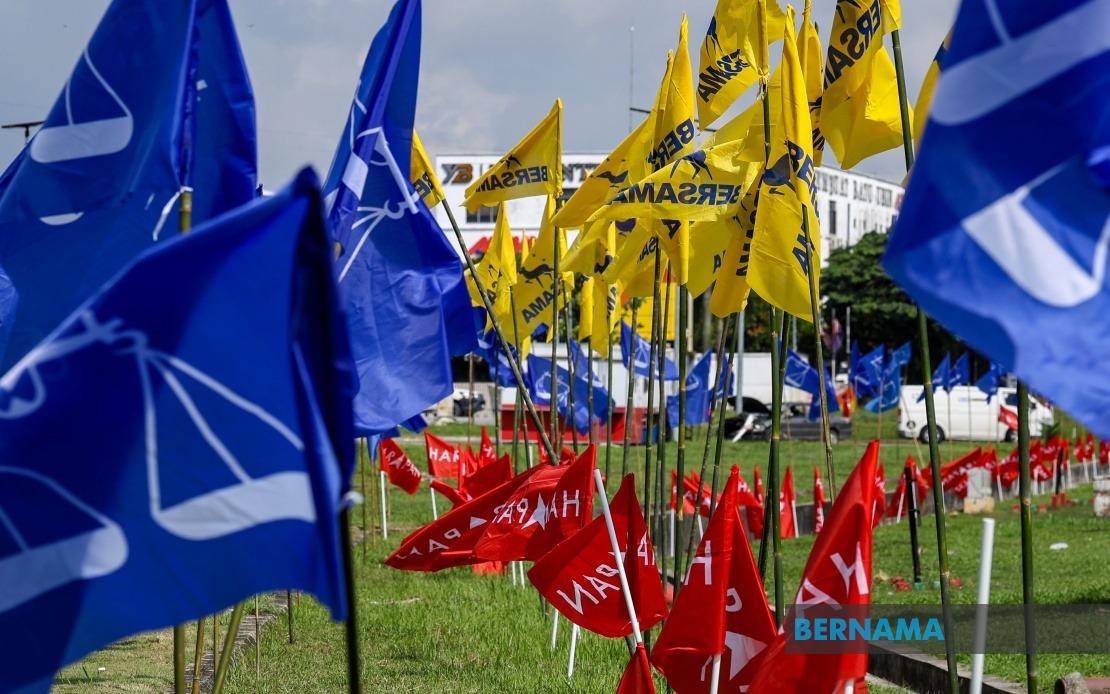
The opening week of campaigning for Johor's 16th state election has unfolded with deliberate restraint, as political parties across the board have consciously moved away from the traditional spectacle of mass rallies in favour of granular, constituency-level voter outreach. This strategic recalibration reflects both practical considerations and a deeper evolution in how Malaysian electoral contests are now being contested at the state level.
Political specialists point to several interlocking reasons for this measured campaign tempo. Prof Datuk Dr Sivamurugan Pandian of Universiti Sains Malaysia's Political Sociology programme emphasises that the first phase of any election cycle traditionally serves as a foundational building block rather than a definitive battleground. During this window, party machinery across the board is investing heavily in door-to-door visits, intimate neighbourhood gatherings, and community-based programmes designed to establish direct rapport with voters. This approach yields tangible dividends beyond mere social niceties: candidates gain genuine insight into localised voter concerns whilst simultaneously testing and tightening their party's organisational apparatus ahead of anticipated intensification in subsequent weeks.
The strategic value of these early, ground-level interactions extends further than surface-level engagement. By concentrating on personal conversations with constituents, political organisations can better allocate their finite campaign resources, identify swing voters and key influencers within communities, and construct more resonant messaging tailored to specific demographic and socioeconomic clusters. Sivamurugan argues that this methodical approach actually strengthens individual candidates' competitive positioning within their respective constituencies, creating what amounts to a distributed advantage across multiple electoral units rather than concentrating firepower in a handful of high-profile venues.
Modern election strategy has been fundamentally reshaped by data analytics and digital infrastructure. Dr Azmi Hassan, a geostrategist at the Nusantara Academy for Strategic Research, explains that contemporary campaigns have become increasingly algorithmic in nature. Political parties now deploy voter categorisation systems that classify individuals as white (solid supporters), grey (persuadable moderates), or black (committed opposition). This taxonomy informs targeted digital advertising, personalised messaging, and strategic deployment of campaign personnel. The shift from open-air rally formats to hybrid models combining face-to-face persuasion with social media targeting represents not mere tactical adjustment but a fundamental modernisation of electoral competition itself.
The narrative landscape across competing parties has stabilised around three recurring thematic pillars: incumbent track records, prospective policy commitments, and assertions regarding each coalition's capacity to ensure political stability. Yet according to Mujibu Abd Muis, a political science lecturer at Universiti Teknologi MARA, these framings have not yet crystallised into sufficiently compelling overarching narratives capable of reshaping the broader campaign trajectory. The potency of political messaging ultimately depends upon its capacity to translate abstract promises into concrete improvements affecting voters' daily realities—cost-of-living pressures, employment accessibility, locational infrastructure development, and public service delivery standards.
Geographic variation in campaign intensity reveals much about how competing coalitions assess their electoral prospects across different regions. Mujibu observes that during the initial campaign week, party machinery concentrated disproportionate effort in northern Johor's competitive constituencies spanning Muar, Tangkak, and Segamat, alongside portions of Batu Pahat and Kluang. This geographical concentration is neither accidental nor arbitrary but reflects sophisticated internal modelling of where marginal constituency-level gains remain realistically attainable. Northern Johor encompasses multiple seats genuinely in contention, and the strategic deployment of national party leaders to these areas signals their estimated significance within each coalition's overall victory calculus.
The bifurcated nature of Johor's electoral competition has become increasingly apparent through early campaign positioning. Mazlan Ali, a senior academic administrator at Universiti Teknologi Malaysia, identifies a clear stratification whereby Pakatan Harapan holds demonstrable organisational advantages across southern and western Johor districts, whilst Barisan Nasional maintains stronger traditional support bases in eastern coastal regions including Mersing and Kota Tinggi. How each coalition mobilises its campaign infrastructure directly reflects these carefully calibrated assessments of regional electoral probabilities. Rather than pursuing uniform statewide strategies, both Barisan Nasional and Pakatan Harapan have adopted geographically differentiated approaches that concentrate maximum effort in disputed territories whilst maintaining existing strongholds.
Turning attention from campaign mechanics to electoral mechanics, all analysing experts converge upon a critical determinant: voter participation rates. The final outcome of Johor's state election will substantially depend upon which coalition proves more effective at translating voter sympathy into actual ballot-box participation. In electoral systems where margins frequently prove razor-thin, differential turnout effects can completely invert anticipated results. This reality explains why parties are simultaneously pursuing granular ground operations designed to build personal relationships and commitment with constituents—the objective extends beyond persuasion toward behaviour activation.
With 172 candidates contesting 56 state assembly seats, Johor's electoral landscape contains sufficient complexity and constituency-level variation to accommodate multiple competing narratives and tactical approaches simultaneously. Early voting has been scheduled for July 7, with the main polling day set for July 11, leaving several weeks for campaign intensity to accelerate according to analyst expectations. As the second phase of campaigning materialises, senior party leadership is anticipated to assume increasingly visible roles, whilst rallies and digitally-targeted outreach intensify their focus toward genuinely persuadable voter segments whose preferences remain genuinely malleable. For Malaysian politics observers and Southeast Asian students of electoral strategy, Johor 2024 provides instructive evidence of how state-level elections in the region have fundamentally transformed in their mechanics and execution.

