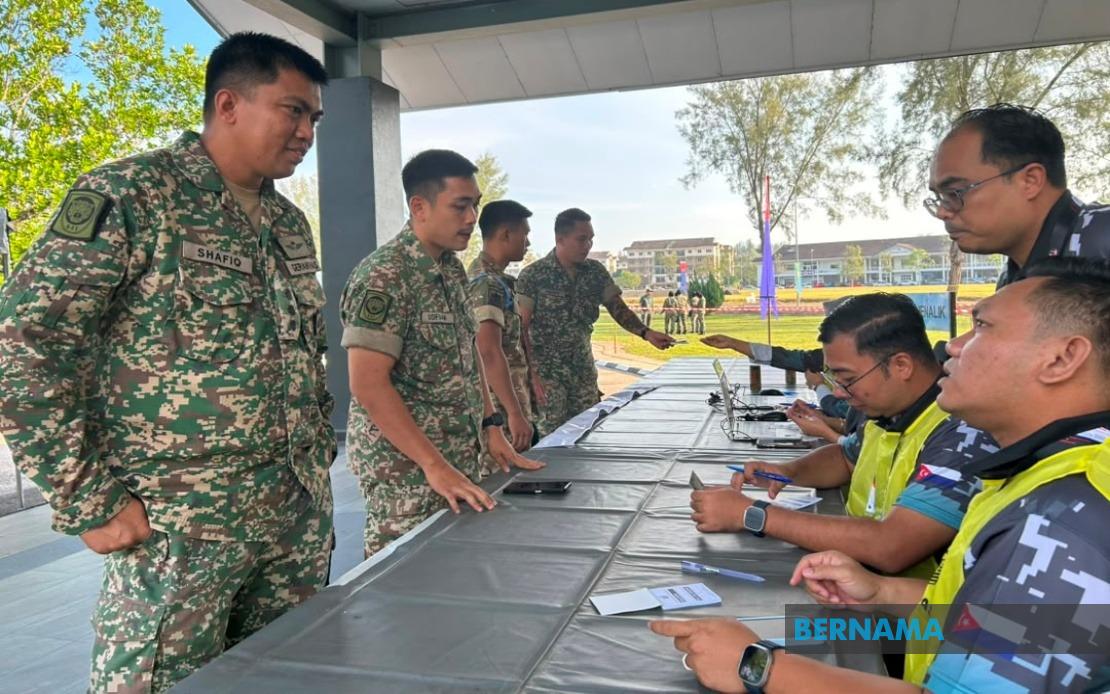
Early voting for Johor's 16th state election proceeded without incident on July 7, with security personnel and their families taking advantage of advance polling arrangements across the state. The morning started under clear skies at all designated centres, providing ideal conditions for what represents a critical preliminary phase in the electoral process. The Election Commission opened its doors at 8 am, with security staff already assembled from 7.30 am to cast their votes, ensuring the procedural machinery operated smoothly from the outset.
A total of 24,751 registered voters participated in early polling across 64 specially designated centres distributed throughout Johor. This cohort comprised 12,041 personnel from the Malaysian Armed Forces and their spouses, complemented by 12,710 officers drawn from the Royal Malaysia Police and General Operations Force along with their immediate family members. The arrangement acknowledges the operational demands faced by security personnel who would otherwise struggle to participate during the standard Saturday polling day.
The Malaysian Meteorological Department issued alerts regarding expected thunderstorm activity across the state later in the afternoon, though this did not materially disrupt proceedings during the early morning hours when most security voters exercised their franchise. The advance notice allowed the Election Commission and participating agencies to implement contingency planning, demonstrating the coordination between government bodies managing the electoral process. Such weather forecasts have become standard considerations in Malaysian electoral administration, particularly for elections spanning multiple voting locations and days.
Field observations at representative polling centres including the 5th Battalion GOF Camp in Simpang Renggam, the Johor Contingent Police Headquarters, and Mahkota Kluang Camp confirmed that voting proceeded in an orderly fashion throughout the morning period. The Election Commission conducted comprehensive final verification checks at all facilities prior to opening times, examining ballot security, polling station equipment, and administrative procedures. This meticulous preparation reflected the institutional emphasis on electoral integrity that the commission has emphasised across recent Malaysian state and federal contests.
The staggered closing schedule adopted across centres, with shutdowns occurring between noon and 6 pm depending on local logistics and voter registration numbers, provided operational flexibility while maintaining security protocols. This approach has become standard practice in managing early voting windows, balancing the practical demands of security personnel deployment with the bureaucratic requirements of the electoral administration. The variation in closing times ensured that each location could accommodate its registered voter population without creating congestion or administrative bottlenecks.
The overall electoral landscape for Johor's contest encompasses 2,727,926 registered voters entitled to participate across 1,140 polling centres throughout the state. The Saturday main polling day will determine the outcome of competitions for 56 state assembly seats among 172 candidates representing various political parties and independent contenders. This represents a comprehensive democratic exercise across a major Malaysian state, with implications extending beyond Johor's borders to influence national political dynamics and coalition mathematics in Parliament.
The early voting mechanism specifically accommodates the practical realities of managing security personnel who operate outside regular administrative working hours. Members of the military, police, and paramilitary forces maintain continuous operational duties that preclude their participation during standard election day voting windows. By establishing dedicated early voting sessions, the electoral administration demonstrates recognition of these constraints while simultaneously upholding the democratic principle that all eligible citizens should exercise franchise rights regardless of professional commitments.
Security preparations at polling centres received attention comparable to that afforded general election administration, reflecting the sensitivity surrounding voting arrangements in Malaysia. The presence of Election Commission personnel, security forces managing queues and access, and administrative staff checking voter rolls created an integrated system designed to prevent irregularities while maintaining voter comfort and confidence in the process. These arrangements have evolved through multiple electoral cycles and represent institutional learning regarding best practices in electoral management.
The Johor state election carries particular significance within Malaysia's broader political context, given the state's economic importance and its role as a demographic powerhouse within the federation. The distribution of early votes among security personnel may carry subtle implications for overall results, as this cohort comprises individuals accustomed to disciplined organisational structures and whose voting patterns sometimes reflect institutional preferences. Analysts monitoring the Johor contest will likely parse early voting figures alongside eventual results to discern any patterns of deviation from broader state-level trends.
The successful commencement of early voting operations sets a procedural tone for the broader election period extending to Saturday's main poll. Logistical problems encountered during early voting phases can indicate systemic challenges requiring remediation before the high-volume main election day, when substantially larger voter numbers will converge on polling centres nationwide. The apparent smoothness of Johor's early operations suggests that the Election Commission has adequately resourced and prepared its administrative apparatus for managing the complete electoral exercise.

