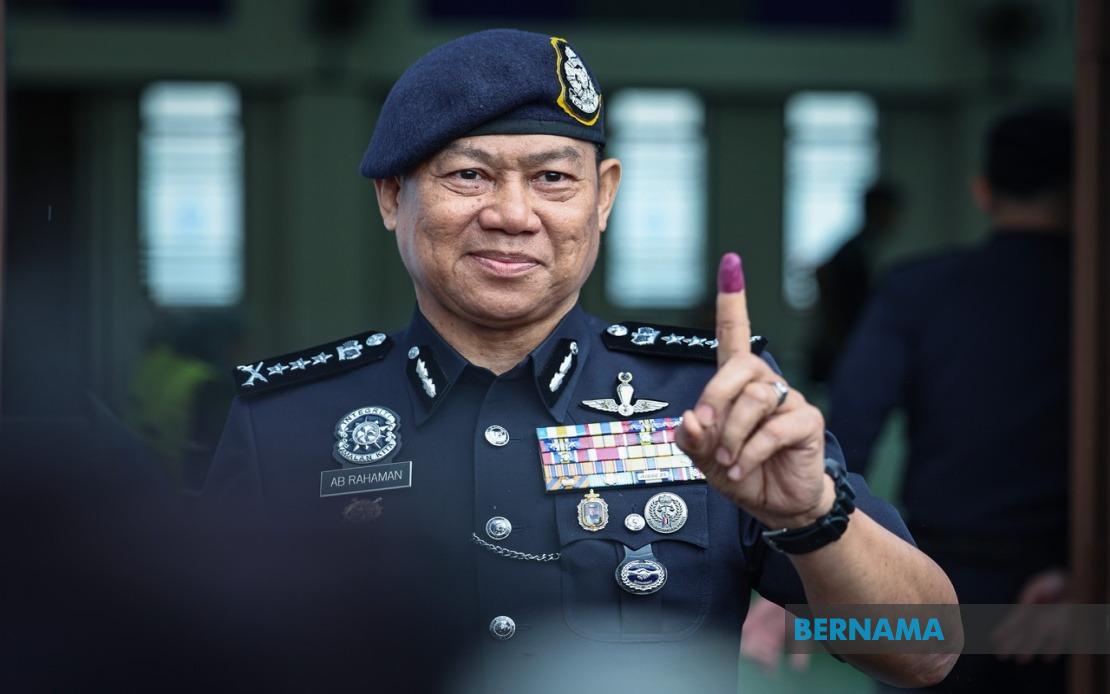
The 16th Johor state election moved into its voting phase on July 7 with security forces participating in early polling, recording a 36.3 per cent turnout among eligible personnel by 10.30 am. According to Johor police chief Datuk Ab Rahaman Arsad, exactly 4,257 police members had voted across the state's designated centres, maintaining orderly proceedings as the election machinery accelerated towards Saturday's main polling day.
The comprehensive early voting arrangement, which allowed members of the Malaysian Armed Forces and police to cast ballots before the general public, opened 64 polling centres simultaneously at 8 am. These facilities received 20,607 registered early voters in total, with voting scheduled to conclude in stages between noon and 6 pm depending on location and voter distribution. The staggered closing times reflected logistical planning across a large state with varying population densities and geographic challenges.
Datuk Ab Rahaman emphasised during his remarks to journalists that the voting process unfolded smoothly across all 53 designated early voting centres throughout Johor, with no incidents compromising electoral integrity or procedural conduct. His statement carried particular weight given the security responsibilities law enforcement agencies bear during elections. The absence of disturbances in this sensitive phase suggested adequate preparation and coordination among officials managing the electoral machinery.
The police chief noted that the final tally of overall voter turnout would emerge only after all polling centres completed their operations later that afternoon, reflecting standard practice where comprehensive statistics require full data collection. His cautionary framing acknowledged that mid-morning figures provided merely a snapshot of emerging participation patterns rather than definitive conclusions about engagement levels among security personnel.
Campaign-related tensions had manifested primarily through vandalism incidents rather than confrontations or serious breaches. During the canvassing period, most police reports and investigation papers concerned destruction or defacement of campaign materials, including party flags and political billboards. This pattern of disorder, while frustrating for campaign organisers, represented relatively contained expressions of political friction compared to more serious electoral violations.
A separate controversy involving former Johor State Assembly Speaker Datuk Dr Mohd Puad Zarkashi demanded ongoing police attention. The speaker had alleged that the Johor Palace interfered in the state legislative assembly's dissolution, triggering 153 reports filed nationwide by the afternoon. While investigations remained active, authorities had not publicly disclosed substantive findings, leaving the matter suspended between allegation and resolution during this sensitive electoral moment.
The scope of the election itself underscored Johor's political significance within Malaysia's federal framework. A total of 172 candidates competed for 56 state seats, with more than 2.7 million registered voters eligible to participate in Saturday's general polling. Such figures reflected Johor's substantial population and economy, making electoral outcomes consequential for regional governance and national political dynamics.
For Malaysian observers and regional analysts, Johor elections carry particular weight because the state represents a significant portion of peninsular Malaysia's electorate and economic output. The state's political complexion influences coalition mathematics at federal level and shapes perceptions of electoral momentum heading into potential national contests. Early voting turnout among security forces, traditionally viewed as an indicator of engagement across professional demographics, suggested healthy participation among this disciplined voter segment.
The smooth administration of early voting on July 7 reflected institutional learning from previous electoral cycles. Election Commission procedures and police coordination had evidently stabilised around proven mechanisms, enabling large numbers of voters to cast ballots without logistical breakdown. This operational success created an orderly environment for subsequent main-day polling, reducing friction points that might otherwise compromise confidence in electoral administration.
Regional implications extended beyond Johor's borders given Southeast Asia's broader democratic preoccupations. Malaysia's demonstrated capacity to conduct large-scale elections relatively peacefully, particularly among security force personnel who must themselves guarantee electoral integrity, provided reassuring testimony to institutional resilience. While vandalism and allegations of palace interference signalled ongoing political tensions, the absence of violence or systemic disruption indicated functional democratic machinery.
The convergence of high voter eligibility numbers, substantial candidate competition, and relatively incident-free early voting procedures positioned the Johor state election as a significant democratic exercise within Malaysia's electoral calendar. Saturday's main polling would determine concrete outcomes, yet the preparatory phase had already demonstrated institutional capacity for managing electoral complexity at scale. The state's political direction, whatever it proved to be, would emerge through procedurally sound mechanisms that, despite surface controversies, functioned with fundamental competence.

