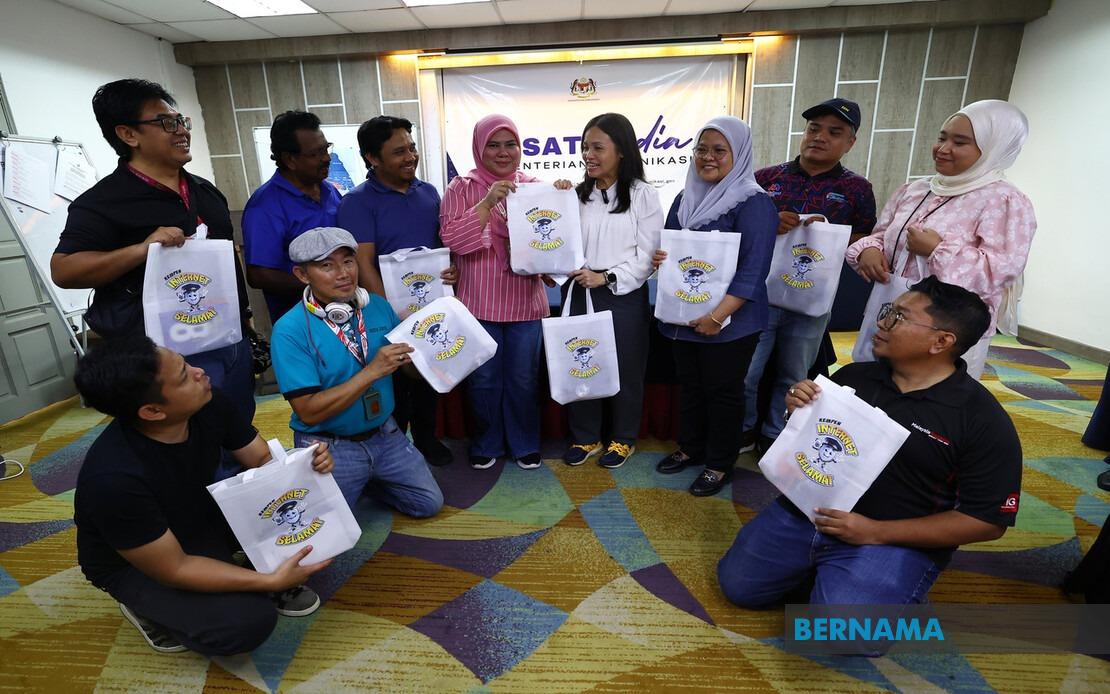
The Malaysian Communications Ministry has rolled out comprehensive logistical support for media organisations covering the 16th Johor state election, deploying two primary media centres and expanding the National Information Dissemination Centre network to 100 locations across the state. Deputy Communications Minister Teo Nie Ching announced the infrastructure arrangements during a visit to the main media hub at Hotel Seri Malaysia in Johor Bahru on June 28, just days before the polling process commences.
The dual-hub approach reflects the geographical spread of Johor's electoral landscape. While the Hotel Seri Malaysia facility serves as the primary press centre in the state capital, a secondary location at NADI Kampung Sawah Awok in Muar provides comparable facilities for journalists covering the northern reaches of the state. Both venues operate continuously from early morning at 9 am through to 9 pm, maintaining these hours throughout the campaign phase from June 26 until polling day on July 11. This extended operating schedule acknowledges the demands on media teams during intensive electoral coverage, when reporters may require multiple shifts to maintain round-the-clock reporting.
Technical infrastructure has been prioritised as a central component of the support framework. Teo specifically committed to maintaining internet speeds of at least 100 Mbps across all facilities, a threshold designed to accommodate modern news production workflows that increasingly rely on uploading video content, transmitting high-resolution photographs, and filing multimedia reports in real time. The minimum speed specification addresses a longstanding challenge in Malaysian elections where internet congestion during peak reporting periods has occasionally constrained transmission capabilities. This guarantee extends beyond merely hosting journalists in a building; it acknowledges the technical requirements of contemporary journalism where digital file transfers are essential to meeting publication deadlines.
The physical infrastructure complements the connectivity commitments. Media centres have been equipped with desktop computers, laptop stations, photocopiers, and printers to enable journalists to process materials, prepare documents, and conduct administrative tasks without leaving the facility. This arrangement proves particularly valuable during intensive news cycles when reporters may spend extended periods at the centre rather than commuting between locations. The provision of standardised equipment also ensures that freelance journalists or those from smaller publications can access technology that might not be available through their own organisations, promoting more equitable access to facilities.
Beyond the fixed media centres, the Malaysian Communications and Multimedia Commission has assumed responsibility for monitoring telecommunications performance more broadly across Johor during the campaign. Rather than relying solely on the controlled environments of dedicated media facilities, the MCMC has committed to engaging directly with telecommunications companies to maintain optimal service levels throughout the state. This approach recognises that journalists operate across Johor's diverse geography, covering rallies in towns, rural constituencies, and urban centres, each requiring reliable connectivity. The MCMC's proactive monitoring stance signals an understanding that election coverage failures during critical moments could undermine press freedom and public access to campaign information.
Public participation in signal monitoring represents an innovative element of the regulatory framework. Teo encouraged citizens to utilise the MCMC Nexus application, which enables real-time reporting of internet signal strength at specific locations. This crowdsourced approach transforms the public into active monitors of telecommunications infrastructure quality, creating a feedback mechanism that extends monitoring beyond what government agencies could feasibly undertake independently. The application architecture includes privacy protections, with MCMC explicitly clarifying that personal data remains confidential while technical specifications such as location and signal metrics are shared with service providers for network optimisation.
The election communications framework incorporates explicit ethical guardrails addressing content standards. Teo reminded political parties and their supporters to maintain campaign conduct aligned with principles of civility and democratic norms, particularly emphasising avoidance of sensitive issues spanning race, religion, and royalty. This messaging carries particular resonance in the Malaysian context, where historical experience demonstrates that inflammatory discourse around these sensitive topics can rapidly escalate beyond the campaign sphere into broader social tensions. The MCMC's stated intention to collaborate with police forces to identify and remove social media content characterised by extreme provocative elements indicates a multi-agency approach to content moderation during the electoral period.
Factual accuracy initiatives complement the content conduct messaging. The Malaysian Media Council's establishment of a dedicated fact-checking platform reflects institutional recognition that electoral periods generate heightened information vulnerabilities, where false claims and distorted narratives can proliferate rapidly through social channels. Teo's advocacy for citizens to adopt fact-checking as a regular practice before sharing information addresses the structural problem that verification responsibilities increasingly devolve onto individual social media users rather than centralised gatekeepers. This framing implicitly acknowledges that traditional top-down content moderation cannot adequately address the volume and velocity of information circulation in networked environments.
The Johor election timetable structures the coverage window into distinct phases. Early voting occurs on July 7, providing an initial news event with smaller but concentrated voter participation, while general polling on July 11 represents the primary electoral moment generating nationwide attention. These two dates bookend a campaign period spanning from June 26 through July 11, during which media organisations must cover candidate rallies, policy announcements, constituency movements, and the evolving political dynamics between major contenders. The infrastructure commitments outlined by Teo must sustain consistent operational capacity across this entire duration, rather than concentrating resources on a single day.
For journalists and media organisations, the announced infrastructure represents tangible recognition of the resource demands inherent in subnational electoral coverage. State elections, while smaller in scope than federal contests, involve complex logistical challenges that require coordination across multiple constituencies, candidate movements, and polling locations spread across geographically dispersed territory. The commitment of state resources toward facilitating media access and operational capacity reflects institutional understanding that press coverage availability directly influences public access to campaign information and electoral accountability. The emphasis on technical capacity, physical facilities, and content standards collectively shapes the information environment within which Johor voters make electoral decisions.

