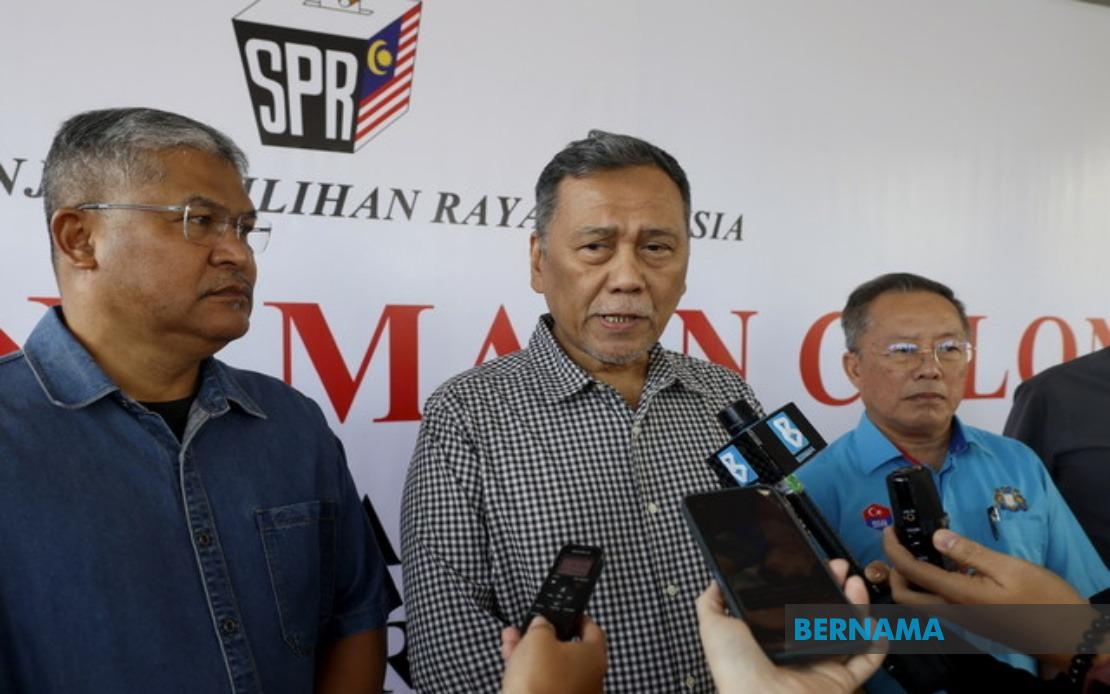
Malaysia's Election Commission reported significant movement in candidate preparations for the upcoming Johor state election, as 593 nomination forms have been distributed across the state ahead of tomorrow's nomination deadline. However, the gap between forms sold and confirmed candidates—with only 133 prospective contenders having submitted required deposits—indicates that many aspirants are still making final decisions about whether to proceed with their electoral bids. EC chairman Datuk Seri Ramlan Harun suggested this pattern was normal, pointing out that candidates retain until the start of nomination proceedings to complete all necessary formalities and financial commitments.
The distinction between those purchasing nomination forms and those actually confirming candidacy through deposit payment carries significant implications for understanding the genuine scale of electoral contestation. Nomination forms serve as the initial step and cost relatively little, allowing potential candidates to keep options open. The deposit requirement, however, represents a financial commitment that signals serious intent to contest. The current ratio suggests that between 70 and 80 percent of form purchasers may withdraw before the nomination process formally commences, a pattern consistent with previous Malaysian state elections where interest exceeds actual participation.
Ramlan's remarks reflected the EC's confidence in its operational readiness, having completed two consecutive days of trial operations across all 56 nomination centres throughout Johor. This preparation phase, typically conducted just before nomination day, tests procedures, staffing, technology, and crowd management systems. The fact that all centres met readiness standards indicates the commission expects a smooth nomination process despite the potential for high turnout if the preliminary form sales translate into actual nominations.
Security considerations weighed heavily on the EC's messaging, with Ramlan explicitly reminding political parties, candidates, and their supporters to maintain discipline and avoid provocative behaviour that might disrupt proceedings. The emphasis on peaceful, orderly conduct reflects lessons learned from previous contentious nomination periods in Malaysian electoral history, when rival supporters clashed or created disturbances at nomination centres. Such incidents not only undermine the electoral process's credibility but also expose the EC to criticism regarding its crowd management capabilities.
Detailed arrangements for the Maharani constituency, revealed by returning officer Zainal Eran, illustrated the practical measures being implemented to prevent confrontations. The protocol restricts entry to nomination centres to the candidate themselves, plus one proposer and a single supporter, creating strict numerical limits on who directly participates in the formal nomination submission. This contrasts sharply with the experience for other supporters, who will be directed to designated field areas where barriers separate different parties' supporters. The physical barrier approach represents a standard crowd management technique, though its effectiveness depends on adequate policing and security personnel.
The political composition of candidates expected to contest reveals substantial competition across most constituencies. Pakatan Harapan announced it would field contenders in all 56 seats, distributing them among three coalition partners: PKR fielding 20 candidates, Amanah 19, and DAP 17. This complete slate coverage demonstrates the coalition's determination to compete across the entire state battleground, avoiding any uncontested seats that might signal weakness in particular regions. Barisan Nasional similarly committed to fielding candidates in all 56 seats, with UMNO providing 36, MCA 16, and MIC four. This comprehensive participation from Malaysia's traditional governing coalition underscores the Johor election's significance as a substantial political contest rather than a regional afterthought.
Perikatan Nasional's more fragmented candidate distribution—with PAS contesting 11 seats, Bersatu 16, the Malaysian Indian People's Party five, and Pejuang one—totalled only 33 seats, leaving 23 constituencies uncontested by the coalition. This incomplete coverage potentially creates opportunities for independent candidates or other parties to gain representation, though it also raises questions about Perikatan Nasional's organisational capacity and strategic priorities in Johor. The Malaysian United Democratic Alliance fielding four candidates, Parti Sosialis Malaysia one, and Parti Bersama Malaysia's debut with 15 seats collectively account for only 20 additional candidacies, leaving numerous constituencies still without representation from these smaller political entities.
Parti Bersama Malaysia's maiden electoral appearance is particularly noteworthy, as new parties rarely contest state elections successfully without significant organisational infrastructure or established voter bases. The party's decision to field 15 candidates suggests confidence in at least some constituencies, though Malaysian electoral history indicates that new entrants typically struggle to convert candidacies into elected representatives. The diversity of parties contesting the election, from established coalitions to independent political entities, reflects the fluid and competitive nature of contemporary Malaysian politics, particularly in states like Johor where results often shift dramatically between elections.
The election timeline established by the EC creates considerable pressure on candidates to finalise their participation decisions rapidly. With nomination day falling on June 26 (today in the source material), early voting scheduled for July 7, and polling day set for July 11, the entire campaign period compresses into merely two and a half weeks. This compressed timeframe means candidates who confirm their nomination late will have minimised time to campaign, conduct grassroots outreach, or establish name recognition among voters. The concentration of electoral activity reflects the EC's preference for efficient, rapid electoral cycles that reduce extended uncertainty and campaign-related disruptions.
The Johor State Legislative Assembly dissolution on June 1 triggered this electoral sequence following the state's political reconfiguration. Previous elections in Johor have demonstrated the state's volatile political dynamics, with results capable of surprising national observers and shifting coalition alignments. The current contest occurs within a broader context of Malaysia's post-2018 political recalibration, where traditional assumptions about state-level dominance no longer apply uniformly across the federation. Johor, historically a Barisan Nasional stronghold, has experienced increasing competition from Pakatan Harapan and coalition movements, making the state's electoral results consequential for understanding Malaysian political trajectories.
Regional observers across Southeast Asia frequently monitor Malaysian state elections as indicators of broader democratic health and electoral competitiveness within the region. The Johor election's scale—56 seats representing substantial constituencies—and its political significance position it as a substantial democratic exercise. The Election Commission's transparent reporting of nomination form sales and deposit payments, along with detailed descriptions of security and procedural arrangements, demonstrates institutional communication practices increasingly expected in contemporary Asian democracies. Malaysian political analysts will scrutinise final nomination numbers, candidate quality, and coalition strategies revealed during the nomination process as indicators of likely electoral outcomes and their implications for federal politics.

