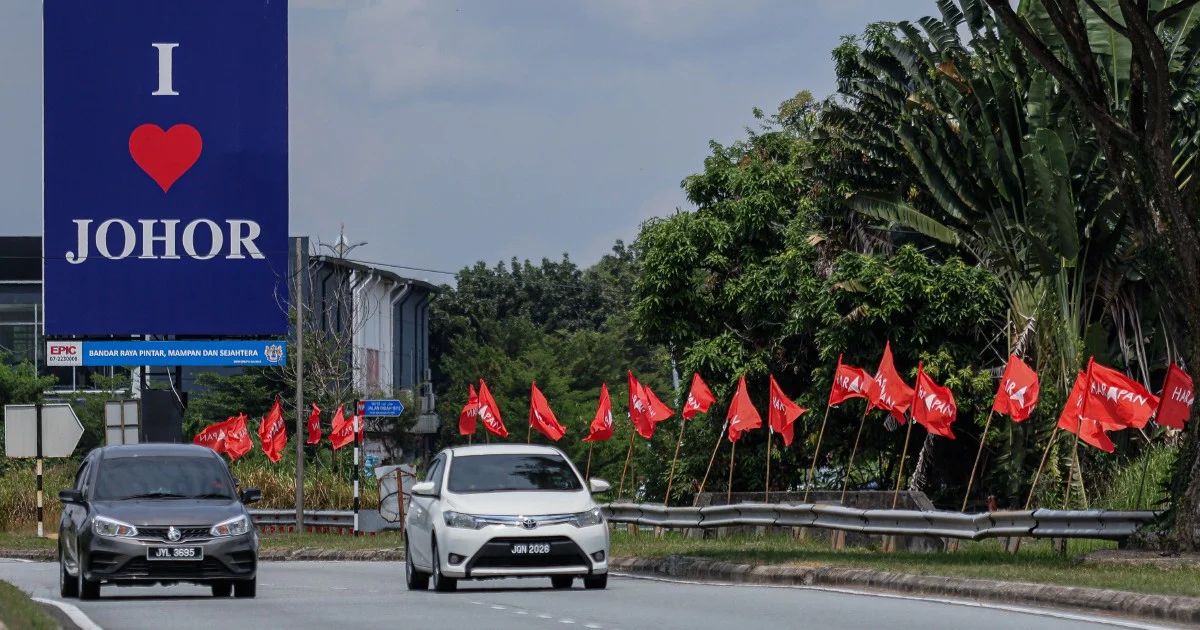
The forthcoming Johor state election demands that voters look beyond the immediate question of who will occupy the menteri besar's office, according to a senior PKR youth figure speaking in Johor Baru. Rather than allowing the contest to devolve into a personality-driven campaign centred on individual candidates, the party representative contended that the electoral exercise should serve as a comprehensive evaluation of which political coalition possesses the organisational strength, technical capability, and strategic planning necessary to advance Johor's broader development agenda.
This framing represents an important strategic repositioning for PKR as the state prepares for polls. The party is attempting to shift public discourse away from individual political personalities and toward institutional competence and policy substance. Such an approach carries particular significance in Malaysian politics, where leadership personality frequently dominates campaign narratives and voter decision-making. By emphasizing the collective capacity of their coalition rather than a single figurehead, PKR appears to be building a narrative that emphasises stability, teamwork, and concrete governance outcomes.
Johor's economic significance within Malaysia makes this emphasis on development planning especially relevant. As the nation's southernmost peninsula state and a crucial economic engine, Johor hosts major manufacturing clusters, port facilities, and extensive agricultural operations. The state's growth trajectory directly influences broader regional economic performance across Southeast Asia's trading corridors. Voters in Johor are therefore justified in prioritising which administration is most likely to implement coherent, long-term strategies that will enhance employment opportunities, infrastructure capabilities, and sectoral competitiveness.
The social dimension of governance presents another crucial consideration that PKR's framing brings into focus. Beyond traditional economic metrics, Johor residents care about educational quality, healthcare accessibility, housing affordability, and community safety. A coalition's ability to address these interconnected challenges requires more than a charismatic leader; it demands coordinated policy implementation across multiple government portfolios, technical expertise in programme management, and sustained commitment to vulnerable populations. The PKR youth leader's emphasis on coalition capacity speaks directly to these concerns.
Historically, Johor elections have seen voters reward administrations that deliver tangible improvements in daily life. The state's development is not automatic; it requires deliberate prioritisation of infrastructure maintenance, industrial investment facilitation, and skills development. These objectives transcend what any single individual can accomplish regardless of position. Effective governance requires functional coalition arrangements where different parties work harmoniously toward shared objectives rather than pursuing narrow partisan agendas that undermine implementation.
The emphasis on coalition strength also reflects broader regional trends. Across Southeast Asia, successful governance increasingly depends on multiparty cooperation and institutional resilience rather than concentrated individual authority. Vietnam's collective leadership model, Indonesia's coalition-based presidencies, and Thailand's administrative frameworks all demonstrate that sustained development requires systems and processes operating effectively even when individual leadership changes occur. Johor voters would do well to consider whether their preferred coalition has demonstrated such systemic capability.
For PKR specifically, this messaging approach addresses potential vulnerabilities in perception. By redirecting attention toward team composition and policy frameworks rather than individual candidates, the party can emphasise the depth of its leadership bench and the comprehensiveness of its development platform. This strategy proves particularly valuable when a single personality might not command overwhelming voter enthusiasm. Instead, PKR invites voters to assess the collective intelligence, experience, and commitment of the entire coalition team.
The electoral stakes for Malaysian politics nationally should not be overlooked. Johor remains a bellwether state where coalition performance signals broader national trends. A strong performance by any coalition in Johor's election would send powerful signals about voter appetite for particular governance models, development philosophies, and political arrangements heading toward the next federal election cycle. Therefore, how campaigns frame their central messages in Johor carries implications extending well beyond the state's boundaries.
District-level variations within Johor further underscore why coalition-wide capacity matters more than any single leader. Urban constituencies face distinct challenges from rural communities. Manufacturing-dependent districts have different priorities than agricultural regions or port cities. No single menteri besar, however capable, can meaningfully address such diverse local conditions without competent, engaged assemblypersons and district administrators throughout the state. Coalition strength translates directly into the availability of such distributed expertise and commitment.
For Malaysian voters generally, the PKR youth leader's argument offers a valuable corrective to the personality cult tendencies that sometimes dominate political discourse. Elections present opportunities to evaluate institutional performance, policy proposals, and organisational capacity rather than simply choosing between charismatic figures. The Johor contest, viewed through this lens, becomes less about who wears the title and more about which coalition can actually deliver improved living standards and economic dynamism to residents across the state's diverse communities.

