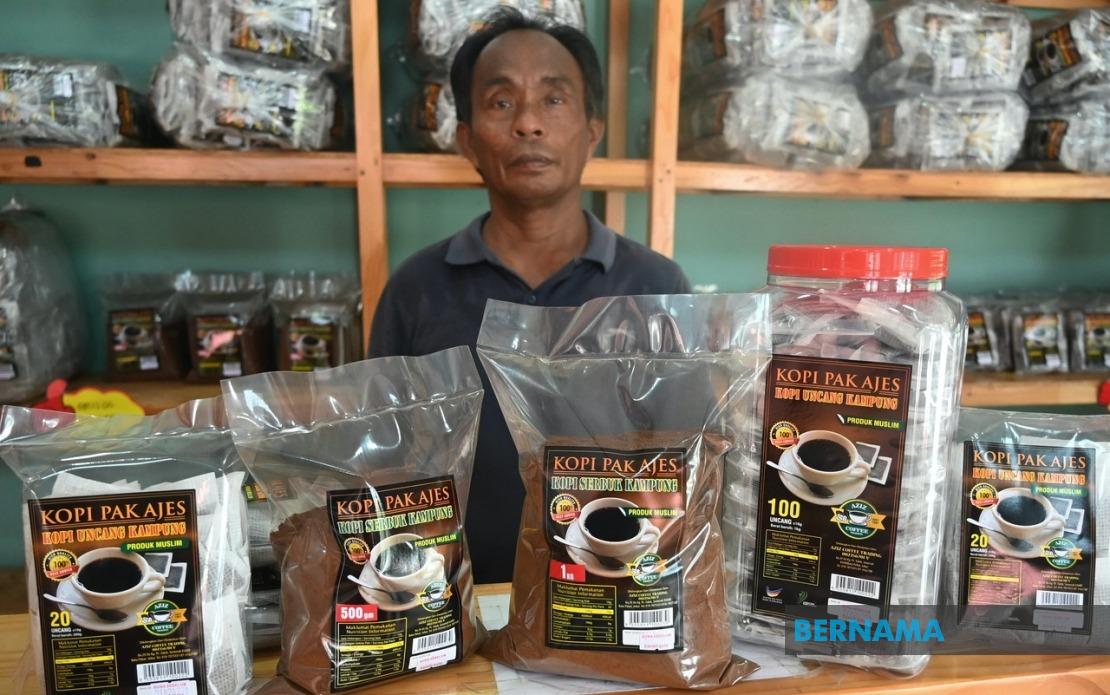
The 16th Johor state election is proving unexpectedly lucrative for small business owners willing to capitalise on the campaign season. In Kampung Parit Sidek, Semerah, coffee entrepreneur Aziz Mohd—popularly known as Pak Ajes—has witnessed a dramatic spike in orders as candidates and their support teams traverse constituencies seeking votes. What started as routine business operations has transformed into a production frenzy, with the 65-year-old coffee trader scrambling to satisfy customer demand that far exceeds his typical monthly output. With 172 candidates contesting 56 state seats across multiple constituencies including Semerah, Sungai Balang and Bukit Naning, the election machinery requires substantial logistical support, including reliable supplies of beverages to sustain workers during intensive ground campaigns.
Pak Ajes' rise as a supplier to the political establishment represents a broader phenomenon in Malaysian electoral cycles: the informal economy's capacity to absorb and benefit from temporary surges in activity. Running Aziz Coffee Trading with his son Muhammad Fitri, Pak Ajes has pivoted his entire operation to meet this once-in-five-years opportunity. The decision to double production was made strategically after receiving advance notice from various campaign representatives preparing their machinery. Rather than scrambling reactively, the entrepreneur coordinated with suppliers across the southern Johor region, procuring coffee beans from as far as Rengit and Kluang to ensure continuity of supply. This forward-thinking approach transformed potential logistical chaos into a calculated business expansion, demonstrating how experienced operators navigate electoral demand cycles.
The foundation underpinning Pak Ajes' current success lies in decades of entrepreneurial experimentation and gradual market positioning. His entry into coffee processing emerged almost accidentally in 1991, when he observed surplus coffee bean supplies in a nearby village. Rather than purchase commercially, he began processing beans for personal consumption and assisting acquaintances operating beverage stalls. Before formalising coffee operations, Pak Ajes had previously engaged in quail farming for egg production and mushroom cultivation, selling produce to local suppliers and market stalls. This diversified background reveals a common pattern among Malaysian rural entrepreneurs: building capability across multiple agricultural sectors before identifying a sustainable specialisation. With merely RM200 accumulated from quail egg and mushroom sales, he initiated coffee powder distribution, initially packaging in 100-gram portions to match customer purchasing power.
The transformation from micro-scale home-based operation to manufacturing enterprise occurred gradually across three decades. Contemporary production capacity reaches approximately 1,500 packets daily, generating over five tonnes of coffee powder monthly. This output supplies multiple coffee shops throughout the Muar and Batu Pahat regions, establishing Aziz Coffee Trading as a recognised regional supplier beyond his immediate community. The production process itself demands considerable technical knowledge and precision that belies its apparent simplicity. Pak Ajes emphasises that successful coffee powder manufacturing requires meticulous attention throughout multiple stages: separating beans from stems and husks, sun-drying for approximately 15 days, roasting, grinding, and packaging. Each stage influences the final product quality, demanding consistency and discipline that cannot be rushed without compromising the product integrity that has built his customer base.
Packaging represents a particularly critical yet often underestimated component of the operation. Coffee powder's susceptibility to moisture, air exposure, and temperature fluctuations means that careless packaging allows the product to harden, clump, and deteriorate rapidly, rendering it commercially worthless. Pak Ajes' insistence on meticulous packaging standards reflects hard-won experience managing quality across thousands of transactions. This commitment to operational excellence distinguishes small-scale producers who survive long-term from those struggling with customer retention. When the election campaign generated unprecedented demand, maintaining these quality standards while simultaneously accelerating production volume required careful planning and temporary staffing adjustments.
Expanding beyond pure manufacturing into retail operations marked a strategic evolution in Pak Ajes' business model. In 2022, he and his son opened Kupi Nang Ajes Cafe directly in front of his house, offering prepared beverages including Americano and latte at deliberately affordable pricing. This vertical integration allows direct consumer engagement, higher profit margins than wholesale supply, and brand establishment in an increasingly competitive café market. The café location benefits from proximity to his processing facility, minimising logistics and enabling real-time quality control. Younger consumers encountering the café brand while competing alternatives dominate visual urban spaces creates accumulating brand recognition that supports both immediate sales and long-term expansion aspirations.
Pak Ajes' ambitions extend considerably beyond his current single outlet. He explicitly targets opening a second location in a high-traffic area, preferring either Batu Pahat town or Muar where concentrated foot traffic and consumer density justify the operational investment. More ambitiously, he envisions establishing branches throughout Malaysia, transforming a community-based enterprise into a nationwide brand. These expansion targets appear optimistic yet not entirely unrealistic given the competitive advantages he has cultivated: established production capacity, supply chain relationships, demonstrated operational competence, and brand recognition within target regions. However, achieving multi-state expansion requires considerably more capital, professional management structures, and brand standardisation than current family-based operations provide.
Government support has provided meaningful assistance in building Pak Ajes' productive capacity. The Department of Agriculture contributed equipment including a coffee grinder and coffee bagging machine, supplemented by training courses addressing packaging standards and product labelling requirements. This institutional support acknowledges the developmental importance of rural agricultural enterprises and reflects broader policy recognition that small producers require technical assistance, not merely financial loans. Such targeted support accelerates productivity improvements that individual entrepreneurs, particularly those with limited formal education and access to professional networks, might otherwise require years to independently develop. This partnership model between government agencies and rural entrepreneurs potentially offers a scalable template for supporting agricultural value-chain development beyond coffee production.
The immediate election windfall occurring during the 16th Johor state polls, scheduled for polling on Saturday, represents both opportunity and challenge for Pak Ajes. The temporary surge in demand creates significant revenue but also risks overextending operations beyond sustainable levels. Campaign seasons conclude abruptly, returning demand to baseline levels. Entrepreneurs who invest heavily in expanding capacity specifically for election-related demand face potential underutilisation and financial distress when orders normalise. Successful navigation of this cycle requires distinguishing between temporary spike-driven expansion and permanent capacity enhancement justified by organic market growth. Pak Ajes appears aware of this distinction, emphasising gratitude for the windfall while maintaining realistic awareness that such opportunities arise infrequently.
For Malaysian policymakers observing rural entrepreneurship and economic development, Pak Ajes' trajectory demonstrates critical lessons about informal sector dynamism often underestimated in formal economic planning. Despite lacking formal business credentials or sophisticated market analysis, he has built a sustainable enterprise generating employment, supplying regional markets, and adapting operationally to changing demand patterns. His willingness to invest in production capacity enhancement during peak periods, coordinate supply chain logistics across regional geography, and maintain uncompromising quality standards while scaling operations reveals entrepreneurial sophistication rooted in practical experience rather than business school curricula. The election-driven demand surge, while temporary, validates underlying market fundamentals supporting coffee production within the region and demonstrates consumer demand for locally-produced alternatives to imported competitors.
The broader implications of Pak Ajes' experience extend beyond individual business success into questions about rural economic resilience and diversification in Johor. Coffee production represents value-added agricultural activity that retains economic benefits within producing communities rather than exporting raw materials for external processing. Scaling such enterprises potentially supports rural population retention, reduces migration pressures toward overcrowded urban centres, and builds regionally-distinctive economic identities. The electoral cycle itself, despite its political dimensions, functions as an economic stimulant for communities producing goods and services demanded during campaign seasons. Understanding these informal economy dynamics remains crucial for policymakers designing comprehensive development strategies addressing rural prosperity beyond plantation agriculture and heavy manufacturing.

