The race to capture Johor's mandate reached fever pitch on July 10 as all contending candidates and party leaders launched their concluding campaign activities ahead of the midnight deadline. With a total of 172 candidates vying for 56 state assembly seats in the 16th Johor State Election, the closing hours of the two-week campaign period witnessed an intensified scramble for voter support, as political operatives employed everything from grassroots walkabouts to large-scale finale rallies to reinforce their messages.
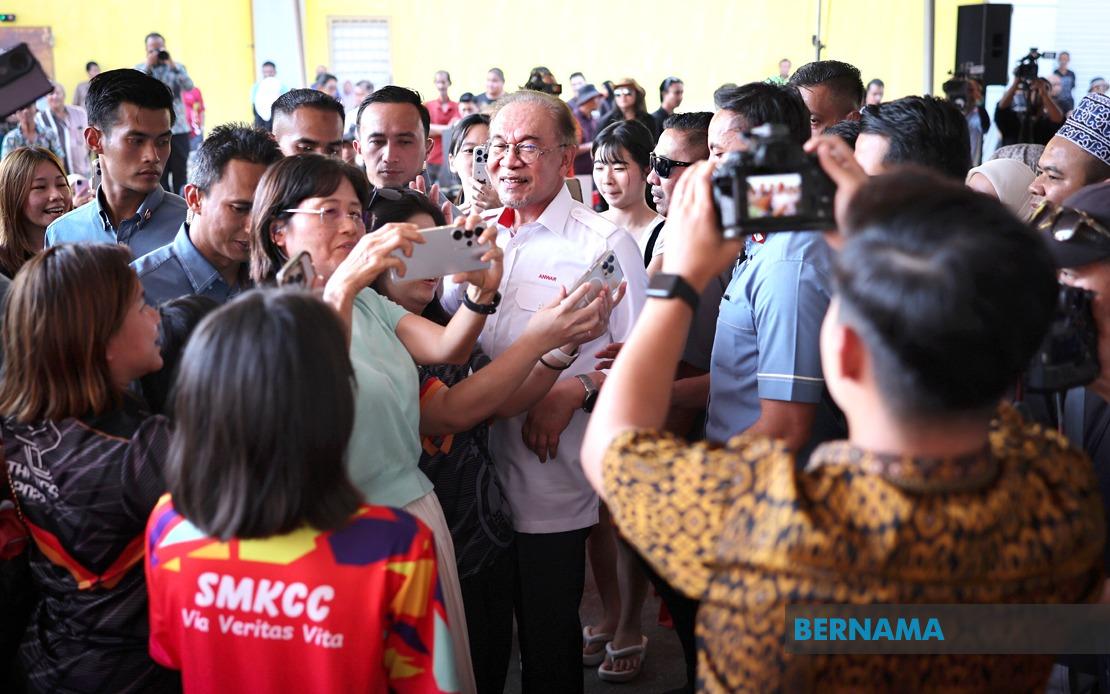
Pakatan Harapan moved to consolidate its position through a coordinated showcase of leadership and momentum. Prime Minister Datuk Seri Anwar Ibrahim, serving as the coalition's chairman, orchestrated an ambitious tour spanning five key constituencies designed to energise the PH machinery in its final push. Beginning in Bukit Gambir, the itinerary extended through Bukit Batu and Layang-Layang before culminating in a marquee event billed as the 'Johor Ke Depan, Undi Harapan Grand Finale Programme' in Pasir Gudang. Through social media messaging, Anwar sought to fortify his coalition's candidates by invoking religious sentiment, calling for divine assistance in ensuring smooth proceedings for the PH team ahead of tomorrow's poll.
Within the broader PH alliance, individual candidates demonstrated diverse strategies to capture the final undecided electorate. Suhaizan Kaiat, representing PH in the Larkin state seat, adopted an informal, accessible approach by conducting a walkabout in an urban shopping precinct, flanked by Amanah Vice President Datuk Seri Dr Dzulkefly Ahmad. This ground-level visibility exercise reflected a deliberate choice to engage ordinary voters in their everyday spaces. Suhaizan characterised the accumulated feedback received throughout the campaign season as both a solemn obligation and a mandate to be discharged should voters grant him authority in tomorrow's contest.
The Barisan Nasional coalition, seeking to retain control of the state after its previous electoral victory, pursued a distinctly different philosophical angle. Coalition chairman and Deputy Prime Minister Datuk Seri Dr Ahmad Zahid Hamidi selected a spiritual dimension for his final campaign act, participating in a 'BN Grand Supplication & Doa Selamat' gathering in the Kulai district. This invocation of religious solemnity underscored an attempt to appeal to voters' deeper values and convictions during the election's concluding phase.
Within BN's ranks, contrition emerged as a prominent campaign theme. Datuk Onn Hafiz Ghazi, the incumbent Johor Menteri Besar and BN's Machap candidate, adopted an unusually apologetic stance in his final messaging. Through a Facebook video, he offered an unqualified apology to the Johor electorate for any administrative shortcomings during his tenure, a calculated move to acknowledge grievances and demonstrate accountability ahead of voters' judgement.
Bersatu, the coalition partner within BN's broader alignment, sought to influence the election outcome by encouraging rational decision-making among voters. Party President Tan Sri Muhyiddin Yassin exhorted Johoreans to base their electoral choice on information and evidence gathered throughout the fortnight-long campaign period, rather than impulse. His messaging emphasised that voters had accumulated sufficient data regarding competing parties' platforms and performance to make a considered determination about which organisation should govern the state.
Bersama, presenting itself as an alternative force, concluded its campaign with an ambitious finale event featuring the high-profile pairing of Datuk Seri Rafizi Ramli and Nik Nazmi Nik Ahmad. Rafizi pledged to deploy his final sermon to synthesise the principal arguments that had animated the election discourse, whilst simultaneously countering competing narratives that had circulated throughout the campaign season. This framing positioned Bersama as an intellectually coherent alternative capable of synthesising complex policy debates.
MUDA, Malaysia's self-described reform-oriented party, closed its campaign with the 'Puteri Wangsa Grand Finale Lecture', underscoring the movement's emphasis on educational and intellectual engagement with voters. Party President Amira Aisya Abd Aziz deployed messaging that centred on voter agency and empowerment, reminding Johor's citizens of the transformative power they wielded through their democratic participation. This rhetorical approach sought to position the electorate as the ultimate determinant of political outcomes, rather than as passive recipients of political messaging.
The Malaysian Meteorological Department's forecast provided practical guidance for election administrators and voters alike, anticipating clear morning conditions across most areas but warning of afternoon precipitation and potential thunderstorms. Such weather patterns could influence voter participation and logistical arrangements across the state's 56 constituencies, potentially affecting turnout in scattered locations.
The 172-candidate field competing for the 56 state legislative assembly seats reflected the significant stakes attached to the Johor election. As one of Malaysia's most populous and economically significant states, Johor elections carry national implications, influencing federal coalition calculations and the broader trajectory of Malaysian politics. The election outcome will determine not only the state's executive direction but also send signal messages to the federal government regarding public sentiment on major policy questions.
The convergence of these diverse campaign strategies on the closing day underscored the competitive nature of Johor's political landscape and the genuine uncertainty surrounding tomorrow's outcome. Unlike contexts where dominant parties enter elections with commanding leads, the 16th Johor State Election appeared genuinely contested, with multiple coalitions mounting serious campaigns and investing substantial leadership resources in the final hours. This electoral competitiveness had activated multiple organisational structures and messaging frameworks, each attempting to mobilise its respective support base whilst persuading persuadable voters of its superior claim to govern.

