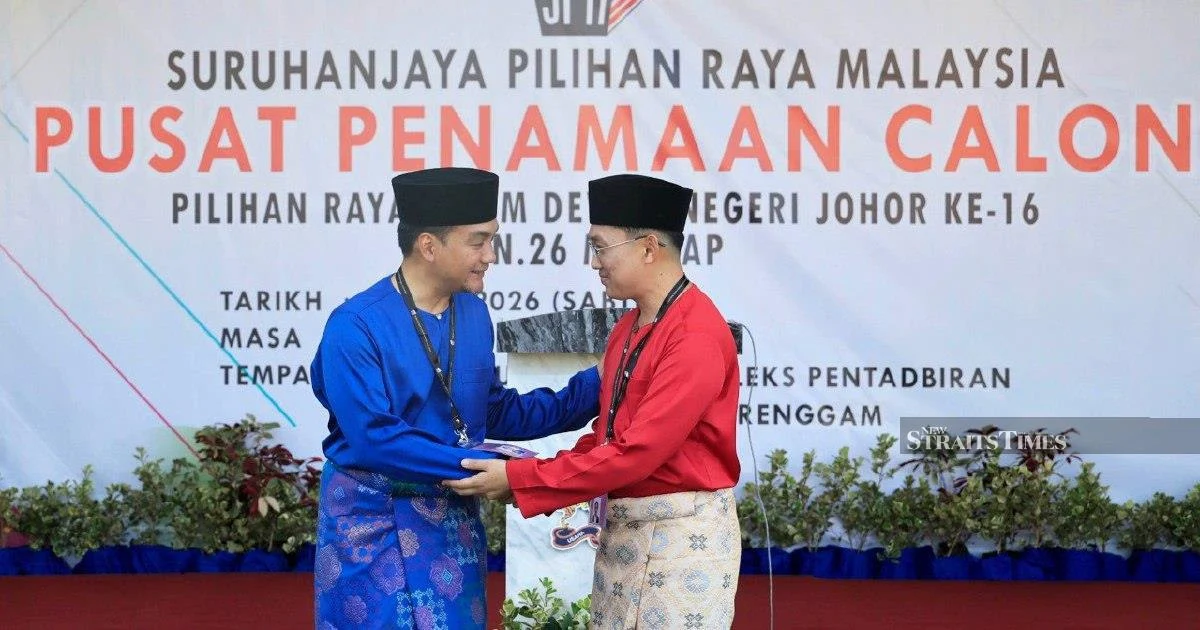
Caretaker Menteri Besar Datuk Onn Hafiz Ghazi has injected a note of caution into the Johor election campaign, emphasising that election outcomes cannot be predicted with certainty even as he pursues a second term in the July 11 polls. Speaking at Simpang Renggam, Onn Hafiz appeared to acknowledge the competitive nature of several constituencies, particularly highlighting the Machap seat where his own political fortunes will be tested.
The remarks from the caretaker chief minister reflect the emerging complexity of the Johor electoral landscape as polling day approaches. Rather than projecting confidence or certainty about results, Onn Hafiz adopted a more measured tone that recognises the volatility inherent in state-level contests. This approach stands in contrast to the often assured messaging typical of incumbent administrations heading into elections, suggesting either genuine concerns about specific constituencies or a strategic pivot toward managing public expectations.
Machap represents a particularly significant battleground in the Johor election. As the seat where Onn Hafiz is contesting, its outcome will carry substantial symbolic weight for both the Menteri Besar's political standing and his government's mandate for another term. The constituency's competitiveness has apparently prompted him to treat the race with considerable seriousness, moving away from assumptions of automatic victory in what was once considered a safe seat.
The broader context of Malaysian state politics has grown increasingly unpredictable over the past decade. Voter behaviour has become more fluid, with traditional party strongholds no longer guaranteed to deliver automatic majorities. Johor, despite its historical association with the Barisan Nasional, has experienced shifting political dynamics following the 2018 general election watershed and subsequent realignments. This volatility suggests that even established political figures cannot rely solely on institutional advantage or machinery.
Onn Hafiz's acknowledgment that "anything can happen" also reflects growing awareness among political leaders about the sophistication of modern voters. Electoral choices are increasingly driven by local issues, candidate quality, and performance records rather than purely by party affiliation or historical voting patterns. Constituencies that analysts might classify as safe can experience surprise outcomes when voters prioritise specific concerns over traditional party loyalty.
The July 11 Johor election will determine the composition of the state assembly and establish whether Onn Hafiz can consolidate his position as Menteri Besar. His tenure since taking office has involved navigating the complex political terrain of the state, where multiple competing interests and factions require careful management. A successful re-election would provide him with a stronger mandate, while a diminished majority could trigger internal party pressures and questions about his leadership.
For observers across Southeast Asia watching Malaysian political developments, the Johor election serves as a barometer of broader trends in democratic participation and political change. Malaysia's state-level contests often preview shifts that later materialise at the federal level, making electoral outcomes in major states particularly significant for understanding the nation's evolving political trajectory. Johor's status as the largest and most economically important state adds further weight to its political significance.
The caretaker Menteri Besar's campaign messaging thus far suggests a strategy of neither taking victory for granted nor conceding ground to opposition rivals. By publicly acknowledging uncertainty while continuing to campaign actively, Onn Hafiz appears to be attempting to energise the ruling coalition's machinery while avoiding overconfidence that could dampen voter turnout among his supporters. This careful calibration of expectations represents a sophisticated approach to managing political messaging during the campaign period.
As the campaign progresses toward July 11, the extent to which various constituencies remain genuinely competitive will become clearer through polling, voter sentiment analysis, and on-the-ground campaign activity. Onn Hafiz's comments suggest that his internal assessments have identified meaningful challenges in several areas, prompting a more cautious public stance than routine re-election campaigns might typically adopt. Whether this reflects realistic appraisal or strategic positioning will become evident once voting concludes and results are tallied.

