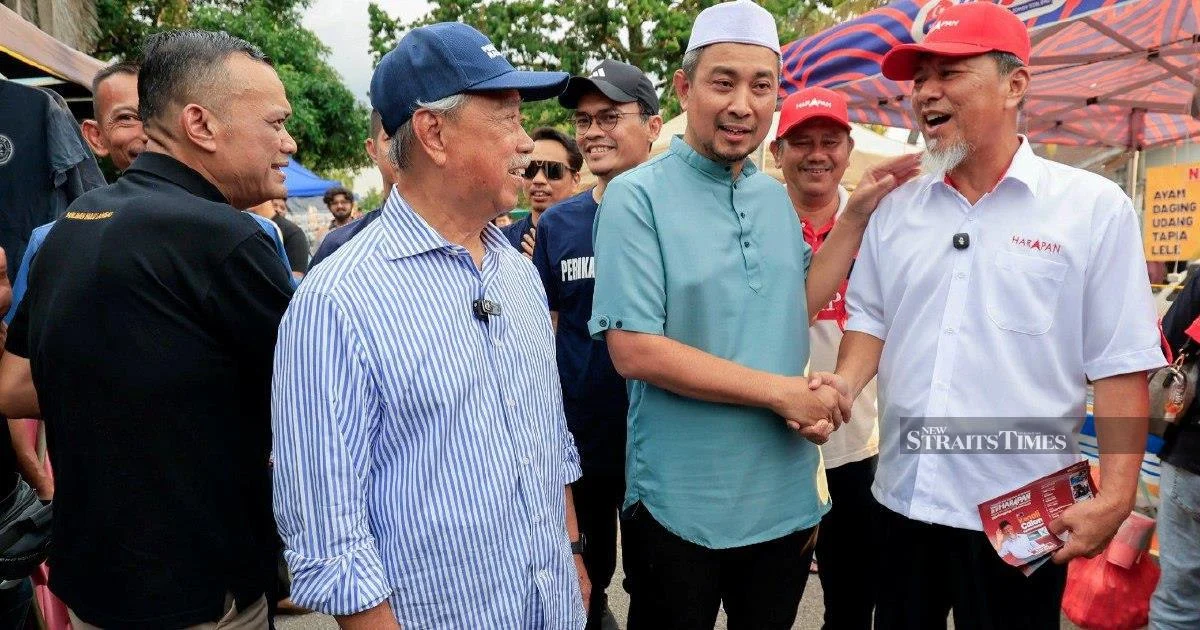
The Johor state election campaign took on a more personal dimension on the third day of polling activities when supporters and traders at the Taman Sri Pagoh night market witnessed an unscripted encounter between candidates representing competing political coalitions. The meeting between representatives from Pakatan Harapan and Perikatan Nasional as they worked their respective corners at the bustling evening market provided an intriguing glimpse into the ground-level dynamics of Malaysia's state-level electoral contests.
Night markets have long served as a cornerstone of Malaysian political campaigning, offering candidates direct access to voters across diverse socioeconomic backgrounds and demographics. The Taman Sri Pagoh night market, situated in the Pagoh parliamentary constituency, represents exactly the type of grassroots venue where electoral momentum is built or lost. These informal gatherings allow candidates to move beyond prepared speeches and engage in the kind of spontaneous conversations that often shape voter perceptions more effectively than formal campaign events.
The convergence of rival candidates at the same venue during active campaigning underscores the competitive intensity that characterises contemporary Johor politics. Both Pakatan Harapan and Perikatan Nasional have invested significantly in ground operations across the state, deploying their most experienced campaigners and mobilising party machinery to reach voters in their daily environments. The night market encounter exemplifies how the campaign has penetrated even the most routine spaces where ordinary Malaysians gather.
For night market traders and patrons, the unexpected convergence of political rivals offered a unusual form of entertainment amid their evening shopping and dining routines. Such unplanned moments can sometimes resonate more powerfully with voters than orchestrated campaign rallies, as they demonstrate a candidate's willingness to engage with constituents in authentic, unscripted settings. The informality of the night market environment means voters can assess candidates based on their genuine demeanour and engagement style rather than prepared presentations.
Johor elections carry particular significance within Malaysia's broader political landscape, as the state remains a crucial battleground between the two main political blocs. Control of state government determines not only policy direction on matters affecting Johor's 4.2 million residents but also shapes the political narrative at the national level. Both coalitions recognise that strong performance in the state translates into momentum for future federal elections and demonstrates their continued relevance to Malaysian voters.
The Pagoh parliamentary constituency, where this night market encounter occurred, has historically been competitive, reflecting the broader pattern of electoral volatility in urban and semi-urban Johor areas. These constituencies have witnessed shifting voting patterns in recent elections, as voters respond to both state-specific issues and national political developments. Candidates operating in such areas must address immediate local concerns—hawker regulations, market maintenance, local business development—while also connecting these issues to broader policy platforms articulated by their respective coalitions.
Pakatan Harapan's campaign strategy in Johor emphasises governance credentials and development delivery, highlighting infrastructure projects and social programmes initiated during periods of administration. Perikatan Nasional, conversely, leverages its positioning as an alternative to the status quo, appealing to voters seeking political change or expressing dissatisfaction with incumbent performers. These contrasting narratives play out across countless ground interactions like the night market encounter, where voters assess each candidate's authenticity and commitment.
The tactical deployment of candidates across night markets, coffee shops, and community centres represents an established feature of Malaysian electoral competition. Both major coalitions maintain sophisticated voter targeting and ground operation systems designed to ensure strategic placement of candidates in high-foot-traffic areas. However, the random intersection of rival candidates, as occurred in Pagoh, demonstrates that even carefully planned campaigns cannot entirely control the incidental moments that characterise electoral contests.
From a broader Southeast Asian perspective, Malaysia's state-level elections continue to demonstrate the region's appetite for competitive democratic processes. Unlike some neighbouring democracies where electoral competition has become constrained, Malaysian voters retain genuine choices between competing coalitions with distinct policy visions. The Johor campaign reflects this vitality, with both Pakatan Harapan and Perikatan Nasional investing substantial resources in persuading voters directly rather than relying on institutional advantages or constraints on opposition activity.
The implications of the Johor election extend beyond the state itself. Strong electoral performance enhances a coalition's claims to national relevance and strengthens the hand of state-level leaders in subsequent negotiations over federal resource allocation and policy direction. Conversely, disappointing results force political leaders to reassess strategies and messaging, potentially reshaping the composition and direction of their respective coalitions. The night market encounter, while seemingly modest, represents the countless interactions through which such electoral outcomes ultimately emerge.
For Malaysian political observers, the Johor contest presents an opportunity to assess how voters respond to competing visions of governance, development, and political leadership following recent experiences with various administrations. The engagement of candidates at grassroots venues like night markets provides voters with opportunities to evaluate leadership quality and responsiveness independent of media mediation or partisan interpretation. These direct encounters often prove more influential in shaping voting intentions than mass media campaigns.

