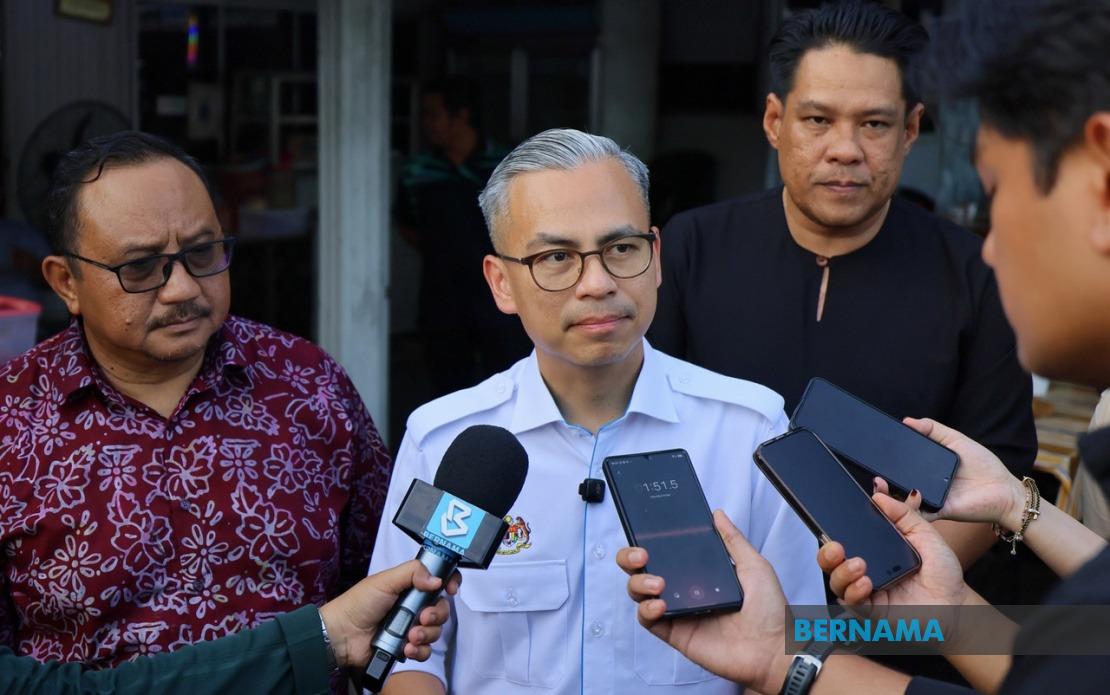
As Malaysia prepares for the Johor state election scheduled for July 11, Communications Minister Datuk Fahmi Fadzil has issued a pointed reminder to all participants in the democratic process: campaigns must be grounded in verifiable facts rather than character assassination and inflammatory rhetoric. Speaking at the Jiwa@Komuniti MADANI Casual Chat Programme in Taman Banang Jaya, Batu Pahat, Fahmi emphasised that the coming weeks demand a higher standard of political discourse, one that preserves the integrity of Malaysia's electoral tradition and upholds the nation's legal frameworks.
The minister's call takes on particular significance given the timing—nomination day falls immediately after his remarks, marking the formal launch of the campaigning period. In addressing both established political machinery and grassroots supporters, Fahmi has drawn a clear distinction between robust democratic debate and the kinds of unfounded allegations and personal attacks that can undermine public confidence in institutions. This framing reflects broader concerns across Southeast Asia about the quality of election campaigns in the digital age, where misinformation can spread rapidly before fact-checkers can respond.
Enforcement mechanisms are already in place to back these exhortations. The Election Commission and the Royal Malaysia Police have been explicitly tasked with taking legal action against any party or individual found breaching electoral regulations during the campaign period. This two-pronged approach—combining ministerial advocacy with regulatory teeth—suggests authorities recognise that appealing to decorum alone may not suffice in an increasingly fractious political environment. The willingness to pursue legal remedies sends a message that violations will carry genuine consequences.
The threat to Malaysia's electoral culture from misinformation extends beyond traditional slander to encompassing sophisticated disinformation campaigns. Recognising this reality, the Malaysian Communications and Multimedia Commission (MCMC) has partnered with social media platforms to strengthen monitoring systems designed to identify and block false narratives before they gain traction. Particularly sensitive are claims touching on the three pillars of the Malaysian social contract—Royalty, Religion, and Race—where inflammatory false claims can rapidly escalate communal tensions. This collaborative approach between government and private platforms acknowledges that controlling information flow in the digital sphere requires technical infrastructure beyond what any single agency can provide.
The infrastructure supporting the election extends to practical accommodations for media practitioners tasked with reporting on the campaign. Authorities have established a dedicated media centre in Johor Bahru while simultaneously ensuring that the National Information Dissemination Centre network operates in each State Legislative Assembly constituency. This distributed system allows journalists to file stories, conduct interviews, and access official information without being forced to travel long distances or work from informal arrangements. Such provisions reflect international best practice in supporting press freedom during elections, recognising that media access to reliable information sources reduces their reliance on secondary accounts and unverified claims.
Beyond campaign conduct, Fahmi has also turned his attention to underlying infrastructure challenges affecting the Johor electorate. Following feedback from Batu Pahat's Member of Parliament, Onn Abu Bakar, the minister has instructed MCMC to investigate complaints of internet disruptions and connectivity blind spots in the area. These technical issues have broader implications than mere inconvenience—unreliable internet access can disadvantage voters seeking information about candidates and policies, potentially skewing the information asymmetry in campaigns. By addressing these gaps, authorities aim to create a more level playing field where all voters can access comparable quantities of electoral information.
Onn Abu Bakar's participation in the event underscores how such forums can serve as direct channels between constituents and decision-makers. Rather than relying on formal complaint mechanisms that may languish in bureaucratic pipelines, the casual chat programme created an opportunity to escalate local grievances to ministerial attention. This model, if replicated throughout the state during the campaign period, could help identify and resolve concrete service delivery problems that affect voter experience, even if not directly related to campaign conduct itself.
The electoral timeline itself has been firmly established. Following the dissolution of the Johor State Assembly on June 1, nomination day comes immediately after Fahmi's remarks, with polling scheduled for July 11. This compressed schedule means the campaign period will be relatively brief—roughly two weeks from nominations closing to voting day. Within this window, the injunction to maintain factual standards becomes more consequential, as there is limited time for rebuttal and correction of false claims. The brevity of the campaign also means that the first few days, immediately following nomination, will be particularly critical in shaping media narratives and establishing the tone for subsequent weeks.
For Malaysian voters and observers of Southeast Asian democracy more broadly, the messaging emerging from this event reflects recognition that elections cannot be viewed purely as technical administrative exercises. The health of the democratic system depends significantly on the quality of debate preceding the vote. When campaigns descend into unfounded character attacks and misinformation, they not only disadvantage particular candidates but potentially erode public trust in the legitimacy of outcomes. By clearly articulating standards and committing enforcement resources, Fahmi and other authorities are attempting to prevent such degradation before it occurs.
The international dimension should not be overlooked. Malaysia's commitment to fact-based campaigning and the suppression of election-related misinformation sends signals about standards expected in an increasingly interconnected region. As other Southeast Asian democracies prepare their own elections in coming years, the approaches adopted in Johor may serve as either positive models or cautionary examples, depending on their effectiveness in maintaining campaign integrity while respecting freedom of expression. The challenge lies in achieving this balance—preventing deliberate falsehoods while avoiding censorship of legitimate criticism or unpopular opinions.
Looking ahead, success in this endeavour will depend on sustained commitment beyond ministerial rhetoric. Political party leaders must genuinely internalise and enforce these standards within their own campaign operations, disciplining candidates and volunteers who cross lines into slander or misinformation. Social media platforms must implement promised monitoring systems transparently and respond quickly to violations. The MCMC must act decisively but fairly against breaches. And voters themselves must cultivate media literacy, treating sensational claims with appropriate scepticism. Only through this collective effort can Malaysia achieve the healthy democratic campaign culture that Fahmi has articulated as essential.

