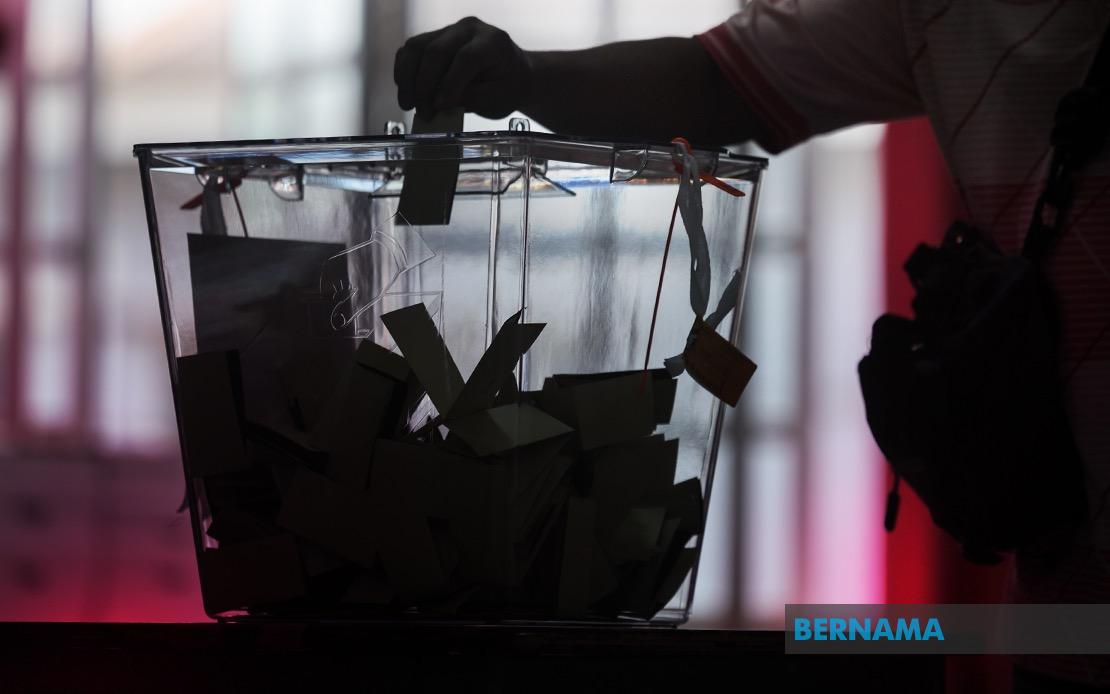
The turnout rates expected in Johor's 16th state election this Saturday may prove decisive for Pakatan Harapan's chances, according to political experts who see potential gains among outstation, young, and swing voters concentrated in urban and semi-urban areas. Associate Professor Dr Mazlan Ali from Universiti Teknologi Malaysia argues that when voter participation climbs, demographic groups that tend to support PH become more influential in determining electoral outcomes. The coalition has historically struggled when turnout remains depressed, particularly when voters who have relocated for work or study fail to return home to cast ballots.
Several macro-factors appear positioned to encourage higher participation this time around. The federal government's political stability, recovery in economic indicators, and ongoing support mechanisms including fuel subsidies and cash assistance programmes create conditions that may motivate voters—particularly those who have experienced these benefits—to participate in the electoral process. Mazlan suggests that supporters benefiting from current economic conditions possess a vested interest in maintaining the status quo, which could translate into mobilisation efforts to ensure they return home and vote. This sentiment particularly affects voters living outside Johor who remain registered in the state and thus retain voting rights there.
The 2022 Johor state election provides an instructive cautionary example. That contest featured a voter turnout just exceeding 50 percent, largely suppressed by pandemic-related travel restrictions and safety concerns. Under those depressed conditions, Barisan Nasional capitalised on its entrenched local support networks and deep community roots, securing 40 state assembly seats. Mazlan contends that BN's performance reflected not necessarily a broader ideological preference but rather the structural advantage that emerges when only committed local voters participate while mobile populations remain absent from the electorate.
The contrast between 2022's state election and the subsequent 15th General Election in December of that year illustrates how demographic composition shapes outcomes. When voter participation surged to approximately 75 percent in GE15, a markedly different picture emerged across Johor. Pakatan Harapan's popular vote share more than doubled, rising from roughly 350,000 votes in the earlier state poll to approximately 830,000 in the general election. This dramatic increase in support translated directly into parliamentary representation, with PH winning 14 Johor seats at the federal level. The mathematics here carry obvious implications for state-level contests: if comparable turnout is achieved and similar demographic patterns repeat, state assembly results could substantially favour PH candidates.
Urban and semi-urban constituencies represent the critical battleground where turnout dynamics will likely prove most consequential. Voters in these areas tend to respond more acutely to contemporary governance issues, policy performance affecting household economics, and PH's messaging centred on social justice and institutional fairness. These constituencies attract disproportionate numbers of what analysts term mobile voters—young professionals, degree-holders, individuals with family dispersed across Malaysia or abroad, and digitally engaged citizens. Such voters gravitate toward PH's narrative framework emphasising equitable distribution and rule of law rather than appeals rooted in communal or religious identity. When this cohort participates at higher rates, the balance of electoral competition shifts noticeably.
The demographic profile of typical PH supporters differs meaningfully from the base that sustains other parties. According to Mazlan's analysis, the coalition draws heavily from outstation voters, those genuinely uncertain about voting intentions, younger age groups, university-educated citizens, and individuals maintaining active digital presence and engagement. These populations remain more geographically dispersed than opposition supporters, who demonstrate stronger local attachment and community rootedness. The implication is straightforward: as outstation voters trek homeward to participate, they reliably contribute to PH-friendly voting patterns rather than splitting their support across options.
Pandemic legacies continue shaping electoral mathematics in ways that advantage higher-turnout scenarios. The 2022 election occurred while COVID-19 travel concerns persisted and government restrictions remained partially in effect, effectively suppressing the outstation vote. Those circumstances no longer exist. Voter sentiment appears to have shifted toward greater willingness to participate in-person without health-related hesitation. Mazlan notes this represents a fundamental change from two years prior, when many Johor-registered voters living elsewhere opted against returning home due to infection risks or inconvenience. The removal of these barriers could unleash participation among precisely the demographic that trends toward PH support.
Social media and digital mobilisation capabilities may amplify turnout gains among younger and urban voters. PH's messaging infrastructure demonstrates particular strength in reaching digitally native audiences through platforms where the coalition maintains active presence. As awareness of voting logistics spreads through social networks and group messaging platforms, younger voters living outside Johor receive practical facilitation to participate. This technological advantage accrues to whichever coalition successfully activates these channels—and PH's experience and apparent digital sophistication provide structural advantage in this domain.
The coalition's central challenge in campaign's final phases involves converting potential participation into actual voting. Knowing that outstation supporters exist and theoretically favour PH differs materially from ensuring they overcome practical obstacles to return home and cast ballots. Transportation logistics, accommodation costs, time away from work, and simple organisational friction can depress turnout among these voters despite their theoretical willingness. PH must therefore execute effective get-out-the-vote operations specifically targeting registered voters resident outside the state, communicating voting locations, dates, and procedures with sufficient clarity to enable participation.
The trajectory visible from recent elections suggests that Johor's political competitiveness depends centrally on which coalition successfully mobilises its natural base. When participation levels remain suppressed, local voters dominate and Barisan Nasional's establishment advantages manifest. When participation climbs toward general election levels, mobile demographics enter with greater force and Pakatan Harapan's competitive position strengthens substantially. This Saturday's turnout rate will therefore constitute the election's most meaningful variable, potentially determining outcomes across numerous contests where victory margins prove narrow. High participation would likely signify a more competitive and potentially PH-friendly result; depressed turnout would again favour BN's consolidated local support.

