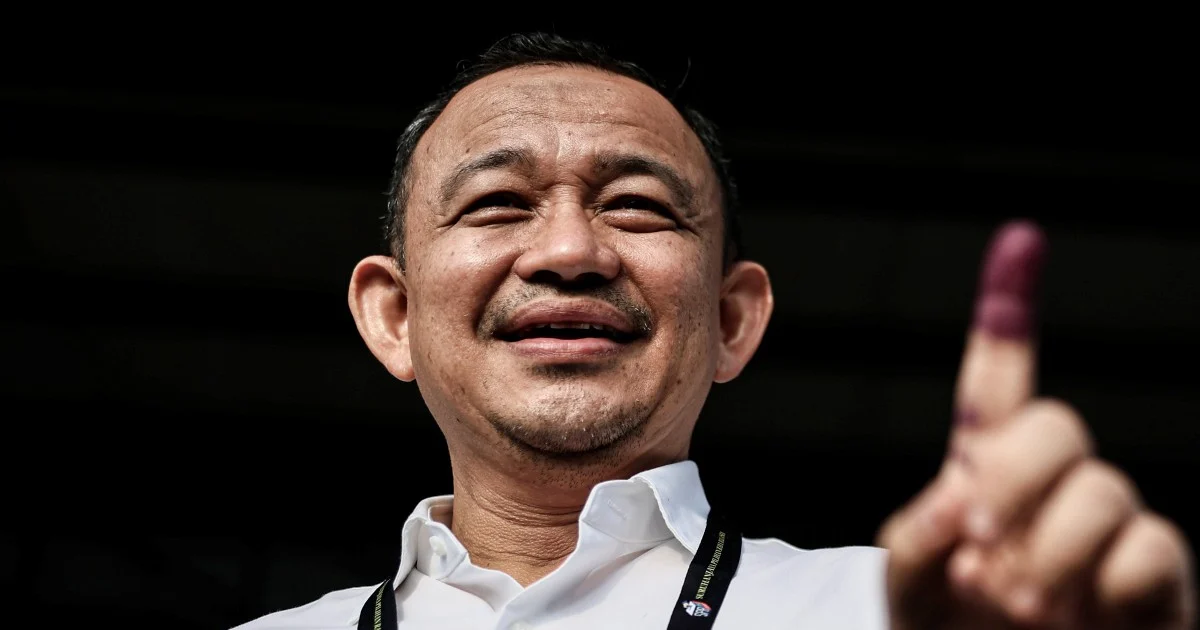
Dr Maszlee Malik, the former federal education minister and PKR figurehead, appears positioned to secure a historic breakthrough for his party in Johor's Puteri Wangsa constituency, signalling potential shifts in the political landscape of Malaysia's southern tier. Based on tallies from polling stations across the electoral division, the veteran politician has established a commanding lead that observers suggest could translate into a landmark victory for PKR—the first the component party of Pakatan Harapan has managed to claim in a Johor state election contest.
The development marks a notable milestone for the reformasi-aligned party, which has struggled to gain legislative foothold in Johor despite sustained organisational efforts. PKR's performance in the state has historically been overshadowed by its larger coalition partner DAP and by Amanah, which secured representation in previous contests. A Puteri Wangsa victory would demonstrate that the party's messaging and grassroots machinery have begun resonating with voters in a state that has long been regarded as a Barisan Nasional stronghold. The constituency itself, encompassing parts of the Johor Baru metropolitan area, represents territory where demographic shifts and urban voter preferences have gradually favoured opposition narratives around governance reform and economic management.
Beyond PKR's anticipated success, the broader electoral picture reveals a more consequential trend: Barisan Nasional's unexpected capacity to penetrate constituencies previously thought secure for Pakatan Harapan. This counter-intuitive development suggests that the traditional binary opposition versus incumbent framework governing recent Malaysian elections may be yielding to more granular, seat-by-seat considerations. Barisan's advances into PH-held terrain indicate that messaging around economic resilience, continuity, and development—core BN narratives in Johor—have gained traction even among voters in areas where opposition parties had cultivated stronger organisational presence.
The Johor election itself carries weight beyond state-level politics. As the first major electoral test since the formation of the current federal government and the reconstitution of coalition alignments at the centre, the results offer preliminary indicators about voter sentiment regarding the administration's handling of inflation, employment, and public service delivery. Johor, home to approximately 1.85 million registered voters and a diverse mix of urban, suburban, and rural constituencies, functions as a political barometer for Southeast Asia's most economically developed region. Results here typically foreshadow patterns that emerge during subsequent national elections or contest cycles in other states.
The strength of BN's penetration into opposition strongholds deserves careful examination. For years, analysts suggested that BN faced structural disadvantages in urban constituencies where younger, educated voters had grown more receptive to alternative political messaging. The apparent narrowing of this gap indicates either a reconversion of previously opposition-inclined voters or a renewed willingness among fence-sitting constituencies to accept BN candidates. This could reflect fatigue with opposition rhetoric, satisfaction with particular BN-led local governance initiatives, or broader economic sentiment shifts. Understanding whether this represents a durable realignment or a temporary tactical advantage will shape expectations for subsequent electoral contests.
Dr Maszlee's background adds particular significance to his apparent victory. Having served as education minister under the Mahathir-led PH administration from 2018 to 2020, he became a recognisable national figure—an asset that transcends typical state election dynamics. His defeat of BN competitors in Puteri Wangsa would demonstrate that former federal ministers can translate national profile into electoral advantage at state level, a lesson particularly relevant for opposition parties contemplating 2025 general election strategies. Additionally, the Puteri Wangsa result may influence internal PKR calculations regarding resource allocation and candidate selection in subsequent electoral cycles.
For Johor's incoming administration, these results establish the operational context for the next state government formation. Should BN secure the most seats, as preliminary indications suggest, the party will need to govern a legislature where opposition voices possess more substantial representation than in the previous state assembly. This could complicate the passage of certain legislation and elevate scrutiny of executive decision-making around land development, water management, and infrastructure contracting—traditional areas of contention in Johor politics. Conversely, the strength of opposition performance in specific urban constituencies may signal that future state governments will require more responsive policies on affordable housing, traffic management, and environmental protection.
Regional implications extend beyond Johor's borders. The election represents a data point in the broader pattern of Malaysian electoral competition following the 2022 general election, which produced no overall national majority and fractured the previous BN dominance. As states move through election cycles, parties are testing voter receptiveness to different coalition configurations and messaging strategies. Johor's results will inform party strategists across the peninsula regarding the viability of national realignments and the electoral potency of localised messaging relative to broader ideological positioning.
The apparent Maszlee victory also reflects the particular demographic and economic conditions of Puteri Wangsa's voters. The constituency encompasses residential areas with significant concentrations of service sector workers, small business operators, and professionals. These constituencies tend to respond positively to candidates who address specific quality-of-life concerns—public transport connectivity, hawker centre management, crime prevention—rather than abstract ideological frameworks. The fact that PKR's candidate succeeded in this environment suggests the party may have successfully adapted its communication strategy to resonate with pragmatic voter concerns rather than relying solely on broader reformist principles.
Moving forward, Johor's political trajectory will warrant continuous monitoring. If BN does form the next state government with independent or PKR support, the legislative arrangements will establish precedents for coalition governance that could influence federal-level calculations. Additionally, the apparent weakening of BN's dominance, even if the party retains the most seats, may accelerate intra-party discussions within UMNO about strategy adjustments and candidate renewal. The Puteri Wangsa victory for PKR, meanwhile, could energise the party's capacity to recruit talent and mobilise volunteers for future contests in the state.

