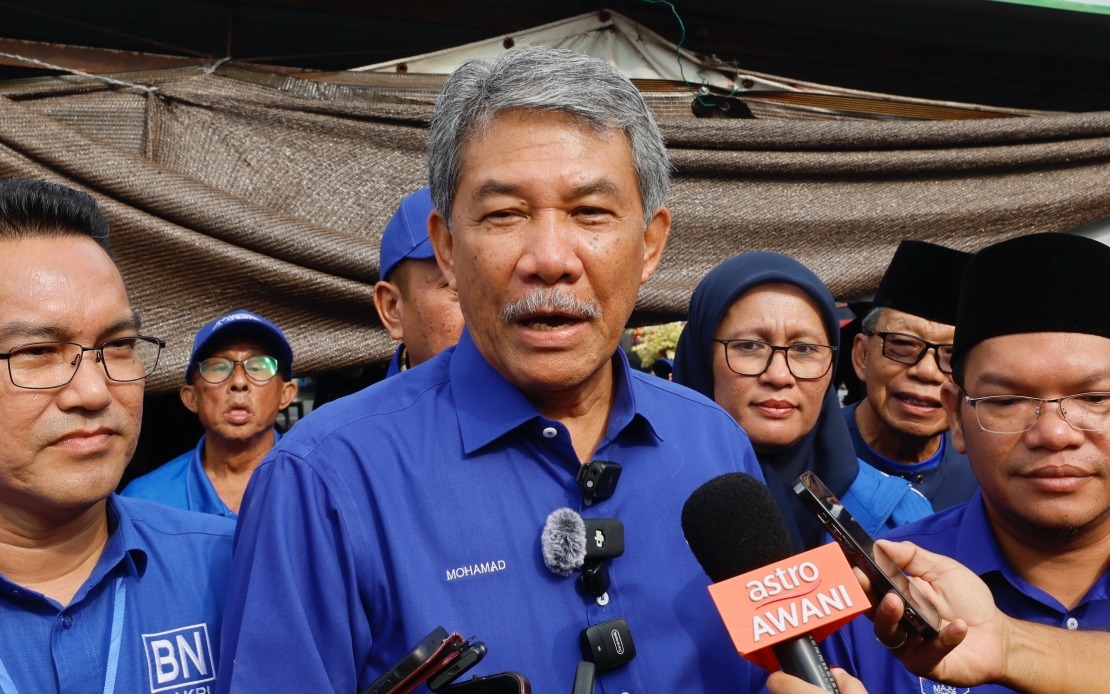
The Johor state election campaign demands a measured and dignified approach from all contesting parties, according to UMNO deputy president Datuk Seri Mohamad Hasan, who underscored the importance of preserving both political decorum and the delicate balance of Malaysia's federal governance structure. Speaking during a constituency engagement in Johor Bahru on the eve of the election, Mohamad stressed that whilst parties retain the right to articulate their policy platforms and electoral proposals, the intensity and tone of campaign rhetoric must not jeopardise the collaborative arrangements that underpin the Unity Government at the national level.
The distinction between competitive state-level politics and cooperative federal administration represents a nuanced challenge for Malaysia's coalition arrangement. Mohamad's intervention signals growing concern within UMNO that the adversarial nature of electoral campaigns could spill over into the legislative and executive partnerships that sustain the current federal coalition. His remarks suggest a calculation that unbridled campaign aggression, particularly involving personal attacks on political opponents, risks creating fractures in relationships between parties that must coordinate policy implementation and budgetary allocation across multiple government portfolios and constituencies.
Mohamad drew a clear line between acceptable political competition and the kind of personalised criticism that threatens coalition stability. He characterised good-natured political banter and policy disagreement as entirely compatible with maintaining productive working relationships across party lines at the federal level. The Foreign Minister's framing implied that the ability to separate institutional cooperation from electoral rivalry represents a hallmark of political maturity, particularly in a multiethnic and multiparty democracy where no single formation commands unchallenged dominance. His emphasis on prudence reflected awareness that campaign messaging resonates beyond immediate electoral audiences, influencing broader perceptions of governmental stability among investors, international partners, and ordinary citizens seeking predictability.
Contention surrounding allegations that the Johor election constitutes a preliminary manoeuvre to facilitate the release of former Prime Minister Datuk Seri Najib Tun Razak prompted clarification from Mohamad. He categorically dismissed suggestions that securing a state government majority would provide mechanisms for Najib's liberation, grounding his argument in constitutional architecture. A Menteri Besar, regardless of party affiliation or electoral mandate, possesses no institutional capacity to alter conviction outcomes or override judicial processes, powers that remain vested exclusively in federal authorities and ultimately reserved to the Yang di-Pertuan Agong as custodian of the prerogative of mercy.
This constitutional reality underscores Malaysian governance's layered separation of powers, where state executives operate within circumscribed authority boundaries. Mohamad's insistence on this distinction carries particular weight given Malaysia's history of institutional tensions and periodic conflicts between state and federal governments. His exposition served partly to delegitimise campaign narratives linking the election to matters beyond state government competence, thereby foreclosing what opposition parties might characterise as a backdoor strategy to address consequences of federal-level judicial processes through state-level political manoeuvres.
Moreover, Mohamad's references to Malaysia's commitment to the rule of law and institutional supremacy carried significance for maintaining investor confidence and international standing. The explicit reaffirmation that UMNO respects legal primacy, coupled with emphasis on constitutional propriety regarding the Yang di-Pertuan Agong's prerogative, positioned the ruling coalition as institutionally committed to governance norms rather than factional interest. For foreign observers and ratings agencies evaluating Malaysia's political stability, such reassurances matter considerably when assessing risks to economic and policy continuity.
The timing of these remarks assumes importance within the broader context of Malaysian electoral politics. Johor represents the federation's second-most populous state and maintains significant economic influence through its port facilities, manufacturing base, and position as a regional trading hub. State government outcomes therefore carry implications extending beyond Johor's boundaries, potentially affecting investor perceptions of stability throughout Southeast Asia's third-largest economy. Campaign conduct that raises concerns about federal governance integrity could impose measurable economic costs through delayed investment decisions, higher borrowing costs, and reduced consumer and business confidence.
The election itself presented logistical complexity and constitutional significance beyond routine state polls. One hundred seventy-two candidates across fifty-six state seats represented an intensely competitive field, increasing probabilities of heated exchanges and personal allegations as multiple formations competed for voter attention within constrained campaign periods. Early voting commencing immediately after Mohamad's remarks suggested an accelerated timeline that nonetheless provided opportunity for campaigns to escalate into more personalised territory as election day approached on July 11.
For Malaysian readers and Southeast Asian observers, the intervention highlighted tensions inherent in managing coalition governance during electoral cycles. Federal alliances inevitably experience strain when constituent parties compete for state-level power, particularly when electoral success provides opportunities to reshape ministerial appointments, resource allocation, and policy direction. The Unity Government's continued stability depends substantially on coalition partners internalising norms of acceptable competition—distinguishing between legitimate policy rivalry and destructive personal antagonism that threatens partnership viability.
Moreover, Mohamad's emphasis on electoral conduct speaks to evolving standards within Malaysian politics regarding campaign ethics and institutional respect. Successive elections have witnessed increasing social media activity, third-party campaigns, and viral content creation that frequently bypasses traditional media filters and editorial oversight. Calls for campaign prudence implicitly acknowledge that digital-age political communication presents challenges for maintaining message discipline and preventing escalation into personality-based attacks that traditional hierarchical campaign structures might previously have contained.
The distinction between criticising political opponents' policy positions and attacking individuals personally carries particular weight in Malaysia's multicommunal context, where campaign rhetoric carries potential for heightening ethnic or religious sensitivities. Mohamad's framing suggested awareness that personalised attacks risk mobilising identity-based political mobilisation that extends campaign conflicts beyond policy disagreement into more destabilising identity-based competition. Federal stability requires managing such dynamics carefully, particularly during transition periods when coalition arrangements remain relatively new and trust remains conditional.
As Johor voters prepared to cast ballots, the UMNO deputy's intervention represented an attempt at managing campaign temperature through appeals to institutional responsibility and enlightened self-interest. Whether contesting parties would heed such counsel remained uncertain, as campaign momentum typically strengthens incentives for competitive escalation rather than restraint. The test of whether Malaysia's political elite could successfully compartmentalise electoral competition from federal cooperation would unfold during the intensive final days before polling, with implications extending well beyond Johor's borders.

