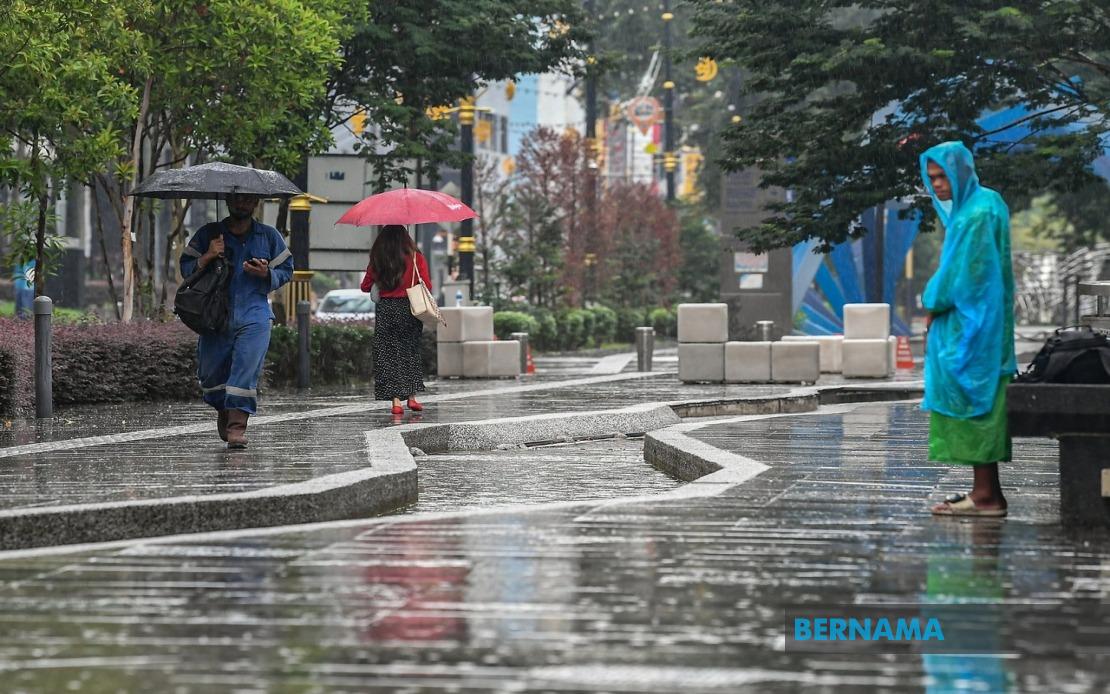
Wet weather will greet candidates and supporters on nomination day for the Johor state election on June 27, with the Malaysian Meteorological Department forecasting rainfall across more than two-thirds of the state. According to Azlai Ta'at, director of MetMalaysia's Johor office, the moisture-laden conditions will manifest themselves in Johor Bahru, Muar, Batu Pahat, Kota Tinggi, Pontian, Tangkak and Kulai throughout the morning hours. The three remaining districts—Segamat, Kluang and Mersing—are expected to enjoy clearer skies during the critical hours when candidates and their teams will be filing nominations at 56 centres statewide.
The meteorological outlook carries practical implications for the logistical choreography of nomination day. Proceedings are scheduled to begin at 9 am and conclude at 10 am, providing returning officers with a compressed window to process candidate submissions across the state's geographic expanse. The rain forecast introduces friction into these tightly scheduled operations, particularly for supporters who will need to travel to nomination centres and for the administrative staff managing the flow of documentation. Ta'at cautioned the public to monitor weather bulletins closely, acknowledging that sudden atmospheric shifts could compound challenges already inherent in coordinating such a large-scale electoral exercise across multiple venues simultaneously.
Temperature conditions will add another layer of climatic context to the day's proceedings. MetMalaysia expects minimum temperatures to fluctuate between 24 and 25 degrees Celsius across Johor, while maximum readings will reach between 31 and 34 degrees Celsius. Segamat is anticipated to record the highest temperatures, potentially climbing to 34 degrees Celsius. These thermal ranges, coupled with the predicted moisture, will create humid and potentially uncomfortable conditions for those navigating nomination centres, though the humidity typical of Johor's pre-monsoon season is hardly unusual during late June.
The afternoon period presents a different meteorological scenario, as MetMalaysia anticipates the development of thunderstorms across much of the state. Johor Bahru, Segamat, Kluang, Kota Tinggi, Pontian, Mersing and Kulai are forecast to experience thunderstorms, while Batu Pahat and Tangkak will see rain, and Muar is expected to remain hot and dry. This afternoon weather pattern assumes particular significance because the official campaign period is scheduled to commence immediately upon completion of the nomination process. Candidates who intended to launch campaign activities or hold public gatherings to capitalise on momentum immediately following their nominations will need to adjust plans in light of the thunderstorm forecast.
The 16th Johor state election represents a significant political contest in Malaysia's most developed and economically strategic state. Pakatan Harapan has committed to contesting all 56 seats, with PKR fielding 20 candidates, Amanah 19 and DAP 17. Barisan Nasional is similarly fielding candidates across all 56 constituencies, comprising 36 from UMNO, 16 from MCA and four from MIC. This bipartisan commitment to full-slate participation underscores the competitive nature of the contest and the perceived stakes involved for Malaysia's two dominant political coalitions.
Perikatan Nasional's approach reflects its position as a secondary force in Johor politics. PAS will contest 11 seats while Bersatu, the coalition's anchor party, will field 16 candidates. The Malaysian Indian People's Party will contest five seats and Pejuang one. Beyond these established coalitions, the Malaysian United Democratic Alliance will contest four seats and Parti Sosialis Malaysia one seat, while Parti Bersama Malaysia is making its electoral debut with 15 candidates. This fragmented opposition landscape, spread across multiple coalitions and independent parties, contrasts sharply with the unified approaches of Pakatan Harapan and Barisan Nasional, potentially affecting vote distribution patterns across the state.
The Election Commission has calibrated the electoral timeline with early voting scheduled for July 7 and polling day set for July 11. This roughly two-week interval between nomination and the actual election will allow campaigns sufficient duration to gain traction, though the compressed nature of state elections typically means sustained intensity from announcement through to voting day. Campaign teams will need to accelerate their ground operations immediately to maximise limited time for voter persuasion and mobilisation activities.
The electorate for this contest comprises 2,727,926 registered voters distributed across Johor's constituencies. Of these, 2,703,175 are ordinary voters, while 12,041 are military personnel and spouses, and 12,710 are police personnel and spouses. The inclusion of security force votes introduces complexity into campaign calculations, as these voters operate under specific institutional and electoral frameworks distinct from civilian electorates. Understanding the geographic distribution and preferences of these constituencies within Johor's 56 state seats will be material to coalition strategists assessing likely outcomes.
For Malaysian electoral observers and political analysts, the Johor contest holds significance beyond the state itself. As the nation's most populated state and its economic powerhouse, Johor's electoral verdict carries implications for federal-level coalition alignments and the broader trajectory of Malaysian politics. The performance metrics for Pakatan Harapan and Barisan Nasional in this contest will provide early indicators of voter sentiment as Malaysia edges toward its next federal election. Perikatan Nasional's participation, meanwhile, signals its determination to establish firmer footing in peninsular state politics following mixed electoral experiences since its formation.
The weather forecast, whilst seemingly a minor logistical consideration, symbolises the unpredictable variables that influence electoral processes beyond campaigns and messaging. Nomination day weather patterns can affect voter perception of candidate enthusiasm and organisation, influence media coverage narratives, and impact turnout-related momentum heading into the official campaign period. The forecast rain and afternoon thunderstorms will test the operational resilience of all contesting parties while introducing narrative elements that campaign teams will need to navigate.

