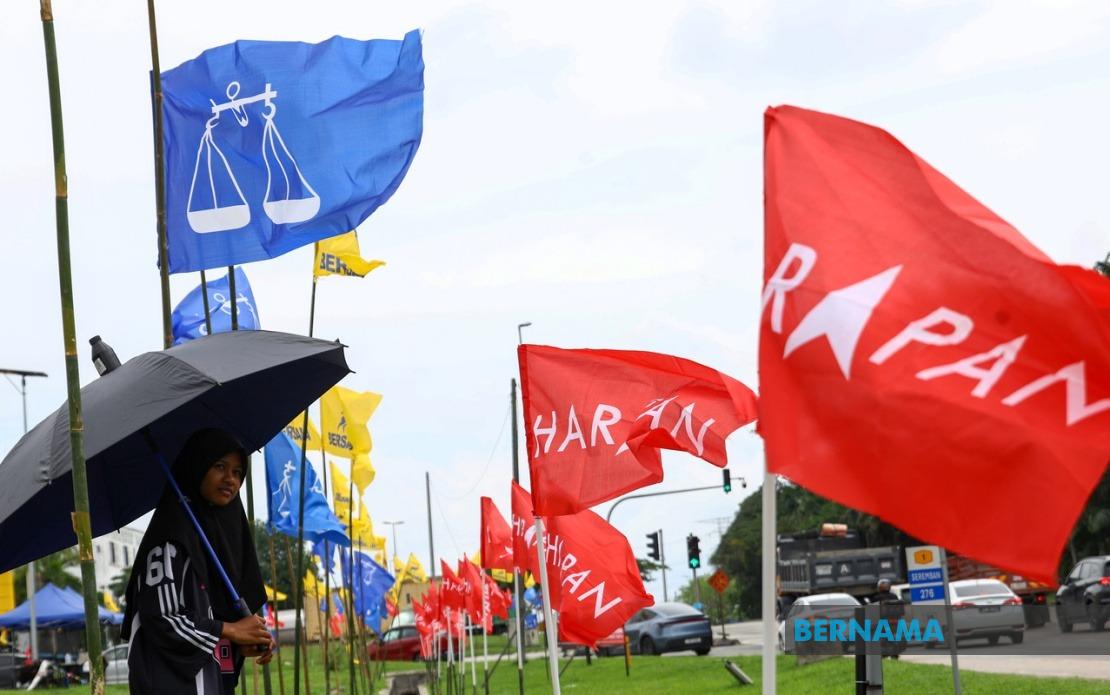
The campaign for Johor's 16th state election has crystallised around two fundamentally different political playbooks. As voters prepare to cast ballots on Saturday, July 11, the competing coalitions—Pakatan Harapan and Barisan Nasional—are deploying strategies that reflect their respective strengths and the evolving nature of electoral politics in Malaysia. With all 56 seats contested and 172 candidates in the race, the election represents a crucial test of voter sentiment in a state that remains a bellwether for national political trends.
Pakatan Harapan's campaign architecture rests on a substantive policy platform rather than personality-driven appeals. The coalition has launched a manifesto titled "Johor For All", which prioritises concrete interventions addressing the immediate economic pressures facing ordinary Malaysians. The emphasis falls squarely on cost-of-living relief, wage growth, affordable housing access, and human capital development. This approach reflects a strategic calculation that voters are increasingly concerned with tangible outcomes rather than grand visions or rhetorical flourishes. By framing development not merely in terms of investment inflows or gross domestic product expansion, but rather through the lens of wage adequacy, employment quality, and social welfare guarantees, PH is attempting to reshape how Johor's economic narrative is understood and evaluated.
According to Dr Mohammad Tawfik Yaakub from Universiti Malaya, PH's messaging carries an implicit critique of past governance paradigms. The coalition argues that economic growth divorced from widespread household benefit represents an incomplete picture of progress. Instead, PH contends that development metrics should ultimately translate into improved living standards for ordinary citizens. This positioning allows the coalition to acknowledge Johor's economic achievements while simultaneously arguing that these gains have not been equitably distributed or effectively translated into better employment conditions, housing affordability, or retirement security for the broader population.
Barisan Nasional, by contrast, has chosen to leverage human capital and organisational machinery as its primary campaign assets. The coalition has strategically deployed two significant political returns: former UMNO vice-president Datuk Seri Hishammuddin Tun Hussein and former UMNO Youth chief Khairy Jamaluddin have rejoined the party through the 'Rumah Bangsa' initiative and are actively campaigning across Johor. These reappearances represent calculated bids to reconstitute BN's political coalition and address specific voter segments that the coalition has struggled to reach in recent electoral cycles.
The strategic logic underpinning BN's approach assumes that these high-profile returns carry sufficient political magnetism to reverse recent electoral setbacks and revitalise party grassroots. Hishammuddin's deep roots in Johor—where his influence remains substantial—potentially positions him to restore confidence among UMNO supporters who have grown distant from or disillusioned with the party in recent years. Similarly, Khairy's consistent popularity among younger demographics addresses a demographic vulnerability that has plagued BN's performance, particularly in urban centres and among first-time voters.
Yet political analysts caution that the contemporary Malaysian voter operates within significantly different decision-making frameworks than in previous electoral eras. According to Assoc Prof Dr Mohd Yusry Ibrahim from the Ilham Centre and Universiti Malaysia Terengganu, voter sophistication has increased markedly. Citizens no longer respond passively to celebrity endorsements or the mere presence of recognisable political personalities at campaign events. Instead, voters now evaluate candidates based on multiple criteria: policy coherence, candidate credibility, institutional track records, and demonstrated responsiveness to community concerns. The shift represents a maturation of electoral behaviour that complicates purely personality-driven campaigns.
The differential appeal of these two approaches may ultimately determine the election's outcome. PH's policy-centric strategy attempts to capture voters motivated by specific, measurable commitments regarding wages, housing, and economic distribution. This approach risks appearing overly technical or abstract to voters seeking emotional connection or historical reassurance from familiar political figures. Conversely, BN's emphasis on prominent personalities could mobilise traditional party loyalists and swing voters attracted to individual leaders, yet this strategy may fail to adequately address substantive policy questions from increasingly discerning electorates.
Demographic considerations further complicate the electoral dynamics. Young voters, in particular, exhibit voting patterns characterised by fluidity rather than inherited partisan loyalty. This generation gravitates toward public figures they find credible and relatable, rather than toward parties or coalitions based on family tradition or historical identification. Khairy's consistent resonance with younger voters positions him as a potential bridge between BN and a demographic group that has drifted away from the coalition over successive election cycles. Yet even this advantage proves contingent on whether his presence translates into concrete policy offerings that younger voters perceive as addressing their specific concerns.
The Johor election occurs against a backdrop of broader Malaysian political recalibration. The state has historically functioned as a proving ground for competing national coalitions, and its electoral verdict carries implications extending well beyond state-level governance. A PH victory would suggest that policy-focused campaigns centred on economic equity and living standards can overcome BN's organisational advantages and traditional supporter networks. Conversely, a BN success would validate the continued potency of personality-driven politics and suggest that strategically deployed political figures can regenerate coalition support despite recent electoral losses.
Campaigning has intensified across the state as both coalitions mobilise resources in the election's final week. The contrast between their respective approaches—substantive policy platforms versus prominent political personalities—represents a genuine ideological and strategic divergence about how Malaysian politics should operate and what voters fundamentally value. This competition between competing visions of political engagement will likely shape electoral strategy not merely in Johor, but across subsequent Malaysian elections as both coalitions assess which approach resonates most effectively with contemporary electorates.
Early voting commenced on July 7, allowing specific categories of eligible voters to cast ballots prior to the main polling day. The election will determine not only Johor's state government but also provide critical data about voter preferences and the comparative efficacy of contrasting campaign methodologies. Whether Malaysian voters ultimately prefer policy specificity and economic equity messaging over personality and institutional continuity remains an open question that the Johor result will help answer.

