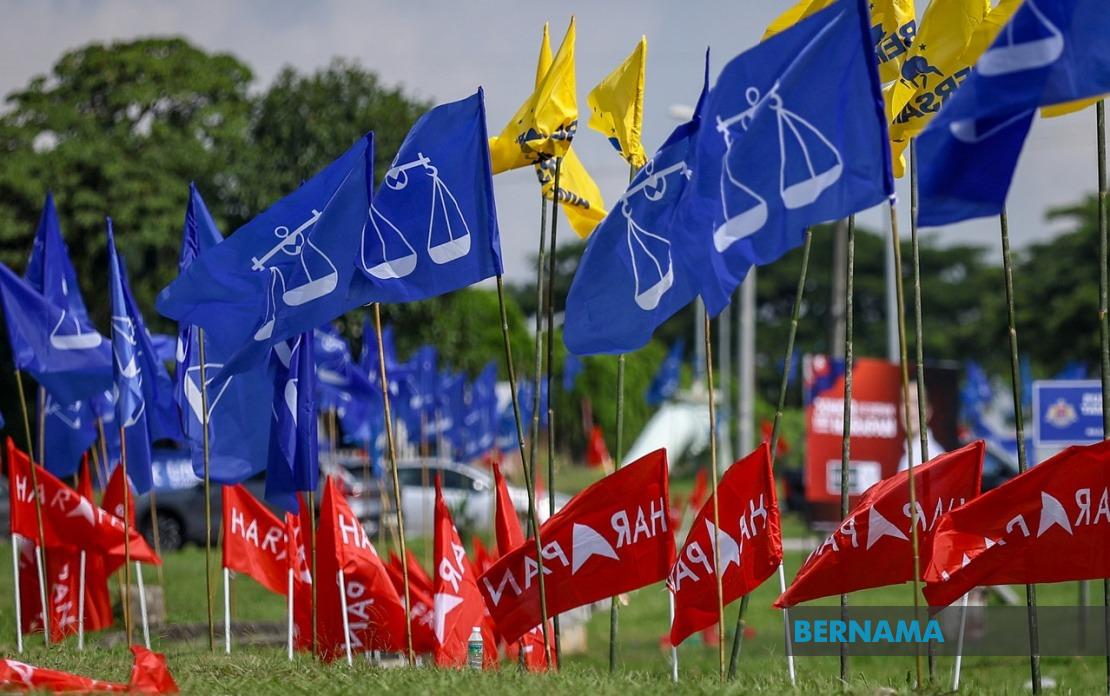
Pakatan Harapan launched a substantially developed manifesto for the 16th Johor state election on July 3, marking a serious attempt to disrupt the ruling Barisan Nasional's long-held positioning as the guarantor of state stability. Academic observers suggest that the opposition coalition's platform goes beyond typical campaign rhetoric, directly confronting voter anxieties about employment, housing costs, living standards, and institutional integrity—concerns that cut across demographic lines throughout the southern state.
Assoc Prof Dr Mazlan Ali from Universiti Teknologi Malaysia's Social Sciences and Humanities Faculty characterised the "Johor For All" framework as a sophisticated response to fundamental governance questions. He emphasised that the four pillars—decent employment, affordable housing, improved quality of life, and governmental integrity—represent core issues that consistently emerge in public opinion research. These are not aspirational abstractions but practical matters affecting daily household decisions, from transport costs to healthcare access. The structuring of a campaign around such tangible concerns indicates a strategic calculation that undecided voters remain persuadable through substantive policy proposals rather than partisan loyalty alone.
What distinguishes PH's approach, according to Mazlan, is the apparent grounding of pledges in demonstrated administrative capacity. The Unity Government's economic stewardship at the federal level—reflected in ringgit strengthening, increased foreign direct investment inflows, and improved trade metrics—provides a foundation for claims that the coalition possesses the institutional competence to execute state-level promises. This matters significantly in Johor, where voters have grown accustomed to BN's emphasis on developmental continuity and predictable governance. By pointing to measurable economic indicators, PH attempts to reframe the debate away from abstract governance philosophy toward concrete outputs.
Yet the manifesto's numerical commitments remain ambitious. PH has pledged to establish a RM500 million youth fund, construct 80,000 affordable housing units, guarantee healthcare protection schemes, and generate 250,000 high-paying employment opportunities. Mazlan suggested these targets are achievable provided genuine coordination materialises between a potential PH state government and the federal administration in Kuala Lumpur. Such vertical integration—where state and federal bureaucracies work in tandem rather than at cross-purposes—has historically been a challenge in Malaysian federalism. However, under a Unity Government arrangement where the same coalition dominates both levels, the institutional friction typically observed during periods of divided governance could theoretically diminish.
The psychological dimension of specific, quantified targets deserves particular attention. Undecided voters—who constitute the genuine battleground in Johor—evaluate political parties not through ideological consistency but through demonstrated competence in policy delivery and programme execution. When voters encounter large numbers attached to concrete promises, they simultaneously assess credibility. Implausibly inflated targets generate scepticism, while modest goals signal lack of ambition. PH appears to have calibrated figures that appear challenging yet non-fantastical, a calculation that could appeal to pragmatically minded electors who care more about track records than rhetoric.
Dr Nazreena Mohammed Yasin from Universiti Tun Hussein Onn Malaysia widened this analytical frame by highlighting a critical vulnerability in PH's position: voter perception of implementation capability. An opposition party inherently struggles with credibility deficits when making elaborate governance promises because voters cannot directly observe their administrative competence in the contested domain. Barisan Nasional's decades-long stewardship of Johor provides it with an established institutional narrative. Citizens can point to roads built, schools constructed, and development projects completed. BN's longevity has transformed its administrative record into a form of political capital that new administrations struggle to replicate.
For PH to overcome this incumbent advantage, Nazreena stressed that the coalition must move beyond manifesto content toward demonstrating the granular details of implementation. Voters increasingly demand to understand not merely what will be done but how, by whom, within what timeframe, and with what financial allocation. Manifestos that articulate ambitious goals without accompanying implementation frameworks risk being dismissed as aspirational rather than operational. This is particularly crucial in Johor, where cross-border economic dynamics and sophisticated voter sophistication in urban areas like Johor Bahru mean that electorate assessments of governance capacity tend toward critical rigor.
The cross-border dimension warrants particular emphasis in evaluating PH's appeal to Johor voters. Nazreena highlighted that proposals to reduce border waiting times by fifty percent and enhance public transport connectivity resonate directly with the substantial commuting population moving daily between Malaysia and Singapore. This constituency—increasingly visible in Johor's economic profile—possesses acute awareness of comparative administrative efficiency. Singaporean governance standards, whether regarding infrastructure maintenance or service delivery speed, function as a regional benchmark. PH's commitment to reducing friction in cross-border movement therefore connects to lived experience rather than abstract policy preference.
Similarly, the pledge to cultivate 250,000 high-value employment opportunities within digital economy, artificial intelligence, and advanced manufacturing sectors speaks directly to generational aspirations, particularly among younger Johor residents. Malaysia's broader digital economy ambitions have faced implementation challenges in peripheral states. A state government deliberately targeting high-wage sector development could theoretically accelerate Johor's transition from traditional manufacturing and agricultural bases toward knowledge-intensive industries. However, execution remains contingent upon coordinated federal-level support through infrastructure investment, research institution development, and talent attraction initiatives—another area where state-federal synchronisation becomes critical.
Barisan Nasional's response to this manifesto challenge remains rooted in its incumbent status and demonstrable track record. The ruling coalition will likely emphasise continuity, risk mitigation, and proven execution capacity. This positioning holds particular force in Johor, where voters may be reluctant to exchange known administrative patterns for untested alternatives, regardless of manifesto attractiveness. Developmental outcomes—real roads, hospitals, schools—constitute more tangible governance evidence than campaign promises, however detailed and specific.
The electoral calendar now accelerates toward decision point. Early voting occurred on July 7, with the main poll scheduled for July 11. The intervening days will determine whether PH's manifesto successfully translates detailed proposals into voter persuasion or whether Barisan Nasional's stability narrative continues to dominate Johor political imagination. The outcome will likely hinge less on manifesto comprehensiveness than on voter confidence that Pakatan Harapan possesses both the administrative machinery and political will to execute its elaborate commitments. In this sense, the election becomes a referendum not merely on policies but on whether voters believe the opposition coalition has matured into a governance alternative rather than remaining a collection of protest movements.

