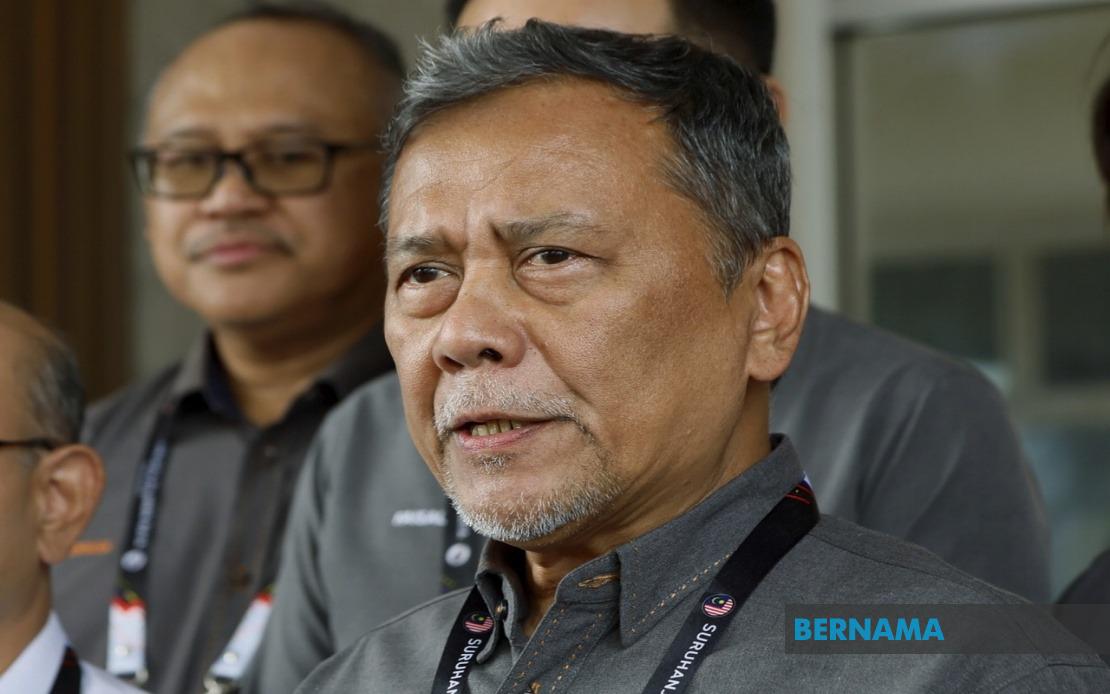
The Election Commission has fielded nearly 600 allegations of electoral misconduct during the campaign period leading up to Saturday's Johor state election, signalling widespread monitoring of compliance with campaign conduct rules. Speaking at a press conference in Kluang on July 7, EC Chairman Datuk Seri Ramlan Harun disclosed that 588 complaints involving various election offences had reached the commission as voting preparations entered their final stretch. The volume of reports underscores the intensity of scrutiny applied to political activities in one of Malaysia's most electorally significant states, where competition for the 56 state assembly seats has been notably contested.
Among the complaints received, the EC has escalated 44 cases to police for formal investigation, indicating that a subset of the alleged violations warranted criminal inquiry. Additionally, three separate matters have been referred to the Malaysian Anti-Corruption Commission, pointing to concerns about potential graft or unethical financial conduct during campaign activities. These referrals highlight the overlapping regulatory frameworks that oversee electoral processes, with multiple enforcement bodies coordinating to maintain the integrity of the democratic exercise. The distribution of complaints across different agencies reflects the commission's assessment that some alleged offences fell outside purely electoral violations and touched on broader misconduct issues.
The election authority's vigilance extended into the early voting phase, with EC leadership and military officials personally monitoring polling centres to ensure procedural correctness. On the same day as Ramlan's announcement, the Army Chief, General Tan Sri Azhan Md Othman, accompanied the EC chairman on a tour of early voting stations, including facilities at the Kluang District Police Headquarters and Kem Mahkota. This high-level oversight reflected the institutional importance placed on conducting the election transparently and securing public confidence in the process, particularly among uniformed personnel whose involvement in electoral participation requires special safeguards against undue influence.
The early voting exercise itself drew participation from nearly 21,000 individuals entitled to cast ballots before the official polling day. This group comprised 8,544 members of the Malaysian Armed Forces and their spouses, alongside 12,063 police officers and their dependents. The provision of advance voting for security force personnel and their families addresses a logistical reality: these voters face potential deployment or duty obligations on the main election day and require alternative arrangements to exercise their franchise. The smooth administration of early voting across multiple centres served as a practical test of the election machinery's readiness for the broader exercise scheduled for the following Saturday.
The 16th Johor state election represents a significant political contest, with 172 candidates seeking to represent constituencies across the state. The high number of aspirants relative to the 56 available seats suggests competitive contests in many areas and reflects the stakes involved in controlling Johor's state government. As Malaysia's second-largest state by population and a traditional stronghold for major political movements, Johor elections carry implications extending beyond state boundaries, often serving as indicators of broader shifts in the national political landscape. The scale of candidate participation also creates administrative complexity for the EC in managing campaign conduct across diverse constituencies and ensuring compliance with electoral rules.
The nature of complaints reaching the commission during campaign periods typically spans a wide spectrum. Common allegations include breaches of campaign finance regulations, unauthorised campaign materials, improper use of government resources, voter intimidation, and false political advertising. The fact that nearly 600 complaints emerged during this campaign suggests either heightened vigilance among voters and party workers in reporting infractions, genuinely elevated levels of misconduct, or more likely a combination of both. In polarised electoral environments, competing camps often scrutinise each other's activities closely and lodge complaints promptly, creating administrative volume that reflects political competition as much as actual breaches.
The referral of some cases to the MACC signals the commission's recognition that electoral violations can intertwine with corruption concerns. Campaign financing irregularities, for instance, may constitute both election law breaches and corrupt practices depending on whether funds derive from illegal sources or are disbursed in exchange for improper favours. The tripartite coordination between the EC, police, and MACC ensures that different aspects of alleged misconduct receive appropriate investigation by the agency best equipped to pursue each line of inquiry. This institutional separation of enforcement responsibilities helps prevent the politicisation of electoral oversight, though critics argue that fragmented enforcement can sometimes create gaps in accountability.
For Malaysian voters and observers, the volume of complaints provides mixed signals about election health. On one hand, robust reporting mechanisms and active enforcement suggest the system possesses mechanisms to detect and address violations. On the other hand, the sheer number of allegations raises questions about whether the regulatory framework adequately deters misconduct or whether parties view penalties as acceptable costs of aggressive campaigning. The translation of complaints into actual prosecutions or sanctions remains unclear from the initial disclosure, and the ultimate outcomes of these cases would substantially determine whether the complaint-handling machinery functions as an effective deterrent.
Johor's election unfolds within a broader context of electoral management in Southeast Asia, where questions about democratic fairness increasingly influence international perceptions of political legitimacy. Malaysia, as a regional democratic example, faces scrutiny regarding how effectively it administers elections and addresses misconduct. The EC's public acknowledgement of complaint volumes and referrals to enforcement agencies demonstrates transparency in process, though the substantive outcomes matter more than procedural visibility. For Malaysian voters and international observers, the key measure will be whether the 588 complaints translate into meaningful accountability and whether the election's result commands broad acceptance as legitimate.
The election machinery's preparation extended beyond complaint management and early voting administration. The scale of operations required to deliver a state election across diverse communities demanded coordination among numerous agencies and careful logistical planning. The presence of senior military and EC leadership at early voting centres conveyed official seriousness about election administration, though some observers questioned whether military participation in monitoring polling activities raised concerns about perceived influence. Saturday's main polling day would test whether the preparations translated into smooth operations across all 56 constituencies and whether voters could participate freely without hindrance or intimidation. The commission's advance disclosure of complaint numbers set a transparent baseline for assessing post-election claims about misconduct, allowing the public to evaluate whether subsequent allegations aligned with documented patterns.

