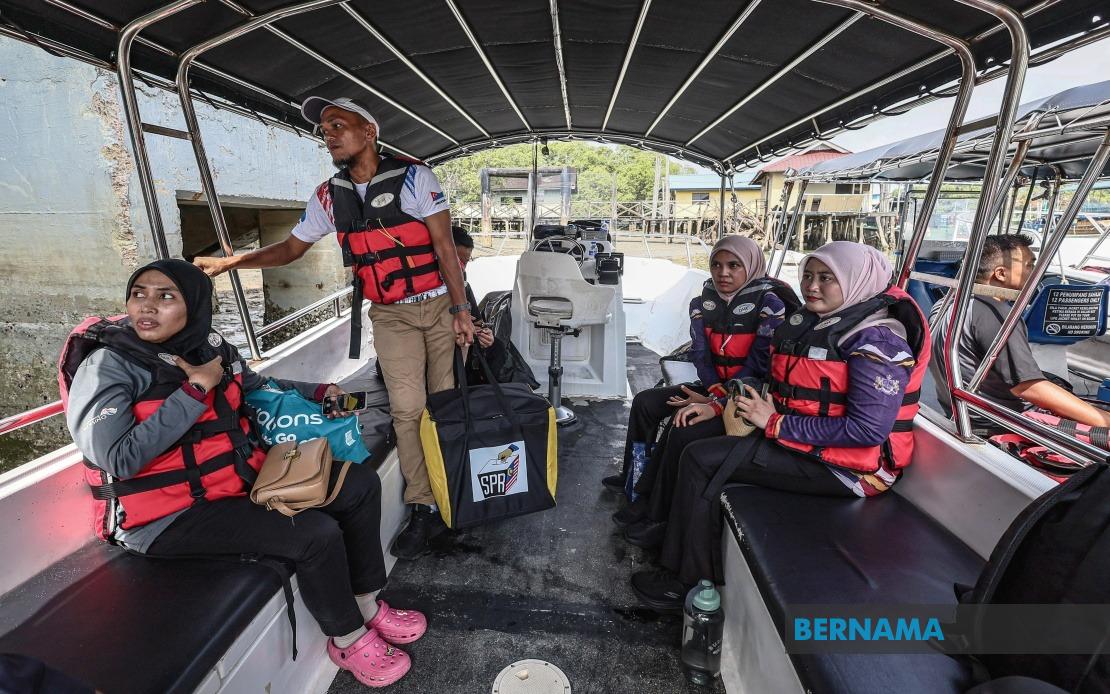
The 16th Johor State Election delivered an unexpected economic windfall for small business enterprises throughout the state, as the electoral process generated substantial demand for transportation and catering services. Beyond its primary purpose of determining the state's political direction, the polling day mobilised thousands of voters and created commercial opportunities for entrepreneurial Malaysians operating in the maritime and food sectors. Boat operators, in particular, found themselves managing a surge in bookings as island residents made their way to voting centres, whilst food vendors strategically positioned near polling stations witnessed unprecedented foot traffic and sales volumes.
Mustakim Shafie, a 35-year-old entrepreneur operating Island Eagle Boat Services & Island Hopping, observed that his business operations pivoted seamlessly between servicing election officials and accommodating civilian passengers. On polling day itself, his six-vessel fleet transported approximately 50 different voter groups back to their home islands to participate in the election. The demand surge proved substantial enough that his company's daily bookings effectively doubled compared to ordinary operating conditions, demonstrating how electoral events can inject temporary but significant revenue into niche transport sectors. His pricing structure, offering three-day charter packages between RM4,000 and RM4,500 alongside one-way services at approximately RM2,500 for up to 18 passengers, reflected the premium nature of maritime transport services in the region.
The maritime transport industry's reliance on environmental factors became particularly pronounced during electoral operations. Hasrul Azmin Jumaat, a veteran boat operator with more than two decades of navigational experience, emphasised that unpredictable weather patterns and sea conditions represented the most significant operational challenge throughout polling day. His expressed concern about securing safe passage for passengers highlighted the inherent risks that accompany island-to-mainland transportation, particularly the lengthier journeys exceeding two hours to reach destinations such as Pulau Aur, a 76-kilometre voyage that demands experienced seamanship and favourable atmospheric conditions.
Food service providers positioned near polling centres experienced equally compelling commercial success. Ismail Mad Hasim and his wife Faradila Fairuz Mohd Affandi operated a food stall adjacent to Sekolah Kebangsaan Taman Sutera, a location that proved strategically advantageous for capturing voter traffic. Their establishment began serving customers from 8 am onwards, with early-morning voter turnout providing the initial surge in demand. The couple drew parallels to their experiences during the General Election, suggesting that polling events consistently generate reliable commercial opportunities for food vendors willing to position themselves near electoral venues.
Despite prioritising their commercial obligations, these husband-and-wife entrepreneurs maintained their commitment to democratic participation by voting at the same polling centre where they operated their business. This dual engagement—simultaneously conducting commerce whilst fulfilling civic duties—characterised the experience of many small business operators navigating election day. Their willingness to suspend trading operations to exercise their voting rights demonstrated how Malaysian small business owners balanced entrepreneurial ambitions with broader responsibilities to the electoral process.
The 16th Johor State Election engaged more than 2.6 million registered voters across the state, a voter population large enough to generate substantial economic activity throughout the jurisdiction. This electoral scale ensured that transportation demand would remain consistently elevated throughout polling hours, sustaining bookings for boat operators and ensuring continuous customer flow for food vendors. The size of the electorate effectively transformed a single polling day into a meaningful commercial event for service-oriented enterprises.
For maritime operators specifically, the electoral cycle offers valuable supplementary income beyond routine passenger and logistics transport. The focused, predictable demand surge provides boat service companies with advance notice of upcoming commercial activity, enabling them to mobilise their assets efficiently and plan personnel schedules accordingly. Unlike weather-dependent variations or seasonal tourism fluctuations, electoral bookings represent a calendar-based revenue opportunity that operators can anticipate and prepare for systematically.
The economic benefits extended across multiple service segments simultaneously. Boat operators managed transportation logistics while simultaneously managing election-related demands, effectively operating at heightened capacity throughout the day. Food vendors experienced compressed demand cycles, with concentrated customer arrivals around voting windows, yet captured sales volumes that exceeded typical daily performance. This multiplier effect—where electoral activity simultaneously benefits diverse small business categories—underscores how political processes generate broader economic circulation within local communities.
From a broader economic perspective, Johor's election-driven commercial activity represents the kind of demand stimulus that benefits grassroots entrepreneurs who typically operate outside formal commercial sectors. These small business operators lack the infrastructure for sustained marketing or the capital reserves to weather extended downturns, making episodic revenue spikes from major civic events particularly significant for their annual earnings and business sustainability. Electoral cycles thus serve an unintended but measurable role in supporting Malaysia's small and medium enterprise ecosystem.
The convergence of electoral participation and economic opportunity also reflects the interconnected nature of Malaysian society, where political engagement and commercial enterprise remain intertwined across state jurisdictions. As Johor voters completed their participation in the democratic process, the economic reverberations continued flowing through local business ecosystems long after polling stations closed at 6 pm. For boat operators and food vendors, election days represented not merely commercial opportunities but essential revenue-generating events that contribute meaningfully to their annual business performance and household incomes throughout the state.

