Johor's ambitious education restructuring project is moving beyond mainstream schools to incorporate the religious education sector, marking a significant expansion of a reform programme originally championed by the Regent of Johor, Tunku Mahkota Ismail. The state government has given the green light for construction of the inaugural Sekolah Agama Rintis Bangsa Johor (SARBJ) in Kota Iskandar, extending a model that has already proven its worth in conventional primary and secondary institutions across the state.
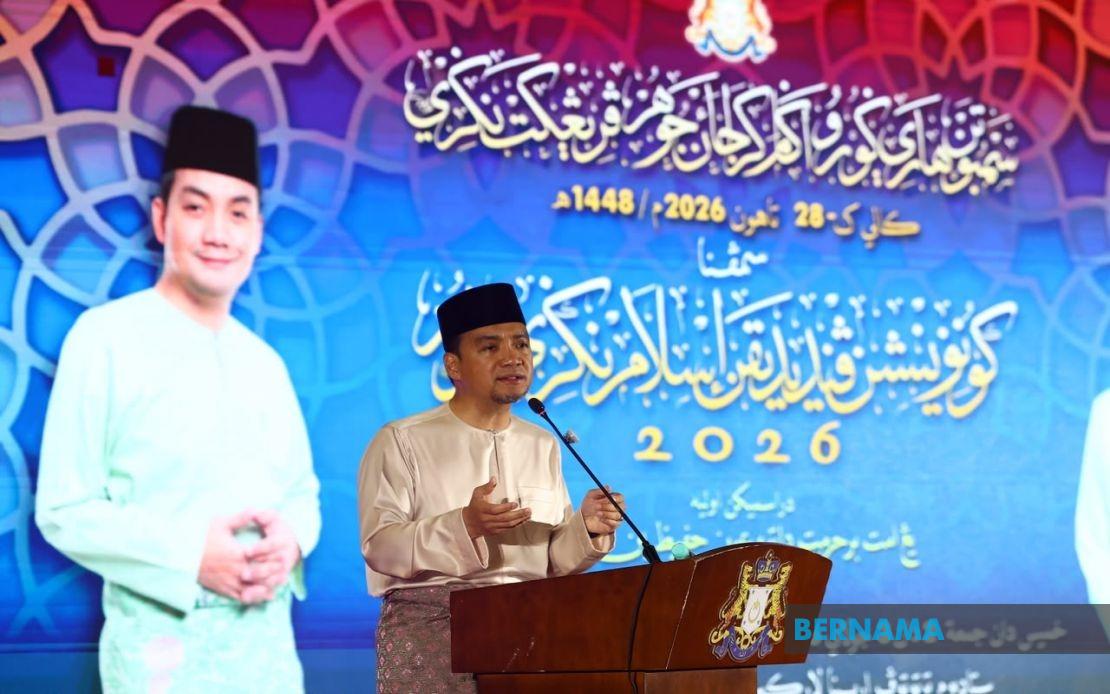
Menteri Besar Datuk Onn Hafiz Ghazi articulated the strategic vision underpinning this expansion during the 28th Johor Government Religious Teachers' Day celebration held at Arena Larkin Indoor Stadium. He described the broader Sekolah Rintis Bangsa Johor (SRBJ) framework as a comprehensive overhaul of the state's education infrastructure, designed to address modern learning demands while maintaining the cultural and religious foundations that anchor Malaysian society. The initiative reflects growing recognition among state-level policymakers that educational excellence cannot be compartmentalised into secular and religious streams, but must represent an integrated ecosystem serving diverse student populations.
The SRBJ initiative currently operates four pilot institutions across Johor: Sekolah Menengah Kebangsaan Seri Kota Puteri 2 and Sekolah Kebangsaan Seri Kota Puteri 4 in Pasir Gudang, alongside Sekolah Menengah Kebangsaan Tasek Utara and Sekolah Kebangsaan Tasek Utara in Johor Bahru. These schools represent a deliberate experimental approach to pedagogy and institutional management, allowing education administrators to test innovations before broader rollout. The diversity in school types—spanning both primary and secondary levels—provides valuable comparative data on how these reform measures perform across different student age groups and developmental stages.
The pedagogical framework underpinning SRBJ schools emphasises interconnected competencies essential for twenty-first century learners. Digital literacy sits at the core, recognising that Malaysian students must achieve technological fluency to remain competitive in knowledge economies. Multilingual proficiency represents another foundational pillar, acknowledging Johor's position within a globalised Southeast Asian context where facility in multiple languages opens economic and cultural pathways. Character development—encompassing ethical reasoning, social responsibility, and resilience—addresses concerns that conventional schooling has under-prioritised non-cognitive skills. Teacher empowerment mechanisms ensure educators possess professional autonomy and continuous development opportunities, while infrastructure investment guarantees schools command learning facilities comparable to private institutions.
The extension into religious education constitutes a philosophically significant move within Malaysia's education landscape. Religious schools occupy a distinct institutional position, serving populations whose parents specifically value faith-informed instruction alongside academic rigour. By importing SRBJ methodologies into this sector, Johor authorities signal that educational modernisation need not conflict with religious pedagogy; rather, the two can reinforce each other when properly conceived. This positioning could influence how other states approach religious schooling, particularly if SARBJ performance outcomes demonstrate that contemporary teaching approaches enhance rather than dilute religious education's distinctive character.
State Islamic Religious Affairs Committee chairman Mohd Fared Mohd Khalid announced the SARBJ approval, positioning it as a natural complement to the government's existing efforts to systematise and elevate religious education delivery. This ministerial backing proves crucial—it signals that religious education reform has achieved legitimacy within the broader cabinet structure and reflects coordination across multiple government portfolios rather than isolated initiatives. Johor's approach contrasts with some state governments where religious and mainstream education develop along largely separate trajectories with minimal institutional cross-pollination.
Anticipated expansion into early childhood education through a pilot kindergarten programme suggests the government envisions SRBJ principles as applicable across the entire educational lifespan. Early childhood interventions represent high-return investments in human capital development, with research consistently demonstrating that quality pre-primary experiences yield significant long-term academic and social outcomes. By extending SRBJ methodology downward through the education system while simultaneously broadening it across religious institutions, Johor is constructing an intentional ecosystem where reform principles permeate multiple institutional contexts simultaneously.
For Malaysian education policymakers, Johor's trajectory warrants close observation. The state effectively functions as a reform laboratory, testing whether comprehensive modernisation can occur within existing institutional structures without wholesale replacement. Success in Johor could generate replicable models for other states grappling with how to enhance education quality amid resource constraints and competing political pressures. Conversely, implementation challenges or uneven results might illuminate the structural barriers that prevent educational transformation at scale within Malaysia's federal system.
The involvement of police leadership—represented by Johor police chief Datuk Ab. Rahaman Arsad at the religious teachers' gathering—hints at broader security considerations surrounding education. Malaysian authorities increasingly recognise that educational quality, institutional credibility, and community cohesion represent preventive factors against recruitment into extremist narratives. By improving religious school facilities, teacher quality, and pedagogical approaches, the government simultaneously strengthens institutions that serve as anchors for social stability and religious moderation.
Regionally, Johor's initiative reflects patterns visible across Southeast Asia where state governments attempt educational modernisation while preserving cultural and religious identities. Thailand, Indonesia, and the Philippines have pursued analogous reforms seeking to upgrade teaching quality and learning outcomes in religious educational institutions. Johor's specific configuration—combining digital literacy, multilingualism, character development, teacher empowerment, and infrastructure investment—represents a holistic framework that other Southeast Asian jurisdictions may find instructive.

