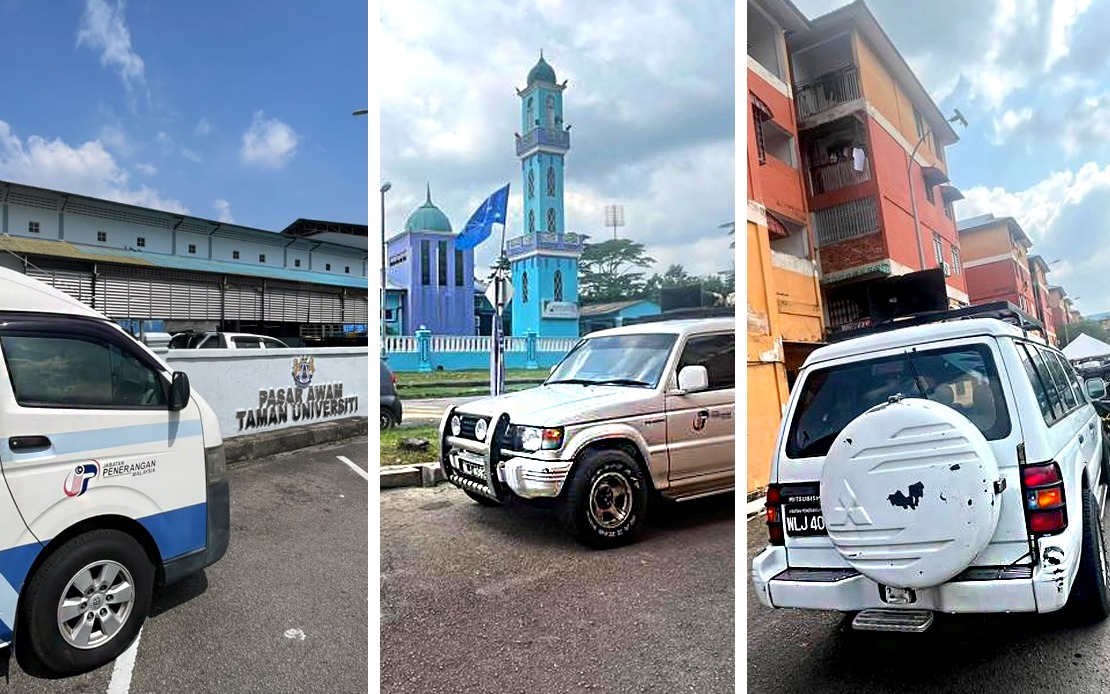
Johor's Department of Information (JAPEN) is ramping up its grassroots engagement effort with the full deployment of 26 Info On Wheels (IOW) mobile units ahead of the 16th Johor state election, aimed at bolstering voter participation and ensuring citizens access reliable, official election information. The fleet will cover all 10 districts and 56 state constituencies throughout the southern state, representing a comprehensive attempt to reach voters across diverse communities and geographical areas before polling day this Saturday.
According to Johor JAPEN director Mohd Rizal Hashim, the department's strategy reflects a deliberate shift from passive information provision to proactive public engagement. Rather than waiting for citizens to seek out election-related details, JAPEN personnel are actively moving into communities to deliver crucial messaging directly. This on-ground approach recognises that information gaps, particularly among rural and underserved populations, can significantly affect voter turnout and informed decision-making at the ballot box.
The mobile units will concentrate on high-density urban centres, residential neighbourhoods, and rural settlements, with particular attention to Felda communities and Orang Asli villages. This targeted deployment acknowledges the diverse demographic composition of Johor's electorate and the varying levels of access to official communications across different areas. Urban residents with strong internet connectivity may easily access election information online, whereas residents in remote settlements often depend on door-to-door outreach and public announcements.
Mohd Rizal emphasised that messaging intensity will escalate dramatically in the three days preceding polling, with announcements concentrated during morning and evening peak hours when residents are most likely to be attentive. These final reminders will focus on practical voter information: confirming individual voter registration status, clarifying polling locations, and reinforcing the importance of early planning to avoid last-minute logistical obstacles. Such timing reflects electoral research showing that voter turnout benefits significantly from last-minute prompting and removal of procedural confusion.
The information campaign pursues two interconnected objectives that extend beyond basic electoral logistics. First, JAPEN aims to ensure that official Election Commission directives regarding dates, voter verification procedures, and voting reminders penetrate throughout Johor's population, minimising instances where citizens miss polling opportunities due to simple information failure. Second, and perhaps equally critical, JAPEN personnel will conduct direct advocacy activities specifically targeting the spread of false information and inflammatory rhetoric that characteristically escalates during election periods.
This counter-misinformation dimension addresses a growing challenge across Malaysian electoral contests. Social media platforms enable rapid dissemination of unverified claims, doctored images, and divisive accusations that can distort public discourse and undermine confidence in electoral legitimacy. By positioning information officers as trusted sources conducting face-to-face conversations, JAPEN seeks to establish credibility that can inoculate voters against persuasion by misleading digital content. The department's emphasis on providing "verified facts" signals an explicit commitment to factual accuracy as a public service during an inherently contested political period.
Mohd Rizal articulated a broader philosophical framework underlying the campaign, characterising voting not merely as a constitutional right but as a civic responsibility that fundamentally shapes Johor's trajectory. This framing carries particular weight in Malaysia's context, where electoral participation rates and democratic engagement have periodically attracted concern from observers and policymakers. By emphasising that voting decisions determine economic direction, development priorities, and public welfare outcomes over the succeeding five-year term, JAPEN attempts to elevate voter participation beyond mere procedural compliance to something emotionally and materially consequential.
The election itself represents a significant moment for Johor's political landscape and broader regional dynamics. State elections in Malaysia's second-largest state by population carry implications extending beyond local governance, often reflecting and influencing national political trends. Voter turnout, campaign conduct, and electoral outcomes frequently receive scrutiny from federal policymakers, international observers, and analysts monitoring Malaysian democratic health. JAPEN's mobilisation effort thus carries broader symbolic weight regarding institutional commitment to enabling informed, participatory electoral processes.
The deployment of 26 mobile units reflects substantial resource allocation by Johor's state government, signalling priority attached to voter education and engagement. Such resource commitment contrasts with minimal or token information efforts in some electoral contexts, though questions may arise regarding whether this represents standard practice across Malaysian states or a particularly ambitious initiative unique to Johor. The scale of the operation—covering all 56 state constituencies with dedicated mobile infrastructure—suggests a comprehensive conception of institutional responsibility for citizen participation.
Mohd Rizal's explicit warning about social media vigilance speaks to anxieties shared across Malaysian political circles regarding digital misinformation's electoral effects. While traditional media outlets operate under regulatory frameworks and professional editorial standards, social media platforms enable anonymous or pseudonymous actors to circulate inflammatory content without accountability mechanisms. Voters encountering false claims in their social feeds may lack ready means to verify accuracy, particularly if misinformation exploits existing prejudices or anxieties. JAPEN's positioning of information officers as real-world counterweights to digital falsehoods acknowledges that institutional credibility and human interaction may offer some resistance to viral misinformation.
The emphasis on a "peaceful and harmonious environment" for voting carries particular resonance in Malaysian electoral contexts, where concerns occasionally emerge regarding communal tensions exacerbated by campaign rhetoric. Official rhetoric promoting harmony reflects genuine institutional commitment to preventing electoral processes from catalysing intercommunal conflict, though the effectiveness of government information campaigns in constraining inflammatory political speech remains debatable. Nevertheless, the explicit framing suggests official awareness that election periods can amplify divisive messaging if left unchecked.
As Johor's election approaches, JAPEN's mobilisation represents a concrete institutional effort to expand voter access to reliable information and counteract digital misinformation through direct human engagement. Whether such ground-level campaigns significantly influence turnout, voter awareness, or electoral outcomes remains an empirical question that analysts will assess following the election's conclusion. The initiative nevertheless demonstrates institutional commitment to supporting informed citizen participation, a foundational element of functional democratic governance.

