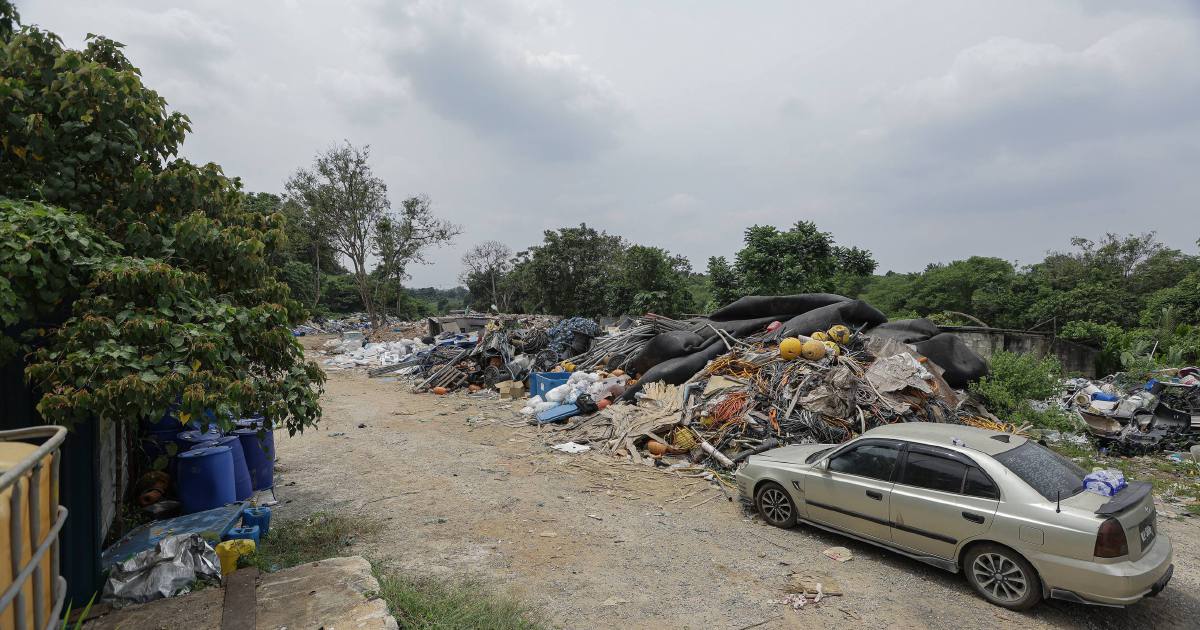
Johor authorities are taking decisive action against what officials describe as systematic dumping of construction waste originating from Singapore, with the state government forming a dedicated task force to examine the scope and origins of the materials allegedly deposited across Pontian district.
The decision to establish a coordinated, multi-agency investigative unit represents a significant escalation in the state's response to environmental complaints that have mounted in recent months. By pooling expertise and enforcement authority across multiple government bodies, Johor officials aim to build a comprehensive understanding of how much waste has been deposited, where exactly it originated, and what pathways enabled its illegal transport across the border.
Pontian, which sits directly across from the western end of the Johor Strait separating Malaysia from Singapore, has emerged as a focal point for these concerns. The district's geographic proximity to Singapore, combined with its mix of industrial zones and land available for development, appears to have made it vulnerable to such activities. Environmental activists and local residents have reported finding materials consistent with construction debris—concrete fragments, metal scraps, and other industrial byproducts—at multiple unauthorised dumping sites throughout the area.
The establishment of this task force underscores growing tensions between the two neighbouring economies over waste management and environmental stewardship. Singapore, despite being one of Asia's wealthiest and most developed nations, faces significant challenges in managing the enormous quantities of construction waste generated by its dense urban development and continuous infrastructure renewal. With limited land suitable for landfills within its own borders, experts have long identified cross-border waste movement as an ongoing concern for Malaysian states nearest to the island nation.
From a practical standpoint, the investigation will likely examine whether individual operators or organised syndicates are orchestrating the dumping, and whether Singapore-based construction companies or waste management firms are complicit in the process. The task force's work will probably involve tracing waste shipments, identifying their point of departure in Singapore, documenting the methods of transport used to cross the border, and establishing legal liability for those involved. Such investigations are notoriously complex, requiring coordination between Malaysian enforcement agencies and potentially intelligence sharing with Singaporean authorities.
The implications extend beyond Pontian itself. Johor sits on Malaysia's southern edge and maintains extensive trade and commerce ties with Singapore. Any large-scale environmental degradation or public health risks from improperly managed waste could trigger diplomatic friction and complicate bilateral negotiations on other fronts. For Malaysian residents, the situation raises fundamental questions about environmental accountability in the region and whether wealthier nations effectively outsource their waste management problems to neighbouring countries with lower enforcement capacity or weaker regulatory frameworks.
The scientific and public health dimensions of the alleged dumping are equally serious. Unregulated construction waste often contains hazardous materials—asbestos, lead paint, chemical residues—that leach into soil and groundwater over time. Pontian's agricultural lands and water resources could be threatened if contamination spreads unchecked. The local population, many of whom depend on fishing, farming, or small-scale industries, faces potential economic and health consequences that may not manifest fully for months or years.
For Malaysian authorities at both state and federal levels, this moment represents an opportunity to demonstrate that cross-border environmental violations will trigger serious consequences. If the task force's investigation produces clear evidence of responsibility and leads to prosecutions or diplomatic representations to Singapore, it may deter future attempts at illegal dumping. Conversely, if investigations stall or produce inconclusive results, it could embolden further illicit waste disposal and suggest that the regulatory deterrent is weak.
The case also highlights a broader Southeast Asian challenge: how to manage waste streams in an era of rapid development when nations like Singapore generate construction debris faster than domestic disposal systems can accommodate. Malaysia, Indonesia, and other regional neighbours have increasingly become destinations for waste from more developed economies, not always by choice or transparency. Johor's willingness to establish this task force suggests a shifting appetite among Malaysian officials to resist being treated as an environmental dumping ground.
Moving forward, the investigation's findings will likely inform Johor's regulatory approach to waste imports and cross-border dumping more generally. The state may push for stricter border inspections, enhanced penalties for violation, and formal agreements with Singapore on waste management standards and responsibility. Such measures could become models for other Malaysian states facing similar pressures.

