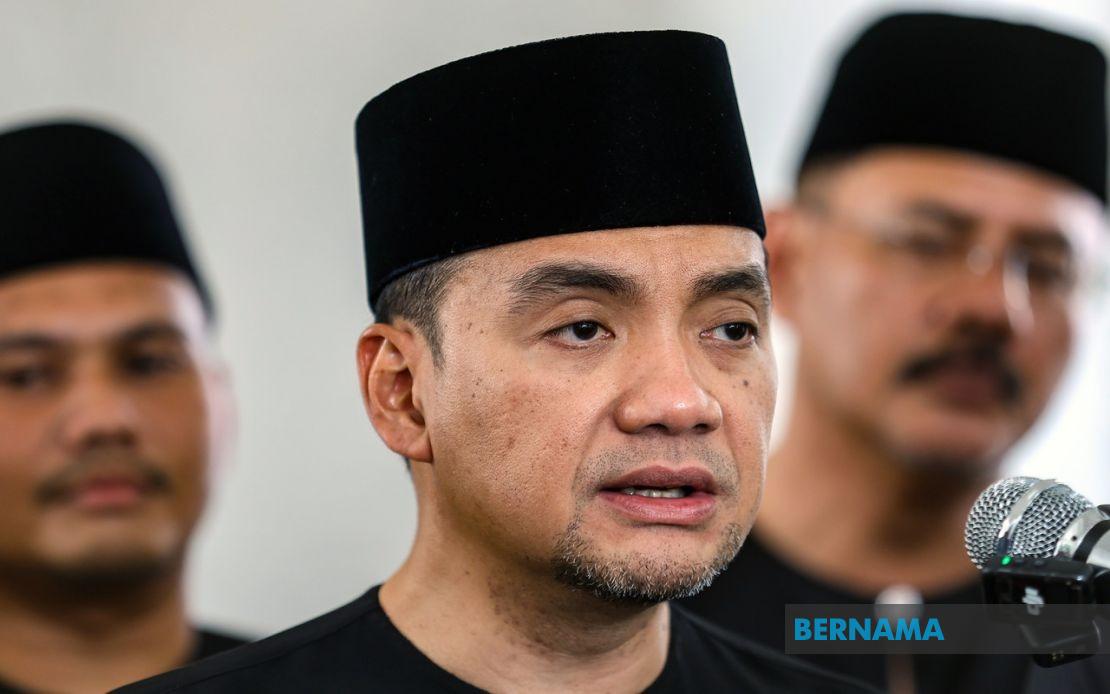
The Johor state government has rolled out an ambitious new initiative designed to reinvigorate mosque participation and strengthen Islamic communal worship across the state. The Semarak Maghrib and Isyak programme represents an expansion of existing efforts to promote evening and night congregational prayers, building on previous work that focused on strengthening attendance at dawn prayers. Menteri Besar Datuk Onn Hafiz Ghazi unveiled the scheme as a direct response to one of the Barisan Nasional's electoral promises made during the 16th Johor state election, signalling the government's intent to translate campaign commitments into tangible community initiatives.
At its core, the programme seeks to position mosques as vibrant hubs that extend far beyond their primary function as spaces for worship. State leadership views these institutions as critical nodes for knowledge dissemination, spiritual development, and the cultivation of Islamic brotherhood among the Muslim community. By encouraging greater attendance at Maghrib and Isyak prayers—the sunset and night prayers in the Islamic tradition—the government hopes to create regular gathering points where the faithful can strengthen their bonds and deepen their engagement with Islamic teachings. This multifaceted approach reflects a broader regional trend across Southeast Asia where Muslim-majority states are investing in mosque infrastructure and programming to counter secularisation and maintain religious cohesion within increasingly urbanised societies.
The inaugural event took place at Masjid Jamek As-Syakirin in Bukit Saujana, where the programme was accompanied by educational components including a hadith discussion session. Johor Bahru district kadi Mohd Zaini Mohd Salleh led a scholarly exposition on the 40 Hadith, focusing on the principle of "Niat Penentu Perbuatan Hamba"—the concept that intention determines the value and merit of one's actions in Islamic jurisprudence. This incorporation of substantive religious instruction alongside prayer activities indicates that the initiative aims for intellectual and spiritual enrichment rather than mere ceremonial participation. The inclusion of Quranic recitation, specifically Surah Al-Mulk, further underscores the programme's comprehensive approach to mosque engagement.
Onn Hafiz's framing of the initiative reveals important dimensions about contemporary Malaysian governance and religious policy. His emphasis on syiar Islam—the propagation of Islamic values and teachings—positions the programme within the state government's broader vision of building what he characterises as a "progressive Johor guided by the Quran and the Sunnah." This language attempts to bridge modernisation with Islamic tradition, suggesting that development and religious observance need not be in tension. For Malaysian readers familiar with ongoing debates about the role of religion in national development, this represents one state government's answer to balancing economic advancement with spiritual renewal.
The timing and rollout of Semarak Maghrib and Isyak merit careful consideration within Johor's political context. Having secured electoral victory, the Barisan Nasional government is now delivering on its stated commitments, using this programme as an early demonstration of responsiveness to voter priorities. For a state government, fulfilling such pledges builds political capital and maintains coalition cohesion—particularly important in Johor, where the BN retains considerable electoral strength but faces periodic challenges from opposition movements. The programme simultaneously serves religious constituents genuinely concerned about declining mosque attendance and spiritual engagement, particularly among younger generations navigating rapid urbanisation and digital connectivity.
Implementation across Johor's mosque network will require significant coordination between state religious authorities, individual mosque committees, and community leaders. The state's Department of Islamic Affairs and various district-level kadi offices will likely bear primary responsibility for programme oversight, training mosque staff, and developing educational content. Success will depend on whether individual mosques can sustain momentum beyond the initial launch events and whether the programme genuinely increases prayer attendance or remains a symbolic gesture. Variations in mosque infrastructure, leadership quality, and community demographics across urban centres like Johor Bahru and more rural areas will likely produce uneven results.
The broader Southeast Asian context illuminates why such initiatives matter to Malaysian policymakers. Across the region, mosque attendance has declined among urban Muslims, particularly younger cohorts. Thailand's southern provinces, Indonesia's major cities, and Malaysia's own urban centres have all experienced this trend. By investing in mosque programming and congregational activities, Johor joins neighbouring jurisdictions in attempting to reverse this pattern. The approach differs from purely regulatory or enforcement-based strategies; instead, it emphasises attraction and community engagement—creating reasons for Muslims to gather beyond obligatory prayer.
For Malaysia's broader religious discourse, the Semarak Maghrib and Isyak programme contributes to ongoing conversations about how religious institutions adapt to contemporary life. Rather than viewing mosques primarily as conflict prevention mechanisms or symbols of Islamic political identity—roles they sometimes occupy in Malaysian political debates—this initiative reframes them as community development assets. The emphasis on brotherhood, knowledge sharing, and spiritual wellbeing aligns with international religious trends emphasising holistic wellness and community cohesion. Whether such reframing gains traction nationally or remains a Johor-specific initiative depends partly on results from this early implementation phase.
Onn Hafiz's public appeal for community participation carries particular significance. By explicitly inviting Muslims to "support" the programme through attendance and active engagement, the Menteri Besar positions success as a collective responsibility rather than a government-directed programme. This rhetorical move acknowledges that state initiatives require community buy-in to succeed and subtly indicates that attendance numbers will likely become a measure of programme efficacy. For mosques and Muslim community leaders receiving this call, the message is clear: the state government expects observable results and community mobilisation around these prayer times.
The programme's potential ripple effects extend beyond immediate religious participation. Successful mosque revitalisation can strengthen community social capital, improve mental health outcomes through regular spiritual practice, and create mentorship opportunities as more experienced Muslims guide younger worshippers through Islamic knowledge. These benefits, while primarily spiritual in nature, connect to broader development goals around social cohesion and community resilience. For Malaysian policymakers and religious authorities in other states watching Johor's experiment, the coming months will provide valuable data about whether such initiatives can meaningfully shift mosque attendance patterns or whether deeper structural changes are necessary.
Looking forward, the sustainability of Semarak Maghrib and Isyak will depend on several factors beyond initial enthusiasm. Mosque committees will need training and resources to develop engaging programming; religious scholars must be available for regular lectures and discussions; and coordination across the state's mosque network requires robust administrative systems. The programme's success will also hinge on whether it addresses underlying barriers to mosque attendance—competing evening commitments, transportation challenges, safety concerns in certain neighbourhoods, and changing social patterns among younger Muslims. If implemented thoughtfully, the initiative represents a meaningful attempt to strengthen religious community life; if treated as purely ceremonial, it may generate symbolic outputs without substantive engagement.

