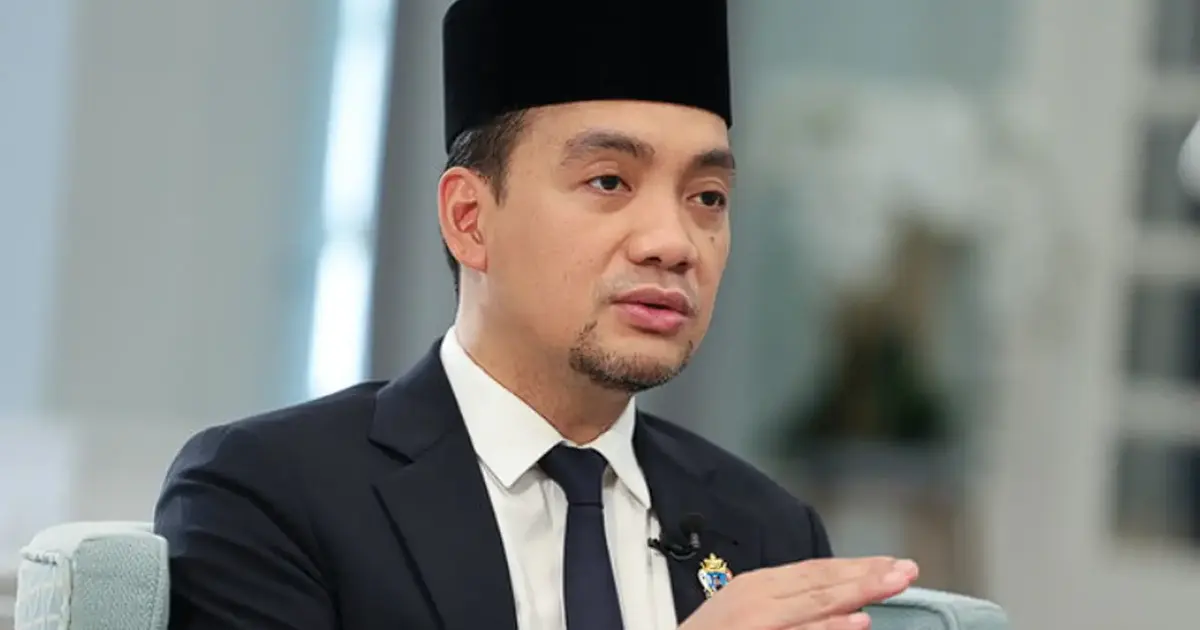
Johor's caretaker menteri besar Onn Hafiz has moved to clarify the constitutional nature of the palace's approval for the state assembly's dissolution, pushing back against suggestions that the sultanate is overstepping its institutional boundaries. The distinction between royal assent and political interference has become increasingly pertinent as Malaysia navigates the complexities of constitutional monarchy in an era of heightened scrutiny over the separation of powers.
The menteri besar's statement underscores a fundamental principle embedded in Malaysia's constitutional framework: the monarch's role in legislative procedures, particularly the dissolution of state assemblies, remains ceremonial and procedural in character rather than discretionary or politically motivated. In Johor's case, the dissolution process required formal royal assent from the Sultan, a requirement that exists across all Malaysian states and reflects the constitutional position of the ruler as head of state. Without this formal approval, the assembly cannot be validly dissolved, making it an indispensable step rather than an optional gesture.
Understanding this distinction carries significance for Malaysian readers and constitutional observers throughout Southeast Asia. The palace's involvement in state governance operates within carefully defined legal boundaries established by the Federal Constitution and state constitutions. When the menteri besar seeks the Sultan's approval to dissolve the assembly, he is invoking a power that technically rests with the crown, though the executive—in this case, the caretaker government—initiates and drives the process. This arrangement mirrors similar constitutional monarchies globally, where formal executive powers flow through the sovereign even when practical authority resides elsewhere.
The timing of Onn Hafiz's clarification suggests that questions had emerged regarding whether the palace had exercised undue influence over the dissolution decision itself. Such concerns occasionally surface in Malaysian political discourse, particularly during periods of governmental transition or when outcomes appear contentious. By explicitly framing royal assent as procedural rather than discretionary, the caretaker menteri besar seeks to reassure the public and political stakeholders that the Sultan acted in his formal constitutional capacity, not as a political actor selecting between competing interests.
In the broader Malaysian context, this episode reflects ongoing tensions about institutional roles during periods of flux. Caretaker governments occupy a peculiar constitutional space—maintaining administrative functions while lacking the political mandate of a full government. When such administrations require palace approval for significant acts like assembly dissolution, observers sometimes question whether all parties are operating within conventional norms. The menteri besar's intervention suggests an awareness of these sensitivities and an attempt to ground the dissolution firmly within established constitutional practice.
For Johor specifically, the state's history of strong sultanate authority and generally stable governance provides background for understanding the dissolution process. The Johor palace maintains a particularly prominent public profile within the state, and its formal approvals carry visible significance that might differ from other states where constitutional forms receive less public attention. Onn Hafiz's statement thus serves a communicative function beyond mere legal clarification—it addresses public perception and reinforces the monarchy's role as custodian of constitutional order rather than political protagonist.
The distinction becomes especially relevant when examining how Malaysian courts and constitutional authorities have interpreted monarch powers in recent decades. Judicial precedent has generally supported a narrow reading of crown discretion in legislative dissolution, emphasizing that while formal power resides with the ruler, the substantive decision-making authority belongs to the chief minister or menteri besar. This jurisprudential consensus reinforces Onn Hafiz's characterization of the palace's role as confirmatory rather than creative.
Regionally, Malaysia's constitutional monarchy model offers instructive comparison with other Southeast Asian systems. While Singapore's presidency operates as a largely ceremonial figurehead, and other nations employ different institutional arrangements, Malaysia's approach—whereby the Sultan retains formal constitutional powers exercised on advice of the executive—represents a particular balance between tradition and democratic governance. The caretaker menteri besar's clarification thus contributes to regional understanding of how constitutional monarchies function in contemporary democratic contexts.
Moving forward, the Johor dissolution episode illustrates why clear communication about institutional roles proves essential during periods of governmental transition. When caretaker administrations undertake significant constitutional acts, transparency about the decision-making process and the respective roles of different institutions helps maintain public confidence in governance structures. Onn Hafiz's statement, by explicitly separating procedural formality from political judgment, aims to achieve precisely this clarity.
The broader lesson extends to all Malaysian states and the federal level: as Malaysia's political environment continues evolving, with coalition changes and electoral volatility creating more frequent periods of caretaker administration, the need for unambiguous understanding of constitutional processes becomes more pressing. Royal assent, when properly understood as procedural rather than discretionary, strengthens rather than weakens constitutional governance by ensuring that powers flow through established institutional channels rather than accumulating in unaccountable hands.

