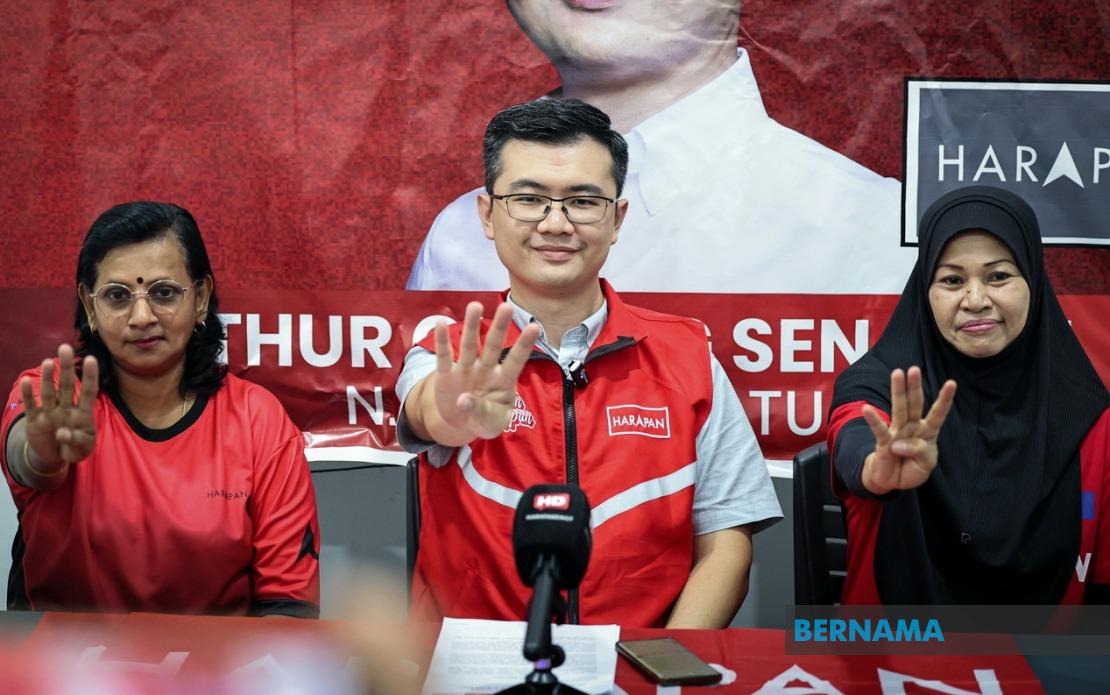
With the Johor state election set for July 11, Arthur Chiong Sen Sern, the incumbent Bukit Batu assemblyman representing Pakatan Harapan, is mounting an aggressive final push to mobilize voters across his constituency. Speaking at his campaign headquarters in Kulai, Chiong acknowledged that his path to retaining the seat depends heavily on voter participation exceeding 60 per cent—a threshold he believes will bolster his chances of overcoming the wafer-thin 137-vote margin that secured his first term in 2022.
Chiong's calculation reflects a broader reality in Malaysian electoral contests: turnout patterns can decisively swing tightly held seats. His 2022 victory demonstrated how narrow his base of support truly is, placing him among the most vulnerable incumbents heading into this cycle. The previous Johor state election in 2022 saw an overall turnout of around 54.9 per cent, meaning Chiong needs to exceed that benchmark significantly to feel confident about his re-election prospects. This targeting of the 60 per cent threshold is not arbitrary but grounded in campaign analytics that suggest higher participation generally favors established candidates with robust ground machinery.
The PH machinery in Bukit Batu has intensified its door-to-door and community engagement activities, with Chiong reporting encouraging feedback from constituents across different ethnic communities. He emphasized that voters appear receptive to hearing the coalition's proposals and policy platform, indicating that the party's organizational efforts are resonating at the grassroots level. This grassroots engagement becomes critical in constituencies where victory margins are measured in the hundreds, where every household visit and conversation can shift outcomes.
Chiong has articulated seven key development priorities aimed at addressing constituent concerns across multiple domains. These include establishing a data centre industry career bridge to create local employment opportunities, undertaking widening works on the FT001 road, and installing intelligent traffic management systems to ease congestion. Health infrastructure improvements through clinic upgrades, youth-focused interventions against vaping and drug abuse, tourism sector strengthening, school facility expansion, and free Malay and History tuition classes complete his manifesto. Rather than portraying these as mere campaign promises, Chiong framed them as continuations of work already begun during his current term, suggesting an iterative approach to constituency development.
The incumbent's framing of these initiatives as part of an integrated, ongoing effort reflects an attempt to position experience and institutional relationships as competitive advantages. Chiong argued that sustainable development demands leadership continuity, strong ties with the state government, and persistent commitment to addressing constituents' grievances—positioning himself as the candidate best positioned to deliver these elements. This argument carries particular weight in Johor, where state governments have wielded significant resources for local development projects.
Chiong also praised what he described as a culture of mature politics evident among candidates contesting in Bukit Batu, noting that rivals exchange courtesies during campaign encounters. This language around political civility serves multiple purposes: it signals confidence that competition occurs within acceptable bounds, subtly contrasts his campaign approach with any perceived negativity by opponents, and appeals to voters who may value respectful political discourse. In a polarized Malaysian political environment, such assertions about campaign tone can influence voter perceptions of candidates' suitability.
The significance of turnout optimization cannot be overstated in Chiong's strategic calculus. With his 2022 victory secured by fewer than 150 votes, any shift in voter participation patterns could prove decisive. A turnout above 60 per cent would suggest strong voter enthusiasm and could indicate favorable momentum for his candidacy. Conversely, if turnout falls below his baseline expectation, Chiong risks facing mobilized opposition while his own support base remains insufficiently engaged. This dynamic explains why turnout messaging features prominently in his campaign communications.
For Malaysian political observers, the Bukit Batu contest exemplifies broader competitive dynamics emerging across the country's electoral landscape. As traditional political loyalties fragment and constituencies become more competitive, razor-thin margins increasingly characterize state assembly races. This creates situations where relatively small shifts in turnout, demographic composition, or candidate performance can alter outcomes. The PH's Chiong represents one of numerous incumbents nationwide operating from positions of electoral vulnerability, requiring maximum mobilization efforts to survive potential electoral shocks.
The Johor state election itself carries implications extending beyond individual constituencies. The state remains politically significant within Malaysia's broader coalition landscape, and overall results will shape national-level political calculations. Early voting is scheduled for July 7, providing a preview of potential turnout patterns that might inform final campaign adjustments across all contested constituencies. For PH, maintaining or expanding representation in Johor would represent a strategic success in a state where coalition performance historically fluctuates.
Chiong's confidence in voter wisdom, his emphasis on continuity and institutional experience, and his targeted turnout strategy collectively reflect a disciplined campaign approach rooted in clear electoral mathematics. Whether his optimistic assessment of voter receptivity translates into the 60 per cent-plus turnout he seeks will become apparent once polling concludes. The Bukit Batu result will serve as one data point among many indicating whether the PH can successfully defend vulnerable seats and consolidate its position in Johor's evolving political terrain.

