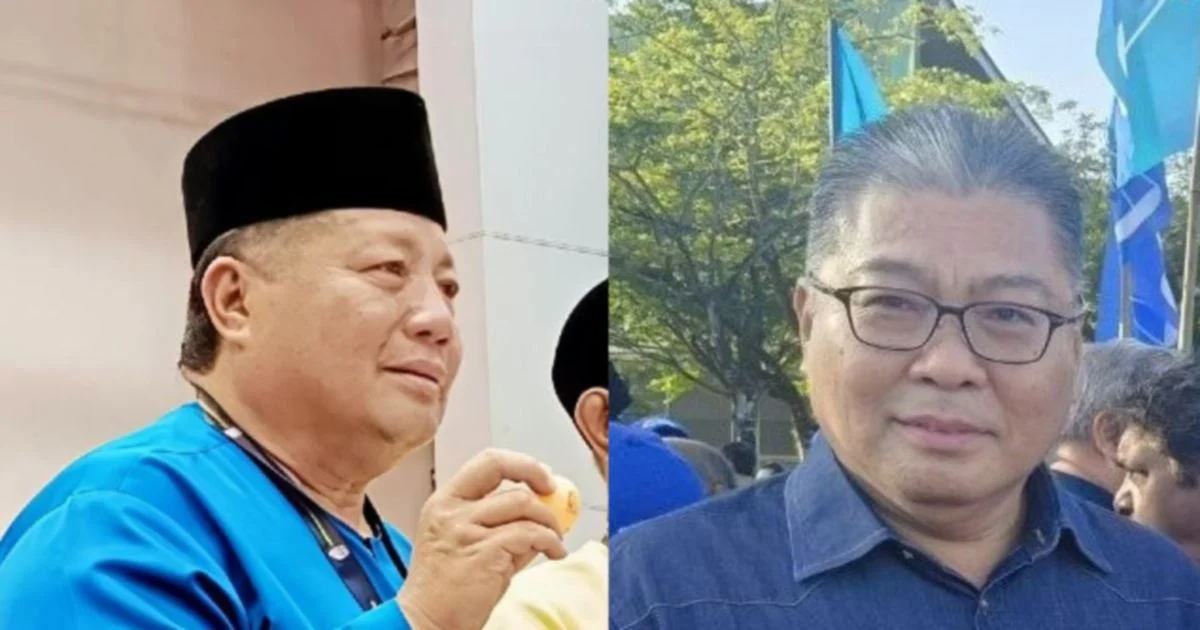
Datuk Maulizan Bujang, the former chief of Tebrau's Umno division, has put family solidarity above political rivalry by endorsing his younger brother Mazlan's campaign in the Kahang seat, where the latter is running as a Perikatan Nasional candidate in Johor's latest electoral contest. The gesture underscores a pragmatic approach to competitive politics that values personal relationships even when candidates operate within opposing coalitions—a sentiment increasingly noteworthy in Malaysia's polarised political climate.
The Tebrau division, located in Johor Baru's urban heartland, represents one of Umno's traditional strongholds in the state. Maulizan's tenure as its chief would have placed him at the centre of the party's grassroots machinery in a strategically important area. His willingness to publicly back a relative standing under the Perikatan Nasional banner signals a degree of political pragmatism that extends beyond mere electoral calculations, suggesting that family loyalty continues to hold substantial weight among Malaysia's political establishment despite intense inter-party competition.
Political competition between close relatives is hardly unusual in Malaysian politics, where many constituencies feature candidates connected by blood or marriage across competing parties. However, public expressions of support from one family member to another contesting under rival coalitions remain relatively uncommon, often giving way to studied neutrality or careful non-endorsement. Maulizan's explicit gesture therefore carries symbolic weight, particularly in Johor where umno has maintained considerable influence since the state's electoral history, though recent federal developments have complicated the political landscape significantly.
The Kahang constituency represents part of Johor's broader electoral landscape, where contests often reflect the state's unique political dynamics. Johor has historically been regarded as Umno's fortress, with the party maintaining strong organisational presence across most constituencies. However, the rise of Perikatan Nasional as a significant electoral force has introduced new competitive dimensions, with both coalitions vying for voter support in constituencies previously considered safely held. Mazlan's candidacy under the PN banner therefore reflects broader shifts in how Johor's political map has evolved.
Perikatan Nasional's emergence as a major political actor in Malaysian politics gained momentum following the 2020 general election and subsequent political developments. The coalition brings together parties with distinct ideological orientations and voter bases, attempting to position itself as an alternative to both Umno-led Barisan Nasional and the opposition. In states like Johor, where traditional political hierarchies had remained relatively stable for decades, PN's expansion represented a significant disruption to established power structures, drawing candidates and supporters from across existing political organisations.
The decision by candidates to contest across coalition lines often reflects complex calculations regarding constituency dynamics, personal ambitions, and changing voter preferences. In Kahang, Mazlan's choice to run under PN rather than following his brother's Umno affiliation may reflect assessments about electoral receptivity in that particular area, or personal political convictions developed independently from familial patterns. Such diversification within families increasingly characterises Malaysian politics, where unified family political voting blocks have become less predictable than in earlier decades.
Maulizan's public backing of Mazlan's campaign demonstrates how contemporary Malaysian politicians are negotiating the tension between intense partisan competition and the persistence of social bonds that transcend political boundaries. This balancing act becomes particularly delicate during election campaigns, when party expectations and loyalty pressures typically escalate significantly. The willingness to defy such pressure, at least rhetorically, suggests a confidence in one's own political standing and a refusal to allow electoral contests to entirely subsume personal relationships.
For voters in Kahang, such family dynamics may influence perceptions of both candidates, though in contradictory ways. Some may interpret Maulizan's support as a sign of Mazlan's genuine capabilities and character, while others might view it as evidence of insufficient partisan commitment. Political psychology in Malaysia remains complex, with family networks, personal reputation, and coalition affiliation all carrying weight in electoral decisions, sometimes in tension with one another.
The Johor electoral context has undergone substantial transformation in recent years, with shifting voter demographics, economic concerns, and national political currents all influencing local contests. Constituencies like Kahang have experienced demographic changes that may advantage newer political entrants or established parties differently than they did in previous cycles. In this environment, both Umno and Perikatan Nasional are competing intensively for constituencies that had previously seemed predictable, requiring candidates to develop distinctive campaign messages and stronger ground-level engagement.
Maulizan's gesture also reflects the reality that Malaysian elections, despite their intensity, occur within a social context where people must continue living together once campaigns conclude. Communities in constituencies across Johor will remain intact regardless of electoral outcomes, with winning and losing candidates returning to their regular roles in society. Political conflicts are therefore bounded by the knowledge that today's opponents may become tomorrow's neighbours, colleagues, or family members requiring cooperation on issues affecting the broader community.
The Kahang contest will ultimately be decided by voters weighing multiple factors, from policy platforms to candidate credibility to broader perceptions of which coalition better represents their interests. Maulizan's endorsement adds one voice among many, but it carries symbolic importance insofar as it publicly acknowledges that political competition need not transform family members into enemies. In Johor's evolving political landscape, such reminders about the continuity of personal bonds beneath the surface of electoral contestation may resonate with voters seeking alternatives to increasingly acrimonious national political discourse.
As campaigning intensifies across Johor, the relationship between Umno and Perikatan Nasional will likely define many constituencies' competitive dynamics. In Kahang specifically, the contrasting positions of two brothers from the same family offers a microcosm of how Malaysian voters are making choices among political options in an era when traditional alignments no longer seem inevitable. Whether Maulizan's goodwill translates into tangible electoral advantage for Mazlan remains uncertain, but his public support at minimum demonstrates that brotherhood can coexist with political divergence in contemporary Malaysian politics.

