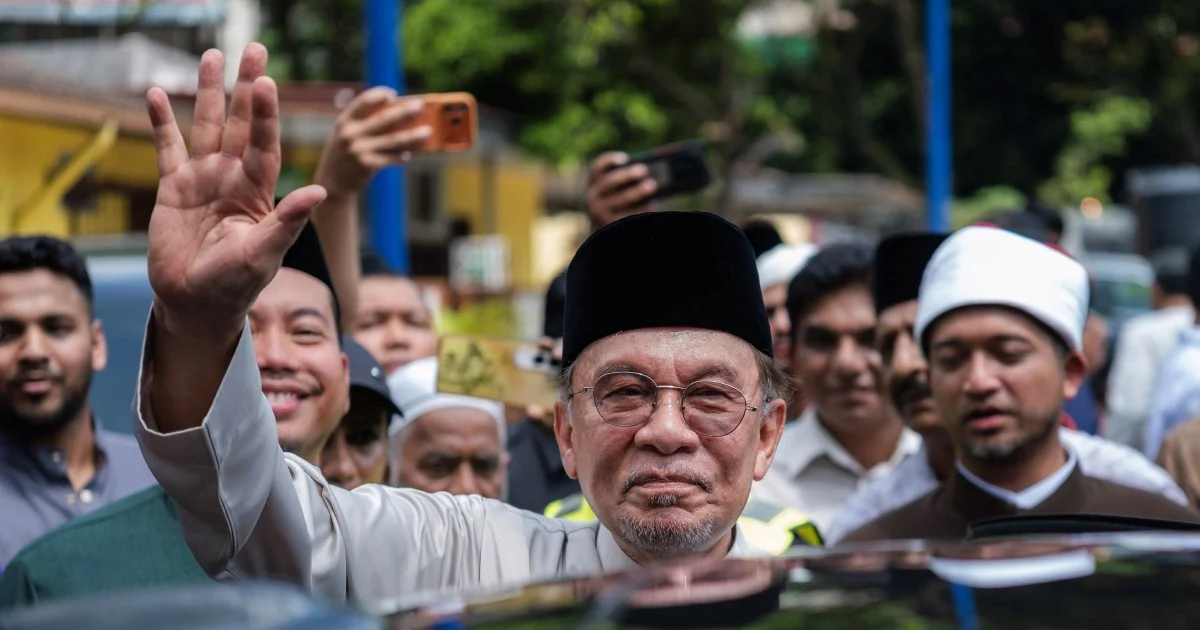
Johor's state election has entered a crucial turning point this weekend as Prime Minister Anwar Ibrahim, Deputy Prime Minister Zahid Hamidi and numerous senior political figures are setting aside their federal duties to conduct an aggressive series of campaign rallies and ceramah sessions across the state. The sudden concentration of top-tier leadership in Johor indicates that both ruling coalition partners view the outcome as strategically significant for their respective political fortunes heading into the next federal elections.
The timing of this weekend's campaign push reflects the electoral calendar's acceleration towards the conclusion of the state-level contest. Campaign events and ceramah sessions—the traditional forums where Malaysian politicians directly engage voters through formal speeches and dialogue—have become the battleground where each coalition hopes to consolidate support and sway undecided voters. The personal involvement of national leaders underscores how state elections in Malaysia often serve as barometers for the broader political health of governing coalitions and opposition alliances.
Prime Minister Anwar Ibrahim's participation carries particular weight given his role as head of government and de facto leader of the Pakatan Harapan coalition. His presence at multiple events signals PKR and its partners view Johor as winnable territory, despite the state's traditional leanings toward UMNO-led administrations. For Anwar, a strong showing in Johor would validate his political resilience following the dramatic political transitions of recent years and demonstrate that his administration retains popular momentum outside its core strongholds in Selangor and Penang.
Deputy Prime Minister Zahid Hamidi, who leads UMNO and serves as the opposition Perikatan Nasional's prime ministerial candidate, faces a more complex calculus in Johor. As a prominent Johor personality with deep roots in the state, Zahid's participation in campaign events is both expected and scrutinised by local voters. His performance in securing UMNO victories in Johor will directly influence perceptions of whether UMNO can reclaim federal leadership after its period in opposition, making his personal campaigning investment substantial.
Beyond these two dominant figures, the engagement of numerous other senior political leaders demonstrates that Johor's election has transcended a local issue to become a referendum on which coalition can better govern Malaysia's southern anchor state. Coalition members from multiple parties—PKR, DAP, Amanah representing the ruling side, and UMNO, PAS partners representing the opposition—are coordinating campaign schedules to maximise voter exposure across diverse constituencies and demographic groups.
The ceramah circuit serves a particular function in Malaysian electoral culture that extends beyond simple message delivery. These public forums allow voters to pose direct questions to politicians and assess their responses in real time, creating organic moments that sometimes generate social media momentum or shift local narratives. For a state election where local issues like water security, economic development, and inter-communal relations may dominate voter concerns, ceramah sessions provide platforms where these specific grievances can be articulated and addressed more directly than through national-level campaign messaging.
For Malaysian voters outside Johor, this weekend's campaign intensity offers insights into how coalitions are adapting their strategies post-2023 general elections. The deployment of national figures to conduct ground-level campaigning suggests both coalitions continue to believe that personal political capital and top-level endorsements can shift electoral outcomes, even as social media and digital campaigning reshape how political messages spread. The balance between traditional and modern campaign methods remains contested terrain in contemporary Malaysian politics.
The concentration of political leadership in Johor also reflects the state's economic and demographic significance within Malaysia. As the location of major port facilities, manufacturing sectors, and growing urban populations, Johor's governance quality directly impacts regional development trajectories affecting Singapore relations, supply chain resilience, and foreign investment patterns. Parties campaigning there are thus implicitly promising voters they understand these broader implications of state-level governance decisions.
Regionally, the Johor election outcome carries implications for Southeast Asian stability and Malaysia's international positioning. A coalition government perceived as strong and stable is better positioned to pursue consistent foreign policies and maintain reliable partnership frameworks with neighbours. For Singapore, Thailand, and other regional powers, clarity about Malaysia's internal political direction through state elections provides confidence about long-term policy continuity and bilateral engagement prospects.
The weekend campaign blitz represents the natural intensification point in any election cycle where parties commit maximum resources to final persuasion efforts before voting day. For Johor voters, the influx of national political figures creates simultaneous opportunities and challenges—opportunities to engage directly with senior leaders and extract policy commitments, alongside the challenge of distinguishing genuine platform differences from generic campaign rhetoric designed for national audiences rather than addressing localised Johor concerns.
As campaign events unfold across the state this weekend, political analysts will be monitoring not only the attendance numbers and public reception but also which leaders prioritise which constituencies. Such micro-level variations in where parties concentrate leadership efforts can reveal their internal polling assessments about which districts remain genuinely competitive versus where they concede or claim advantage.

