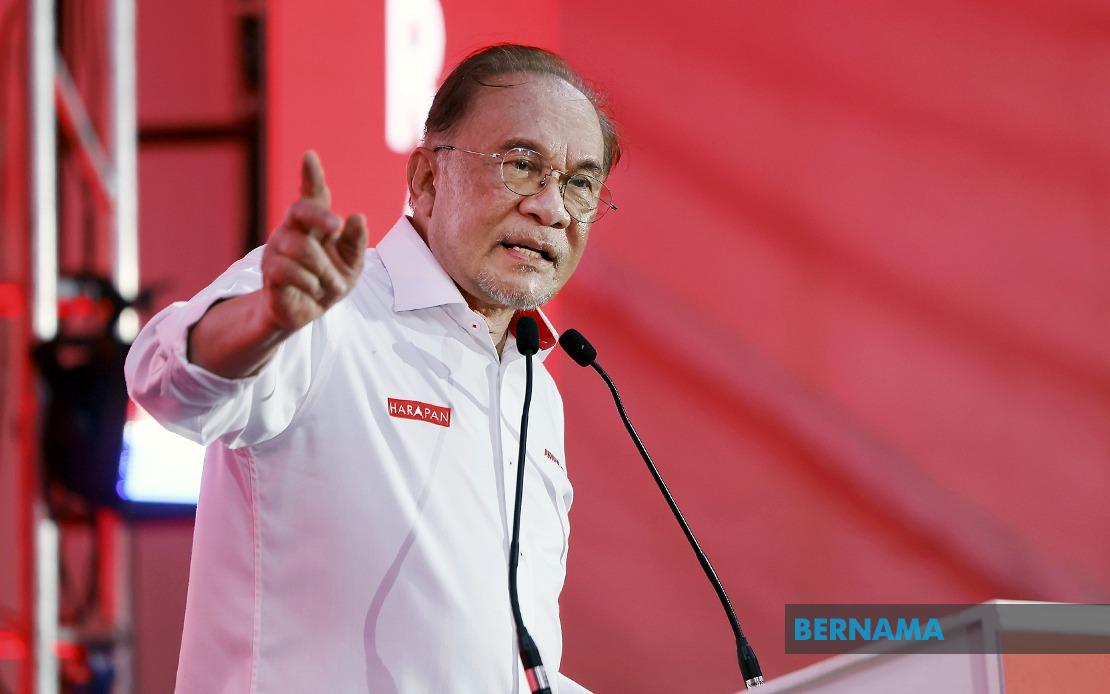
Prime Minister Datuk Seri Anwar Ibrahim has highlighted what he characterises as the Federal government's strong financial commitment to Johor, revealing that the state received more in federal funding than it contributed in tax revenue over the past three years. Speaking at a Pakatan Harapan candidate announcement event in Tangkak on June 22, Anwar pointed to Finance Ministry records showing Johor contributed approximately RM14 billion to federal coffers between 2023 and 2025, yet received RM16 billion in return through development projects, operational support, and government programmes.
The revelation comes as the MADANI administration seeks to demonstrate its dedication to one of Malaysia's most economically significant states. Anwar, who holds both the Prime Minister and Finance Minister portfolios, emphasised that this positive fiscal transfer warranted public explanation to counter any perception that the Federal government was neglecting Johor's interests or development needs. The comparison served a broader political purpose as the Federal government prepares for the Johor State Election, aiming to reinforce confidence in Kuala Lumpur's investment in the state's future.
Federal operating expenditure allocations to Johor have grown substantially since the MADANI Government took office, with annual allocations rising from between RM6 billion and RM7 billion under the previous administration to RM8.7 billion currently. This nearly RM2 billion annual increase represents a significant boost to funding for routine government operations, civil service salaries, and ongoing maintenance of public services across the state. Anwar presented this trajectory as concrete evidence that the current administration prioritises Johor's welfare and development, particularly when comparing fiscal support levels across different government terms.
Development expenditure figures similarly reflect expanded investment. The allocation for capital projects and infrastructure development grew from RM2.3 billion in 2022 to RM4.8 billion in 2026, more than doubling over a four-year period. This substantial increase demonstrates a commitment to physical infrastructure improvements, which typically encompass roads, public facilities, healthcare installations, educational infrastructure, and other long-term assets that enhance a state's economic competitiveness and quality of life. The doubling of development funds suggests the Federal government is actively pursuing ambitious development agendas within Johor.
According to Anwar's presentation of 2026 budget data, Johor ranks as the third-largest recipient of combined operating and development expenditure allocations nationally, positioning it behind only Sabah and Sarawak, the two largest Malaysian states by area and among the least densely populated. This ranking underscores Johor's significance within the Federal allocation framework, particularly given that it is substantially smaller and more developed than either East Malaysian state. The third-place standing reflects Johor's importance as a major economic engine for the nation and a densely populated centre.
Social assistance programmes have also favoured Johor substantially. The state emerged as the second-largest recipient of funds under the Sumbangan Tunai Rahmah and Sumbangan Asas Rahmah schemes, trailing only Selangor. These cash assistance initiatives, designed to provide direct financial relief to lower and middle-income households, have channelled considerable resources to Johor residents, targeting vulnerable populations with targeted welfare support. The prominent allocation reflects both the state's significant population and strategic political importance to the government's welfare agenda.
The financial picture Anwar painted is designed to counter any narrative that Johor has been side-lined or underserved by the current Federal administration. By presenting an accounting that shows Johor receiving more in returns than it contributed in revenue, the Prime Minister implicitly argues that the state enjoys preferential or at least equitable treatment from Kuala Lumpur. This messaging becomes particularly important ahead of state-level elections, where voters assess whether their state government enjoys sufficient support from the Federal level.
For Malaysian fiscal federalism, the data illustrates the complex relationship between revenue-generating states and Federal redistribution mechanisms. While Johor is undoubtedly an economic contributor to Malaysia, the federal system naturally involves transferring wealth from high-revenue states to developing regions and providing standardised services regardless of local revenue generation. Understanding this dynamic helps context the broader fiscal relationship between states and the Federal government.
The emphasis on increased allocations under the MADANI administration, introduced in late 2022, represents the government's attempt to distinguish its approach from its predecessor. By quantifying improvements in both operating and development funding, Anwar provides measurable benchmarks for evaluating government performance in terms of fiscal commitment to state development. Such comparisons hold particular weight in electoral contexts, where promises of increased investment translate into concrete improvements in public infrastructure and services.
These figures also matter for regional development planning across Southeast Asia. As Malaysia positions itself as a developed nation by 2050, the distribution of capital investment across states signals where the Federal government believes growth opportunities and development priorities lie. Johor's substantial allocation reflects its role as a manufacturing hub, port authority, and gateway to Singapore, making it strategically vital to Malaysia's economic vision.