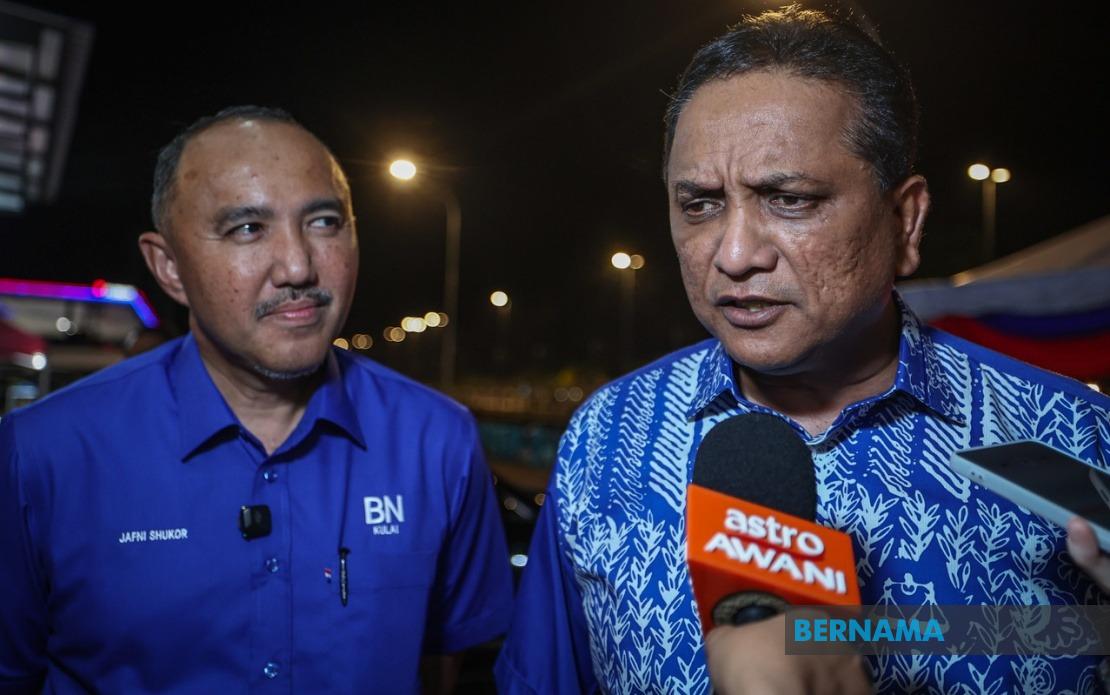
JOHOR BAHRU -- Accusations that the Regent of Johor, Tunku Mahkota Ismail, wields excessive control over the state government have been dismissed as vastly overstated and without factual basis, according to UMNO leadership. Datuk Seri Reezal Merican Naina Merican, a member of UMNO's Supreme Council, made the remarks in response to growing political tensions within the ruling coalition as Johor prepares for its state election scheduled for July 11.
The controversy centres on the distinction between the constitutional authority of a Regent and claims of political interference in governmental operations. Reezal Merican stressed that the Tunku Mahkota Ismail's vocal engagement on matters of state development reflects his legitimate responsibilities toward the people of Johor rather than any attempt to transform the administration into a subordinate instrument of palace interests. In Malaysia's constitutional monarchy system, Regents possess significant ceremonial and institutional roles, but the lines between proper oversight and executive overreach remain subject to interpretation and political debate.
According to Reezal Merican, the Regent operates within established constitutional parameters as a mechanism of institutional checks and balances against the Menteri Besar, the State Secretary, and broader governmental operations. This supervisory function, he contended, should not be conflated with direct control of the state apparatus. The UMNO leader characterised suggestions otherwise as fundamentally misrepresenting the nature of constitutional monarchy in the Malaysian context, where such institutional arrangements are designed to prevent abuse of executive power rather than to concentrate it within palace walls.
The timing of these allegations coincides with defections from the ruling coalition, most notably the resignation of Datuk Dr Mohd Puad Zarkashi, a former Speaker of the Johor State Legislative Assembly. Mohd Puad publicly cited concerns that Menteri Besar Datuk Onn Hafiz Ghazi had become excessively influenced by palace decisions, thereby compromising the elected government's autonomy. His departure from UMNO represents a significant political rupture within the state's dominant party structure, signalling underlying discontent among some senior figures regarding governance arrangements.
Reezal Merican questioned Mohd Puad's motivations for raising such allegations, particularly given the proximity to the state election on July 11. The UMNO official suggested that invoking the Royal institution in localised partisan disputes may serve tactical political purposes rather than reflecting genuine constitutional concerns. This critique reflects broader anxieties within party leadership that public disputes about palace influence could damage UMNO's electoral prospects and undermine confidence in institutional governance ahead of voting.
The state electoral calendar remains tight, with the Election Commission having designated June 27 as nomination day for candidates and July 11 as the polling date. This compressed timeline means campaign narratives are rapidly forming around questions of institutional authority and political independence. The controversy over the Regent's role has become embedded within broader electoral dynamics, influencing how voters perceive governmental legitimacy and party leadership cohesion.
For Southeast Asian observers, the Johor situation illustrates ongoing tensions between constitutional checks and political pressures in parliamentary democracies where traditional institutions retain substantial formal authority. The Malaysian system grants Regents considerable powers, including the ability to withhold assent from legislation and to advise the Menteri Besar on significant policy matters. Whether such constitutional provisions represent healthy institutional balance or potential obstacles to democratic accountability depends significantly on context and political culture.
Reezal Merican's assertion that he has never encountered suggestions within UMNO circles that Johor's party structure operates as a palace proxy serves to reassure party members and the public that internal party governance remains independent. However, the very fact that such reassurances are deemed necessary indicates that questions about institutional boundaries have gained sufficient traction to require official denial. This dynamic often reflects deeper uncertainties within political coalitions about the distribution of actual decision-making authority.
The Johor state election occurs within a broader pattern of electoral competition across Malaysian states, where institutional arrangements and governance quality have become increasingly salient voter concerns. The manner in which UMNO and its allies address allegations regarding palace influence may set precedents for how similar issues are handled in other states, particularly where Regents or Sultans maintain active engagement in governance matters. The resolution of these questions in Johor could influence governance expectations across Malaysia's federal structure.
For voters in Johor, the competing narratives regarding institutional authority present a choice between two interpretations: one that sees strong Regent engagement as necessary oversight preventing governmental malfeasance, and another that views such involvement as constraining democratic decision-making by elected representatives. Both perspectives invoke legitimate constitutional principles, but their practical implications for governance quality and electoral accountability differ substantially. As Johoreans prepare to vote, these institutional questions have become inseparable from partisan calculations about which coalition best serves state interests.

