%22%2F%3E%3C%2Fpattern%3E%3C%2Fdefs%3E%3Crect%20width%3D%22100%25%22%20height%3D%22100%25%22%20fill%3D%22url(%23phhpq4g)%22%2F%3E%3Crect%20width%3D%22100%25%22%20height%3D%22100%25%22%20fill%3D%22url(%23phhpq4p)%22%2F%3E%3Ctext%20x%3D%2250%25%22%20y%3D%2250%25%22%20text-anchor%3D%22middle%22%20dominant-baseline%3D%22central%22%20fill%3D%22rgba(255%2C255%2C255%2C0.95)%22%20font-family%3D%22Georgia%2C%20'Times%20New%20Roman'%2C%20serif%22%20font-weight%3D%22700%22%20font-size%3D%22272%22%20letter-spacing%3D%22-0.02em%22%3EJohor%3C%2Ftext%3E%3C%2Fsvg%3E)
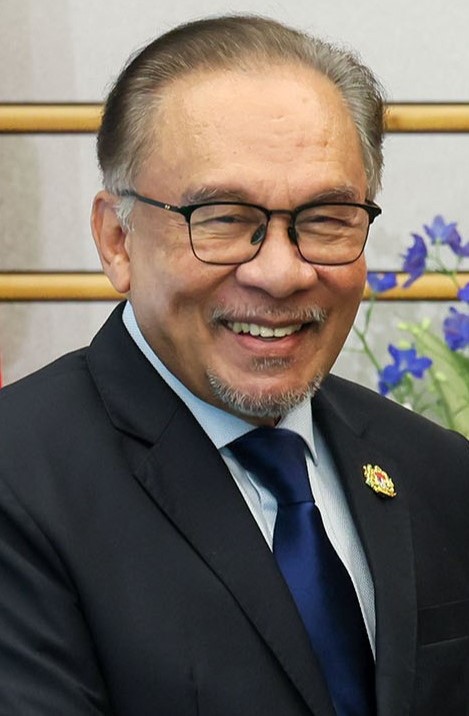
The Regent of Johor, Tunku Mahkota Ismail, received Prime Minister Datuk Seri Anwar Ibrahim in audience on June 22, marking a significant diplomatic engagement between Putrajaya's leadership and one of Malaysia's most strategically important states. The meeting reflects the ongoing coordination between federal and state-level authorities as both navigate complex economic and governance challenges affecting the nation's future trajectory.
Johor's position within Malaysia's political and economic architecture makes such high-level engagement particularly consequential. As the nation's second-largest economy by gross domestic product and a major manufacturing and trade hub, the state's stability and development priorities are intimately connected to broader national objectives. The audience between the Regent and the Prime Minister signals commitment to maintaining the collaborative relationship necessary for managing shared concerns that transcend state boundaries.
The royal institution in Johor carries distinctive weight in Malaysian federalism. Tunku Mahkota Ismail, as the Regent, serves as both a ceremonial figurehead and a custodian of state interests during the Sultan's period of medical leave. This dual role means his engagement with the Prime Minister carries messages about institutional resilience and the continuation of governance frameworks that respect both federal authority and state prerogatives. Such meetings help ensure that policy implementation across jurisdictional lines proceeds smoothly and reflects mutual understanding.
Federal-state relations in Malaysia have historically benefited from formal diplomatic channels between elected leaders and the monarchy. These interactions serve purposes beyond ceremonial function—they provide opportunities to address specific concerns regarding resource allocation, infrastructure development, and implementation of federal programmes within state territories. For Johor, such dialogue is particularly important given the state's economic diversification needs and ongoing investments in areas like healthcare, education, and digital infrastructure.
The timing of this audience carries implicit significance within Malaysia's current political environment. Prime Minister Anwar has prioritized bridging divides across state boundaries and political party lines as part of his broader agenda for national unity and economic recovery. Demonstrating strong relationships with influential state leaders and their representatives reinforces his administration's capacity to build consensus and coordinate large-scale policy initiatives that require multi-level government participation.
Johor's relationship with the federal government has occasionally experienced tensions, particularly when governing coalitions differ or when state-specific interests appear misaligned with national priorities. Regular high-level engagement helps forestall such friction and creates frameworks for resolving disagreements through institutional channels rather than public conflict. The Regent's role as a neutral institutional figure—above partisan politics—makes these meetings valuable opportunities for candid discussions about state needs and federal capabilities.
Economic cooperation between Putrajaya and Johor remains pivotal for Malaysia's development agenda. The state hosts major ports including Port Klang's operations and significant international trade infrastructure. Manufacturing clusters in Johor contribute substantially to national exports, while the state's location adjacent to Singapore creates unique cross-border economic opportunities and challenges. Federal support for Johor's infrastructure development and regulatory environment directly impacts these sectors' competitiveness.
The meeting also reflects evolving governance dynamics as Malaysia transitions toward more mature federal-state relationships. Rather than top-down directives, contemporary engagement emphasizes partnership models where state governments are recognized as important stakeholders in policy formation. This approach acknowledges that implementation of federal programmes succeeds only when state administrations actively participate in design and rollout. The Regent's reception of the Prime Minister embodies this collaborative ethos.
Institutional stability matters considerably for investor confidence and economic planning. When federal and state leadership maintain visible, functional relationships, it sends reassuring signals to both domestic and international business communities about Malaysia's governance reliability. Johor, particularly, benefits from such reassurance given its prominence in cross-border commerce and its attraction of significant foreign direct investment in manufacturing and logistics sectors.
Looking forward, the strengthened rapport evident in this audience may facilitate smoother coordination on several key initiatives. Infrastructure projects spanning federal and state domains—such as transportation networks, digital connectivity, and industrial development zones—depend on seamless cooperation. Additionally, human capital development programmes and social welfare initiatives often require integrated federal-state planning and resource-sharing arrangements.
The courtesy and formality of such royal audiences also reinforce constitutional traditions that have underpinned Malaysian governance. These interactions reaffirm the relevance of institutional protocols even in contemporary governance, demonstrating respect for constitutional structures and the monarchy's role in national affairs. For Johor specifically, this reinforces the Regent's position as an important voice in state-level deliberations.
Moving forward, the relationship reaffirmed through this meeting will likely influence how Johor and the federal government collaborate on economic recovery, pandemic-related resilience, and longer-term development planning. Both leaders recognize that Malaysia's success depends on federal and state governments working in tandem, with clear communication channels and mutual respect for respective jurisdictions and capabilities.