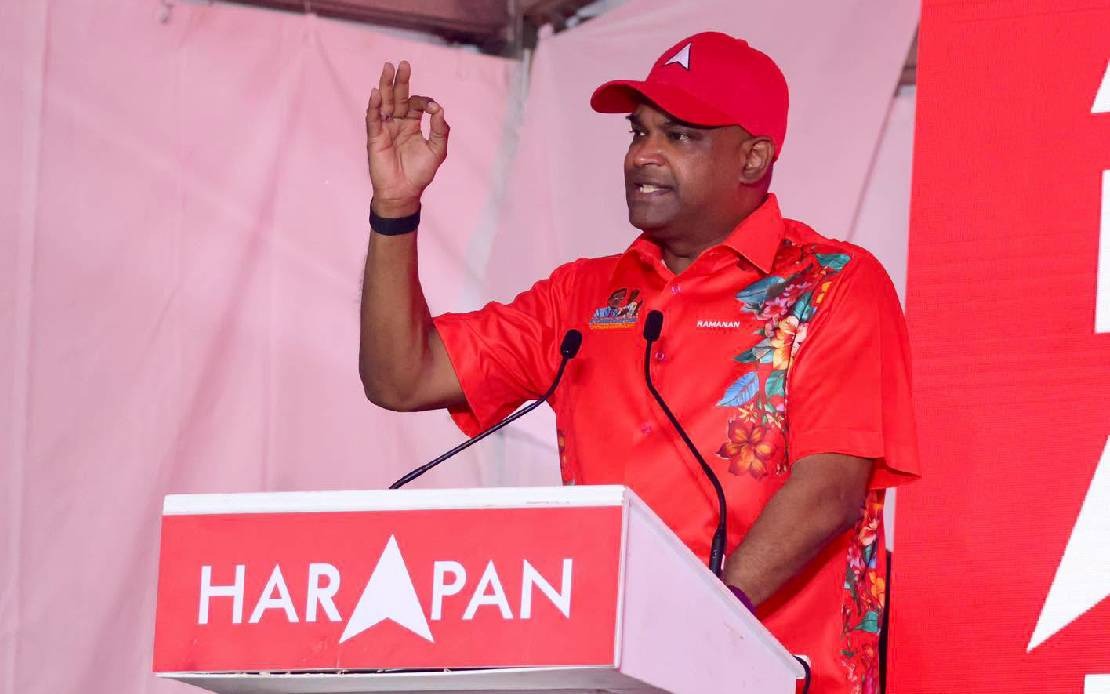
The Federal Government's commitment to accelerating Johor's development remains unwavering, according to PKR Vice-President Datuk Seri R Ramanan, who highlighted the state's strategic importance within the administration's broader national agenda. Speaking at a Pakatan Harapan campaign roadshow in Simpang Renggam, Ramanan underscored how Johor features prominently among the government's development priorities, underpinned by a sustained pipeline of major capital investments, structural improvements to economic and social infrastructure, and targeted welfare initiatives designed to distribute development gains across the state's diverse communities.
The framing of Johor as a central pillar of federal policy carries considerable political weight, particularly given the state's economic heft and geographic significance within Malaysia. As the gateway to Singapore and home to major petrochemical, manufacturing, and port operations, Johor's trajectory shapes regional competitiveness. Ramanan's comments suggest the federal administration views continued investment in the state's productive capacity and social fabric as essential to maintaining both local prosperity and national economic momentum. The emphasis on "ensuring every family in the state enjoys the benefits of the nation's development" reflects an attempt to translate macro-level policy commitments into tangible household-level improvements in income, services, and opportunity.
The government's assistance programmes form a complementary dimension to infrastructure spending. Rather than relying solely on large-scale projects that may take years to yield visible returns, federal authorities have deployed parallel initiatives delivering more immediate relief to households and small enterprises. These schemes—whether targeted subsidies, skills training, or microfinance support—serve both a welfare function and a political purpose: they demonstrate federal attentiveness to everyday economic pressures facing ordinary Johoreans, from cost-of-living strains to employment uncertainty. The breadth of these interventions suggests a multi-layered approach recognising that state-level development requires attention to both the foundation-level infrastructure and the social safety nets that allow communities to flourish.
Ramanan's appeal to voters to grant Pakatan Harapan the state election mandate reflects a familiar governance argument: that alignment between state and federal administrations unlocks administrative efficiency and accelerates project delivery. When opposing coalitions control these respective levels, institutional friction can delay approvals, complicate land acquisition, or create funding disputes. Conversely, unified political control theoretically streamlines decision-making, reduces bureaucratic bottlenecks, and allows coordinated resource mobilisation. For an administration seeking to demonstrate tangible progress on its development promises, such alignment holds genuine operational value—though the degree to which it translates into material improvements for ordinary residents often depends on factors beyond political coherence, including global economic cycles, commodity prices, and fiscal constraints.
The July 11 state election represents a pivotal moment for determining Johor's political trajectory over the coming five years. With 172 candidates competing across multiple state constituencies, the race reflects broader national political dynamics while turning partly on localised grievances and community-specific concerns. Johor's political complexion has shifted considerably over recent election cycles, and the outcome will influence how federal-state relations evolve in Southeast Asia's second-largest economy by gross domestic product. The constituency-level contests—including Machap, Benut, and Layang-Layang—will collectively determine whether Pakatan Harapan consolidates control or faces a resurgent opposition.
For Malaysian and regional observers, Johor's election carries implications extending beyond state boundaries. The state serves as an economic and demographic bellwether; its voting patterns often foreshadow broader shifts in national sentiment. If Pakatan Harapan succeeds in maintaining or expanding its foothold, it signals continued public acceptance of the coalition's governing approach and policy direction. Conversely, opposition gains would suggest voter dissatisfaction with federal performance or Johor-specific grievances regarding development distribution, service delivery, or cost-of-living pressures. Either outcome will reverberate through subsequent by-elections and the next general election cycle.
The infrastructure and investment commitments referenced by Ramanan likely encompass projects across energy, transport, manufacturing, and urban renewal sectors. Johor has been positioned as a node within broader regional integration frameworks, including cross-border economic corridors with Singapore and contributions to Malaysia's high-technology manufacturing base. Federal backing for port expansion, rail connectivity, industrial parks, and digital infrastructure reflects a strategic vision of Johor as a competitive advantage in an increasingly integrated Southeast Asian economy. These projects typically require sustained federal budgetary commitment and coordination across multiple ministries and agencies, reinforcing why administrative alignment with state authorities becomes practically important.
Yet the translation of policy commitments into lived improvements depends on implementation quality and fiscal sustainability. Announced projects must clear complex approval processes, secure land rights, navigate environmental assessments, and maintain funding continuity through budget cycles and economic fluctuations. Communities often experience gaps between political promises and actual service delivery, whether from delays, cost overruns, or scope adjustments. Public perception of federal commitment therefore hinges not merely on rhetorical emphasis but on demonstrable, timely execution that residents encounter directly—whether through improved road conditions, expanded healthcare access, job creation, or educational infrastructure.
As voters prepare for early voting on July 7 and the main polling day on July 11, the messaging around federal prioritisation of Johor forms a core component of Pakatan Harapan's electoral pitch. The coalition seeks to convince electors that returning the state to its fold advances shared prosperity through coordinated governance, sustained investment, and inclusive development programming. The presence of Amanah Secretary-General Faiz Fadzil and multiple Pakatan Harapan candidates at the Simpang Renggam event underscores the coalition's effort to present a unified, multi-party front and demonstrate breadth of backing for its development narrative.
Ramanan's comments also implicitly contest any opposition narrative suggesting the federal government has neglected Johor or favoured other states. By itemising investments, infrastructure initiatives, and assistance programmes, the administration advances a counter-argument: that Johor has received substantial federal resources and attention. Whether this messaging resonates with voters depends partly on their subjective experience of economic conditions, service quality, and development pace—factors shaped by both federal policies and broader international economic conditions beyond any single administration's control.

