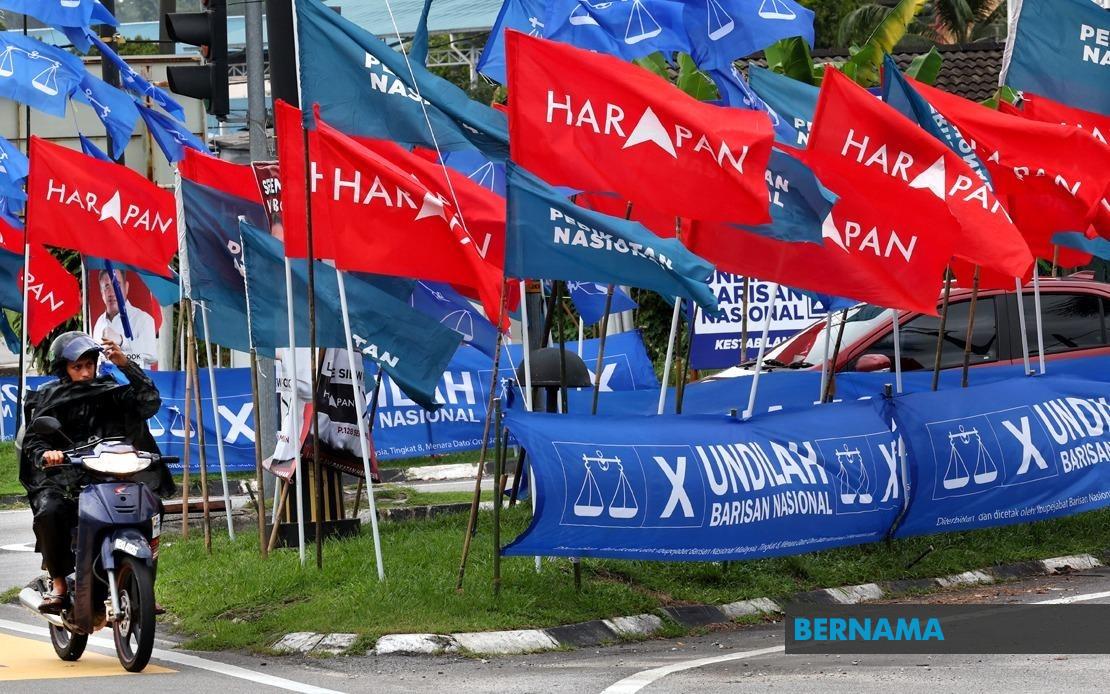
The 16th Johor state election has reached its climactic phase, with candidates from all three major political coalitions staging an aggressive final campaign push as less than two days of permitted campaigning remain before the midnight deadline tomorrow. After thirteen days on the campaign trail, party activists and aspiring representatives show no signs of fatigue, instead escalating their voter engagement through high-attendance rallies, community ground-level work, and systematic house-to-house canvassing designed to capture undecided or persuadable voters in the critical hours before Saturday's polling day.
The arrival and involvement of top national political figures have visibly energized campaign momentum across the state. Prime Minister Anwar Ibrahim, who leads the Pakatan Harapan coalition, is personally conducting campaign events at three key locations this evening, notably concentrating on the Puteri Wangsa state constituency, which analysts regard as strategically significant. This high-level engagement signals the coalition's determination to maintain momentum in what appears to be a competitive electoral contest. Maszlee Malik, the PH candidate for Puteri Wangsa, has been actively mobilizing his support base through social media, directly calling on constituency residents to attend the coalition's closing rally event branded as the "Grand Finale Harapan Johor Selatan," employing contemporary engagement language to encourage attendance among younger voters.
The Pakatan Harapan campaign has weathered some logistical challenges mid-campaign without losing forward momentum. Dr A. Ruban, the coalition's candidate in the Paloh constituency, briefly stepped away from public campaigning to receive medical treatment but quickly returned to the field, symbolically reinforcing his commitment to his candidacy. This swift return to active campaigning sends a message to supporters about candidate dedication during the critical final phase. Additionally, senior PH figure Datuk Seri Dr Zaliha Mustafa, holding the position of Johor PKR chairperson, has personally participated in a large-scale motorized convoy campaign in support of the Kemelah candidate Mohd Afif Abd Hamid, involving 120 motorcyclists traveling through the Felda Redong area, demonstrating the coalition's capacity to mobilize organized grassroots support infrastructure.
The Barisan Nasional coalition, Malaysia's historically dominant electoral force, has similarly mobilized its senior leadership to reinforce campaign efforts in the final critical period. Coalition chairman Datuk Seri Dr Ahmad Zahid Hamidi conducted a final intensive campaign sweep through the Endau and Kempas constituencies, strategically chosen locations where BN intends to consolidate its support base and boost the morale of local party workers and candidates. Datuk Onn Hafiz Ghazi, the incumbent Johor Menteri Besar seeking to retain his Machap seat under the BN banner, continues extensive constituency-level campaigning while utilizing video content distributed through Instagram to directly appeal to Johorean voters, emphasizing BN's development agenda as the basis for voting for the coalition on Saturday.
BN's campaign strategy incorporates systematic community engagement programs operating at the grassroots level. In the Larkin constituency, BN candidate Mohd Hairi Mad Shah has been implementing what he terms the "Ziarah Kasih" programme, which involves personal visits to residents throughout the constituency to conduct one-to-one persuasion efforts focused on BN's policy platform and development objectives. This approach reflects a deliberate tactical choice to supplement large public rallies with intimate voter engagement, recognizing that final-stage persuasion often operates most effectively through direct personal interaction at community level.
Perikatan Nasional, the third significant political force contesting these elections, is concluding its campaign with a major rally scheduled for tonight in the Endau constituency, featuring the coalition's leadership structure including PN chairman Datuk Seri Ir Dr Ahmad Samsuri Mokhtar and PAS president Tan Sri Abdul Hadi Awang, assembled to support Endau candidate Hasnul Hakimi Hussien. This concentration of senior PN leadership in a single location underscores the coalition's strategic focus on specific key constituencies where it perceives competitive opportunity. PN's candidate roster demonstrates similarly intensive final-week activity, with Kahang candidate Mazlan Bujang publicly committing to continuous voter engagement through Saturday, emphasizing the meaningfulness of each individual voter interaction as justification for maximum effort allocation during the final campaign window.
Beyond the three major coalitions, smaller political entities are also maintaining visible campaign presence in these decisive final days. Parti Bersama Malaysia has organized a mobile "Bersama Tour Truck" campaign initiative, with Kota Iskandar candidate Sahrudin Omar participating in this traveling engagement effort. Similarly, Larkin candidate Norsinah Abu from the same party has adopted a community-dialogue approach focused on small group conversations with voters, selecting intimate engagement formats over mass rally formats.
The electoral contest itself encompasses substantial scope and complexity. A total of 172 candidates are competing for representation across 56 state assembly seats throughout Johor, reflecting both the geographic expanse of the state and the competitive nature of Malaysian electoral politics at the state level. This large candidate pool ensures that campaign intensity is distributed across numerous constituencies simultaneously, creating a fragmented but energized campaign landscape across the entire state. The competition across 56 constituencies necessarily means that voters in different areas receive concentrated attention from candidates and party machinery depending on local electoral competitiveness and strategic importance calculations by the respective political organizations.
Malaysian and regional political observers are carefully monitoring the Johor election outcome, as Johor remains one of Malaysia's most electorally significant states due to its substantial population base, geographic position, and historical importance to national political dynamics. The intensity of this final campaign phase reflects the genuine competitiveness of the election outcome, with all three major coalitions perceiving genuine opportunity for favorable results. The scale of leadership engagement from all sides suggests expectations of a closely contested election without predictable outcomes in multiple constituencies, lending particular significance to the final hours of permissible campaigning and the subsequent polling day on Saturday.

