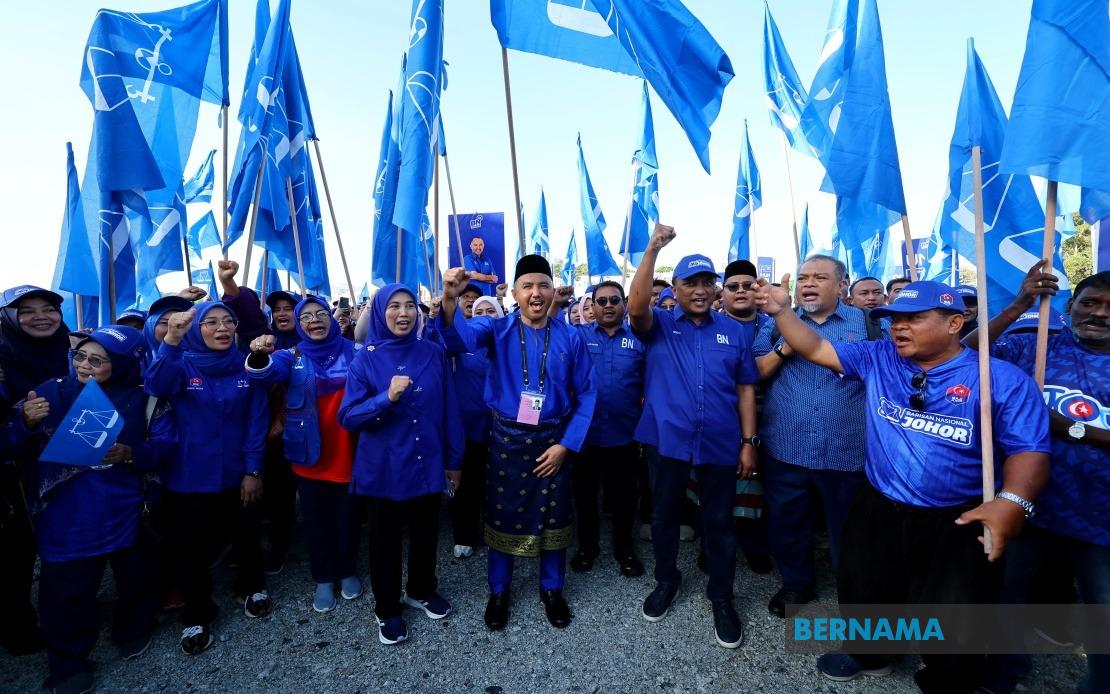
The submission window for candidates contesting the 16th Johor State Election closed punctually at 10am on June 27, as the Election Commission's returning officers locked the doors of all 56 nomination centres across the state. The one-hour registration window, which opened at 9am, proceeded without disruption, setting the stage for what is shaping up to be a fiercely contested election in Malaysia's southern powerhouse.
With nominations formally concluded, the focus now shifts to the Election Commission's release of the official register of eligible candidates and the distribution across Johor's state seats. This announcement will clarify the competitive landscape and how many candidates will vie for each constituency, providing clarity to voters and party strategists alike. The registration process itself appears to have generated significant interest, with party supporters congregating outside nomination centres to accompany their respective candidates.
The 14-day campaign period commences immediately following the nomination deadline and will run continuously until 11.59pm on July 10, giving all registered candidates a fortnight to canvass voters and articulate their platforms. This intensive campaign window is critical for parties to mobilize ground support, conduct rallies, and engage communities before the final push toward the polls. The compressed timeline means campaigns will be strategic and fast-paced, with parties needing to maximize every available opportunity to reach the electorate.
Election day has been set for July 11, with early voting scheduled for July 7 to accommodate service personnel and those unable to vote on the main polling day. This staggered voting arrangement reflects growing recognition of the need to accommodate diverse voter circumstances, particularly among military and police personnel who maintain critical duties even during elections. The early voting provision ensures broader participation while maintaining the integrity of the electoral process.
Order and security prevailed throughout the nomination process, with police and the People's Volunteer Corps maintaining a visible presence at all centres. The atmosphere remained calm and organized, free from any provocative incidents that might have disrupted proceedings. This orderly conduct reflects both the professionalism of election officials and the maturity of political participants, who recognized the importance of maintaining electoral integrity throughout the nomination phase.
Johor's electoral roll reflects the state's substantial population and economic importance within Malaysia. A total of 2,727,926 voters are registered to participate in the election, comprising 2,703,175 ordinary voters alongside 12,041 military personnel and their spouses and 12,710 police personnel and their spouses. This electorate size underscores Johor's significance as one of the nation's most consequential states politically, with enough voters to considerably influence the composition of the state assembly.
The composition of Johor's registered voters reveals important demographic patterns relevant to campaign strategies. The overwhelming majority are ordinary civilian voters, reflecting the state's diverse population engaged in commerce, manufacturing, agriculture, and services. The inclusion of military and police voters, while numerically smaller, carries symbolic importance as it represents the cross-sectional nature of Malaysian democracy, where security personnel participate in the democratic process like other citizens.
Johor's strategic location adjacent to Singapore, combined with its role as Malaysia's second-largest state economy, means state-level governance decisions carry regional implications. Issues such as infrastructure development, water management, and cross-border economic cooperation often feature prominently in state election campaigns. The incoming state assembly will need to grapple with these substantive matters while also representing the diverse interests of a population spread across multiple districts.
The election timeline itself bears noting for stakeholders across Southeast Asia and international observers. Malaysian state elections are conducted with precision and transparency, with clear timelines and established procedures governing every phase. The adherence to schedule in closing all 56 centres simultaneously at 10am demonstrates the institutional capacity of the Election Commission to manage large-scale electoral processes efficiently.
With candidate lists still to be officially published, speculation about seat distribution and competitive dynamics will intensify in coming days. Political analysts and party strategists will scrutinize the nomination data to gauge the intensity of contests in specific constituencies and assess whether dominant parties face credible challenges from opposition groupings. This analytical phase, occurring between nominations and campaign commencement, often shapes media narratives and public expectations heading into the campaign proper.
The smooth conclusion of the nomination phase removes a potential source of electoral controversy and clears the path for a campaign focused on policy debates and community engagement. As Johor voters prepare to exercise their franchise on July 11, the registered candidates will have two weeks to make their cases, articulate visions for their constituencies, and respond to emerging political issues. The state election will provide important signals about voter sentiment and political momentum ahead of any potential federal electoral developments.

