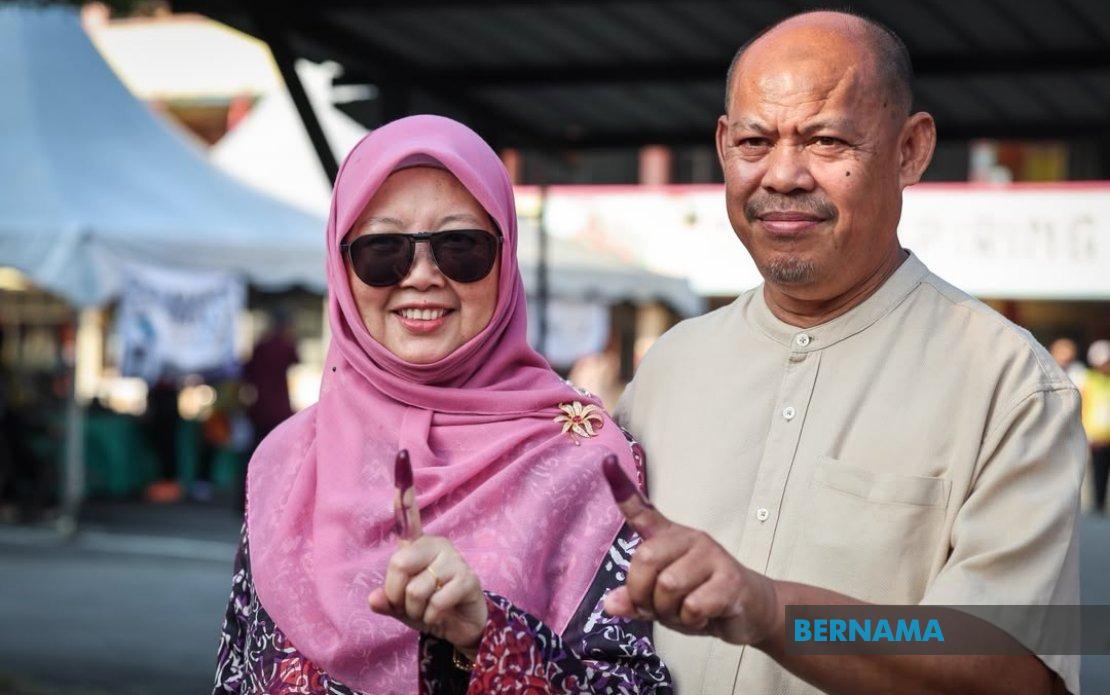
Senior figures from Malaysia's major opposition parties voted among the earliest participants in the 16th Johor state election held on July 11, setting an example for the broader electorate as voting commenced across the southern state. The early turnout by prominent political leaders underscored the significance of the contest, with party officials making deliberate efforts to be seen participating in the democratic process from the opening hours of polling.
Johor PKR chairman Datuk Seri Dr Zaliha Mustafa arrived at Sekolah Menengah Kebangsaan Bandar Baru Uda in Johor Bahru to cast her ballot at 9 am, accompanied by her husband, Dr Ahmad Adzlan Musa. The pair voted together in the Larkin constituency, with Zaliha's presence as one of the first prominent voters reflecting the party's commitment to mobilising support across the state. Her previous experience serving as Minister in the Prime Minister's Department overseeing Federal Territories added weight to her participation, signalling to PKR members and sympathisers the importance the party placed on the election outcome.
Immediate upon voting, Zaliha addressed the waiting media with a direct appeal to Johor residents. She urged the public to venture out early to fulfil their civic duty, framing the timing as a practical matter rather than merely symbolic. Her specific concern centred on weather forecasts predicting significant rainfall from midday through the afternoon—a consideration that could dampen turnout and affect the election's overall participation rates. By casting her vote in the morning window and publicly highlighting this strategic advantage, she provided fellow voters with both an example and practical reasoning to do the same.
The DAP's presence in the early voting cohort was similarly prominent, with Johor DAP chairman Teo Nie Ching casting her ballot at Sekolah Jenis Kebangsaan Cina Kulai Besar in the Kulai constituency approximately half an hour after Zaliha's vote. The Kulai area has long represented contested political ground in Johor, and Teo's early participation underscored the DAP's determination to compete meaningfully across the state rather than concentrate resources in traditional strongholds. Her vote came with symbolism extending beyond personal participation, serving as a visible reminder that the party maintained active leadership presence and engagement in constituencies stretching across Johor's geography.
The timing of the 16th Johor state election held particular resonance for Malaysian political observers. State elections represent crucial electoral moments between federal polls, often serving as bellwethers for shifting voter sentiment and regional political dynamics. For Johor specifically, the contest mattered substantially given the state's size, population, and historical significance within the Malaysian federation. The participation of senior party leaders voting early reinforced the electoral importance their organisations attributed to the result.
Weather represented a legitimate practical consideration for election organisers and voters alike. The monsoon pattern producing afternoon downpours created genuine challenges for poll participation, particularly among voters without private transportation or those managing family responsibilities that made midday voting difficult. Zaliha's recommendation for early participation addressed this real obstacle directly rather than relying on abstract civic duty appeals. Such practical messaging often proves more effective in motivating electoral participation than abstract exhortations to defend democracy.
The early voting by PKR and DAP figures also reflected broader strategic calculations both parties were undertaking regarding Johor's political trajectory. These parties had invested considerable organisational effort into the state, viewing Johor as territory worth contesting rather than conceding to rivals. The visible presence of senior leadership at polling stations during opening hours communicated to party members and supporters that the election genuinely mattered at the highest organisational levels, not merely to mid-tier operatives managing ground campaigns.
Johor's electorate of several million voters represented substantial political stakes for any contesting party. The geographical spread across urban Johor Bahru, industrial clusters, agricultural regions, and smaller towns meant that diverse voter blocs with distinct priorities would determine the outcome. Senior leaders voting across different constituencies—Zaliha in Larkin, Teo in Kulai—demonstrated deliberate strategies to generate positive imagery and encouragement across multiple electoral battlegrounds rather than concentrating ceremonial participation in single high-profile seats.
The messaging around early voting extended beyond internal party communications into public discourse shaping. By creating visual narratives of leadership participation and explicitly addressing practical barriers like weather, party figures attempted to establish social momentum encouraging broader participation. In Malaysian electoral contexts where turnout frequently determines outcomes as significantly as vote distribution, such leadership-level messaging carries measurable influence on overall participation rates.
Regional implications extended throughout Southeast Asia, where Malaysian electoral processes attract neighbour attention given the nation's position as a relatively mature democracy managing significant religious, ethnic, and ideological diversity. How Malaysian state elections proceed and participation patterns observed reflect on the region's broader democratic health and institutional functioning. Early leadership participation and transparent encouragement of broad-based voting contribute positively to such regional assessments.

