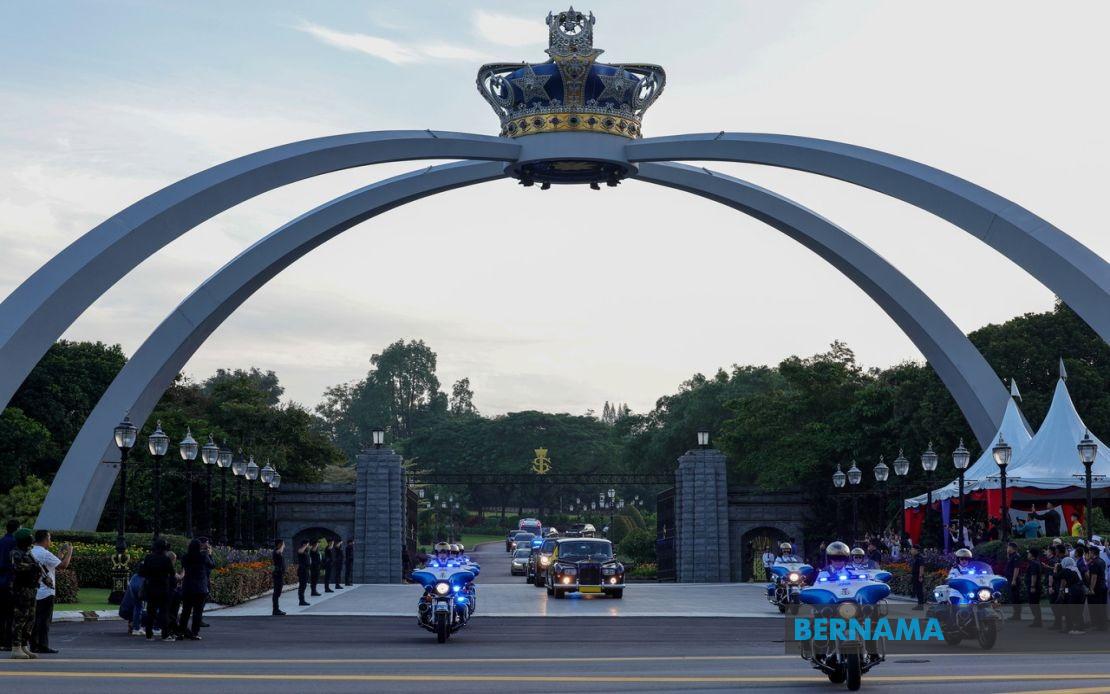
The swearing-in ceremony for Johor's freshly constituted State Executive Council has been rescheduled to Saturday, moving the event back by a single day from its originally planned Friday slot at Istana Bukit Serene in Johor Bahru. Media organisations received notification of the change on Friday morning, though officials offered no explanation for the postponement.
The ceremony was set to be conducted before Tunku Mahkota Ismail, the Regent of Johor, who would have administered the oath to cabinet members gathered at the royal palace. The gathering was anticipated to include Menteri Besar Datuk Onn Hafiz Ghazi, who leads the state government following his recent re-election, alongside other senior officials including Johor Royal Council president Datuk Dr Rahim Ramli and State Secretary Datuk Mohammed Ridha Abd Kadir.
Onn Hafiz secured his second consecutive term as Menteri Besar after Barisan Nasional's commanding performance in the state polls held the preceding Saturday. The coalition captured 48 of the 56 seats available in the Johor State Legislative Assembly, cementing its dominance across the southern state. Onn Hafiz, who represents the Machap constituency, was formally sworn into his fresh tenure the following day, completing the initial phase of the post-election transition process.
The delay in the Exco swearing-in, coming less than a week after the state election result, marks an unusual procedural hiccup in what would typically be a streamlined succession process. Government transitions in Malaysian states usually follow a tightly choreographed schedule to minimise uncertainty and demonstrate administrative continuity. The lack of communication regarding the postponement has sparked speculation among political observers about potential scheduling conflicts, logistical issues, or even last-minute consultations within the royal household.
For Johor, a state that has historically played a significant political role within Malaysia's broader governance landscape, the swearing-in of the Exco represents a crucial moment when administrative authority formally transfers to the newly elected leadership. The Executive Council functions as the principal policy-making body at the state level, with members responsible for overseeing portfolios ranging from economic development and infrastructure to education and local government matters.
The two-day postponement, while minor in the grand scheme of governance, underscores how even well-established ceremonial procedures remain subject to adjustment. Royal protocols governing such occasions can involve complex coordination between multiple parties, and any misalignment in scheduling—whether involving the Regent's calendar, cabinet members' availability, or venue logistics—necessitates rescheduling.
Barisan Nasional's substantial electoral victory in Johor carries implications beyond the state itself. The coalition's performance demonstrates continued voter confidence in its administration despite broader political challenges at the federal level. With nearly 86 percent of legislative seats now held by BN representatives, the state government commands a comfortable working majority that should facilitate relatively smooth passage of legislative initiatives and policy implementation throughout the five-year term.
The composition of the newly sworn Exco will reflect both continuity and potential change. Johor's state cabinet typically includes representatives from the major BN component parties—principally Umno, MIC, and MBF—with the allocation of portfolios traditionally negotiated to balance party representation and individual capability. The specific allocation of ministerial positions often signals leadership priorities and can indicate shifts in policy direction or emphasis.
As Saturday's rescheduled ceremony approaches, attention will focus on the final roster of cabinet appointees and their assigned responsibilities. The delayed swearing-in, despite lacking official justification, has created a brief window for final consultations and adjustments to portfolio assignments, though such behind-the-scenes negotiations would have substantially concluded before the election results were announced.
The incident highlights the sometimes opaque nature of governmental communications in Malaysia, where public institutions occasionally issue schedule changes without elaboration. While transparency concerns might arise from such minimal disclosure, the postponement itself remains procedurally routine—a common occurrence in government that typically reflects practical rather than substantive complications.

