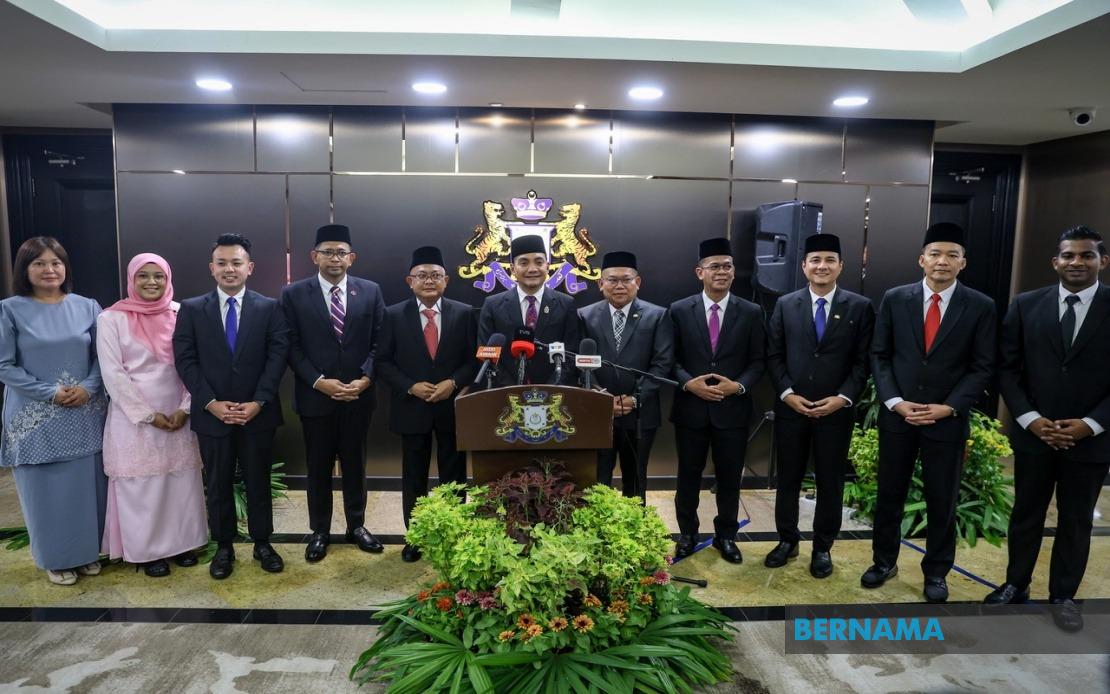
Johor's state administration has been bolstered with the appointment of 10 deputy chairmen to its Executive Council committees, Menteri Besar Datuk Onn Hafiz Ghazi announced at Kota Iskandar on July 22. The restructuring represents a significant expansion of the state's leadership capacity, reflecting the growing complexity of governance as Johor pursues its ambition to achieve developed-state status within the decade. The move comes with formal endorsement from the Regent of Johor, Tunku Mahkota Ismail, signalling strong institutional backing for the administrative shake-up.
Onn Hafiz framed the appointments as a strategic response to escalating developmental demands. As Johor accelerates implementation of major initiatives, the state government determined that existing committee structures needed reinforcement to manage the expanded workload effectively. The deputy committee chairmen will operate alongside existing committee leadership, creating an additional tier of oversight and coordination. This layering of responsibility aims to prevent bottlenecks in decision-making and ensure that complex, multi-departmental projects receive sustained attention throughout their lifecycle.
The appointments directly support two major policy frameworks driving Johor's trajectory. The Maju Johor 2030 programme represents the state's overarching development vision, encompassing economic, social, and infrastructure priorities across a decade-long horizon. Complementing this broader framework is the Johor Economic Transformation Plan (JETP), which targets specific sectors and economic levers for growth. Both initiatives require seamless coordination across multiple government agencies, private sector partners, and district-level administrators. The newly appointed deputy chairmen will serve as crucial nodes in this coordination network, translating high-level policy into ground-level action.
The structure of this administrative expansion reflects lessons learned in governance elsewhere in Southeast Asia. Rather than wholesale reorganisation, which risks institutional disruption, Johor has opted for targeted capacity-building within existing frameworks. Deputy committee chairmen will work in tandem with their respective chairmen, avoiding redundancy while creating space for parallel effort streams. This approach allows the state government to test new processes and responsibilities before potentially making them permanent fixtures in future administrative reviews.
Onn Hafiz emphasised that the deputy chairs bear genuine responsibility, not ceremonial titles. Each will be expected to engage directly in monitoring project implementation and coordinating field operations. This hands-on expectation distinguishes the roles from traditional deputy positions that sometimes amount to honours. By requiring active participation in operations—visiting project sites, liaising with departments, and troubleshooting on-ground problems—the state aims to create faster feedback loops and more responsive decision-making. The accountability language used in the announcement suggests performance expectations will be monitored.
For Malaysian observers, the appointment carries broader significance regarding state-level governance innovation. Johor, as one of Malaysia's largest and economically significant states, often functions as a testing ground for administrative approaches that other states later adopt or adapt. How effectively these deputy committee chairmen operate over the coming months and years will likely inform discussions about governance capacity in other state administrations grappling with similar challenges around project coordination and service delivery.
The geographical scope of these arrangements merits consideration. Johor encompasses 14 districts with varying levels of economic development, urbanisation, and infrastructure maturity. Iskandar Puteri, where the announcement was made, represents the newer, rapidly developing southern corridor, while northern districts such as Kota Tinggi and Mersing face different developmental priorities. The deputy chairmen structure should theoretically enable more nuanced, context-appropriate implementation of state policies across these diverse settings, rather than one-size-fits-all approaches from the state capital.
Transparency regarding the actual appointments remains limited in the available announcement. The press conference revealed the decision and its rationale but did not list the names of those appointed or specify which committees received new deputy chairs. This information gap suggests either a phased announcement strategy or reliance on subsequent official gazetting. For businesses, contractors, and civil society organisations monitoring Johor's governance apparatus, clarity on the appointees' backgrounds, expertise, and networks will be important for understanding how committee work may evolve.
The timing of the restructuring, roughly two-and-a-half years into the Maju Johor 2030 period, suggests that mid-course adjustments are underway. Initial implementation phases of major state programmes often reveal coordination gaps or capacity constraints. Rather than waiting for formal five-year reviews, Onn Hafiz's administration appears to be proactively addressing emerging bottlenecks. This adaptive governance approach contrasts with more rigidly structured administrations that rarely adjust course absent external pressure.
From a service delivery perspective, the public-facing benefits hinge on execution. Committee structures and deputy appointments matter only insofar as they translate into faster licensing decisions, better-coordinated infrastructure projects, more responsive complaint resolution, and clearer communication about government initiatives. The announcement's emphasis on service delivery and grassroots reach suggests the state government recognises that administrative efficiency ultimately matters to ordinary Johoreans navigating bureaucracy or awaiting promised development projects. Measuring whether these appointments genuinely improve service metrics will be crucial feedback for evaluating the reform's success.
The appointment also signals confidence in the existing committee system's fundamental framework. Rather than discarding or radically restructuring the committee-based governance model, the state is augmenting it. This conservative approach preserves institutional continuity while addressing capacity concerns. For stakeholders accustomed to existing committee operations and relationships, the change introduces new contact points without destabilising established channels.
Looking forward, the question of whether these deputy positions remain permanent or function as developmental roles for future succession planning remains unclear. If the latter, these appointments could represent talent identification for future committee chairmanships or higher executive roles, effectively serving as a leadership pipeline. Either interpretation underscores that Johor's administrative evolution is ongoing, with structural adjustments likely as the state pursues its ambitious 2030 development targets and grapples with the practical challenges of sustained economic transformation across a geographically and economically diverse territory.

