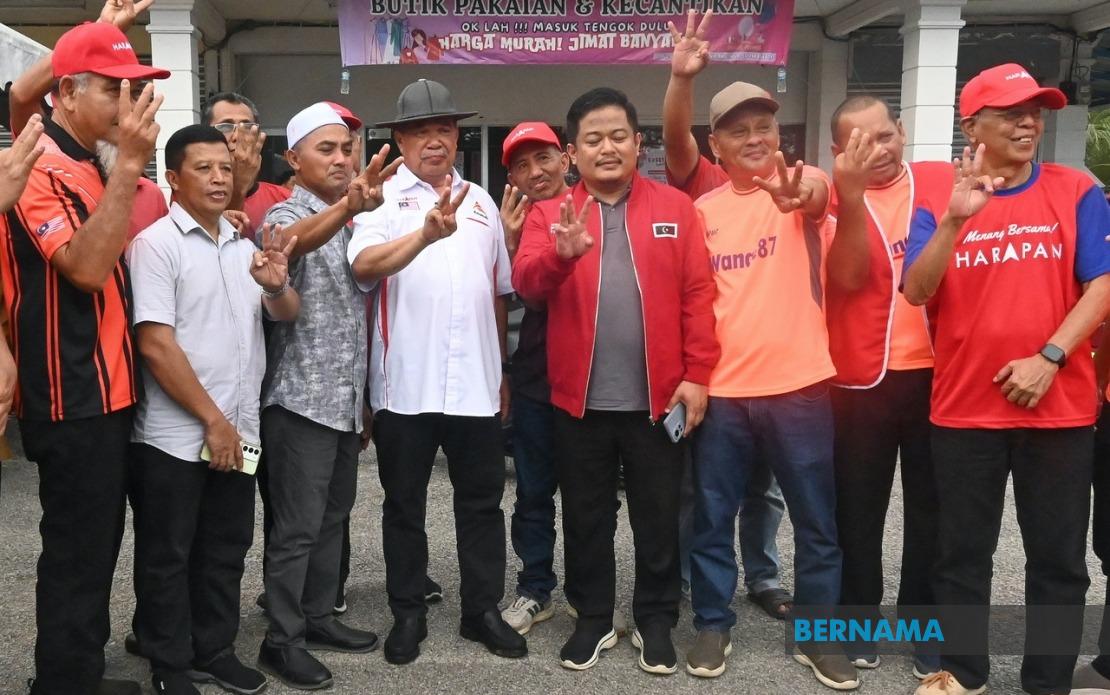
Pakatan Harapan is making a direct appeal to Johor voters ahead of Saturday's state election, with coalition leaders arguing that securing a mandate is essential to transforming campaign promises into tangible policy outcomes. Amanah president Datuk Seri Mohamad Sabu, who also serves as Minister of Agriculture and Food Security, addressed supporters in Rengit on Friday, emphasising that the manifesto released days earlier represents genuine commitments developed through extensive grassroots consultation rather than superficial political rhetoric.
The messaging from PH's leadership reflects awareness that voters often harbour scepticism about pre-election pledges, particularly given Malaysia's history of unfulfilled campaign promises. Sabu acknowledged this implicit criticism by stressing that manifestos, while important, derive their true value only through implementation. He framed voter choice as deterministic: without PH winning sufficient seats to govern Johor, the coalition cannot enact the policies outlined in its platform. This framing places responsibility squarely on the electorate, suggesting that those who wish to see promised reforms must actively vote for PH candidates rather than merely expressing passive support.
According to Sabu, the PH manifesto emerged from prolonged engagement with rural and urban communities across Johor, during which party representatives documented constituent grievances and policy priorities. The coalition then structured its pledges to address the issues raised directly by voters themselves. This narrative of bottom-up policy development contrasts sharply with opposition claims that PH's manifesto constitutes merely repackaged or duplicated commitments. By characterising the document as the product of listening campaigns and genuine deliberation, Sabu attempted to rebut suggestions that PH operates without authentic connection to local needs.
The timing of Sabu's remarks—five days before polling—underscores PH's apparent confidence in its campaign trajectory while simultaneously revealing tactical concerns about voter turnout and commitment. The Johor state election carries particular significance for the federal coalition, which governs at the national level but faces structural disadvantages in several crucial states. Victory in Johor, historically a Barisan Nasional stronghold, would represent a decisive consolidation of PH's political position and validate the coalition's governance record since 2018.
Sabu noted tangible shifts in public receptivity toward PH across rural constituencies, describing a marked contrast with the 2018 general election when the coalition remained relatively unknown in farming communities and small towns. He reported that campaigning now generates spontaneous recognition and enthusiasm from ordinary voters, with people greeting PH representatives unprompted and requesting photographs. This anecdotal evidence, while not statistical, suggests that PH has successfully transformed its brand perception in peripheral areas where it previously struggled to establish organisational presence or public familiarity.
The minister pledged that implementation of promised initiatives would commence immediately upon electoral victory, setting July 12 as a symbolic commencement date for policy execution. This commitment addresses a common criticism of incoming governments: the perception that campaign promises remain dormant during transition periods. By publicly committing to rapid action, Sabu sought to establish accountability benchmarks and demonstrate seriousness regarding policy delivery. Malaysian voters have witnessed extended delays between election victories and substantive policy changes, making Sabu's timeline pledge potentially significant for managing public expectations.
For Johor's electorate, the election presents a choice between continuity under traditional governing arrangements and change represented by the PH coalition. The rural focus of Sabu's campaign tour reflects strategic prioritisation of constituencies where voter margins often determine election outcomes. These areas have historically voted conservatively, favouring incumbent parties and established political structures. PH's campaign efforts in such communities therefore represent attempts to fracture long-standing voting patterns through direct engagement and tangible policy offers addressing agricultural concerns, rural infrastructure, and livelihood security.
The election also carries implications for Malaysia's broader political equilibrium. A decisive PH victory in Johor would strengthen the federal government's legitimacy and weaken opposition claims that the coalition lacks genuine popular mandate. Conversely, a poor PH showing would embolden Barisan Nasional and other opposition forces while creating internal questions about PH's electoral sustainability and governance capacity. These stakes extend beyond Johor's boundaries, influencing calculations for subsequent elections and national political trajectories.
Sabu's emphasis on implementation over rhetoric reflects lessons PH itself has absorbed since returning to government in 2018. The coalition's mixed record on manifesto delivery during its first federal term, interrupted by internal collapses and leadership changes, created public perception of unfulfilled commitments. By explicitly addressing this credibility gap and proposing rapid implementation, Sabu attempted to differentiate PH's current offer from previous electoral promises that languished in bureaucratic processing or fell victim to political instability.
The Johor election occurs within Malaysia's broader context of devolved governance, where state governments exercise substantial autonomy over land, local administration, agriculture, and social welfare matters directly affecting daily voter experience. Control of state machinery therefore translates into genuine policy-making authority rather than merely symbolic representation. This distinguishes state elections from federal ballots and increases their relevance for evaluating political performance and accountability.

