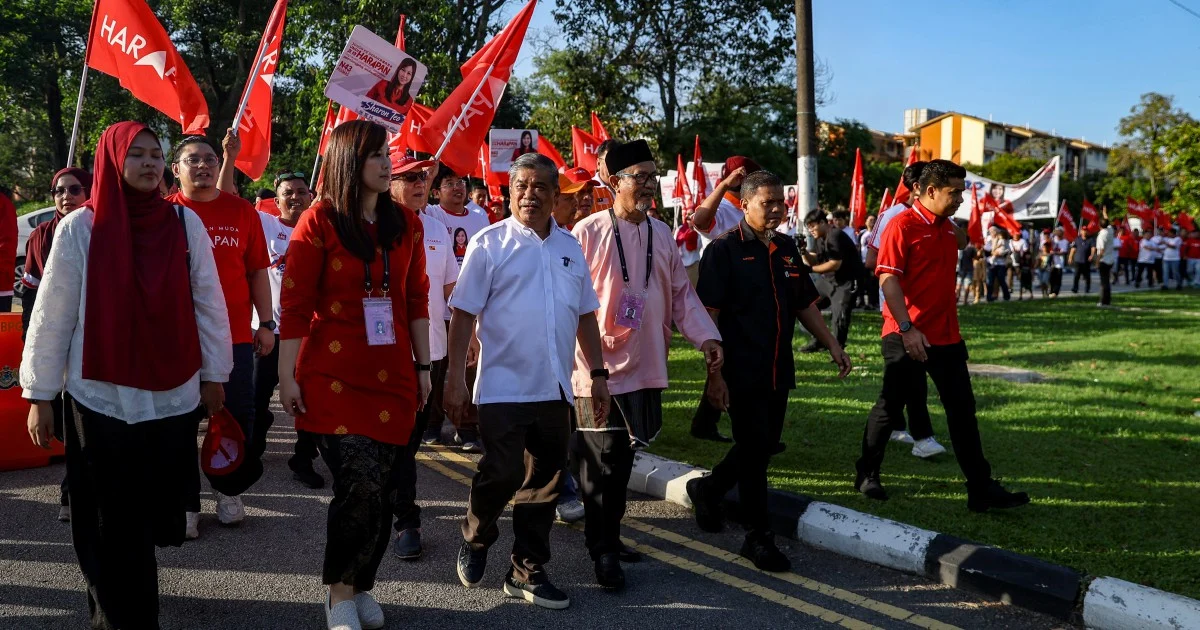
Pasir Gudang witnessed fervent backing for the opposition coalition on Monday as Pakatan Harapan's candidate Sharon Teo proceeded through nomination formalities at Dewan Muafakat Taman Mawar. Supporters congregated to demonstrate their preference for the coalition, with rhythmic chants of "Johor undi Pakatan Harapan" filling the venue and underscoring the organised nature of the campaign machinery mobilising behind the nomination process.
The scene reflects the intensifying electoral engagement in Johor's state-level contest, where both established and emerging political forces are attempting to consolidate voter backing ahead of polling day. Sharon Teo's candidacy in the Permas constituency represents one focal point in what has become a competitive multi-cornered battle for legislative control of Malaysia's southernmost peninsular state, traditionally a stronghold of Barisan Nasional influence.
Permas, located within Pasir Gudang district, carries political significance given its mixed urban and suburban demographics. The constituency's voter composition includes working-class residents, small-business operators, and younger professionals—constituencies that both ruling and opposition blocs have prioritised in recent electoral cycles. Pakatan Harapan's decision to field Teo in this seat suggests the coalition perceives meaningful opportunities for inroads, particularly if national-level sentiment against the incumbents has filtered down to state-level preferences.
The nomination centre gathering demonstrates the tactical importance parties attach to theatrical displays of grassroots enthusiasm during the formal nomination phase. By marshalling supporters to the filing venue, parties seek to convey momentum and inevitability to both voters and media observers, essentially previewing campaign energy that will intensify through the nomination period and into the final canvassing phase.
For Pakatan Harapan, manufacturing visible enthusiasm in Johor holds particular weight. The state remained a Barisan Nasional bastion following the 2023 general election, despite the coalition's strong peninsular performance. Demonstrating capacity to mobilise voters in traditionally hostile terrain serves multiple purposes: it signals that the opposition retains capacity for organised action, boosts morale among party members and supporters increasingly disillusioned with incumbent governance, and potentially unsettles ruling-coalition strategists by suggesting dormant opposition reserves in constituencies previously written off.
Sharon Teo's profile and background as Pakatan's representative will factor significantly in determining whether early enthusiasm translates into substantive electoral gains. Candidates positioned as bridge-builders between traditional party bases and newer, issue-focused voters—whether environmentally conscious younger voters, or residents frustrated by cost-of-living pressures—tend to generate the type of grassroots momentum evident at Monday's nomination filing.
The timing of Johor's election remains significant for national political calculations. As a populous state with substantial electoral weight, Johor outcomes will signal the trajectory of competition heading toward a potential general election that could occur within the next 18 months. Should Pakatan achieve unexpected gains in constituencies like Permas, it would suggest their 2023 momentum has not entirely dissipated, complicating Barisan Nasional's path toward reclaiming outright legislative dominance at federal level.
Nomination centre activations across constituencies serve as early indicators of campaign intensity and organisational capacity. Opposition coalitions that can mobilise supporters for what are ostensibly administrative events demonstrate superior ground organisation compared to rivals who approach nominations as mere procedural requirements. The Permas turnout suggests Pakatan has invested preparation resources into consolidating its Johor infrastructure since the 2023 general election.
For Malaysian voters in states beyond Johor, developments in the southern state carry resonance. Johor's outcome may influence perceptions about which political blocs possess momentum, particularly if results contradict pre-election predictions. A stronger-than-expected opposition performance would reframe national political dynamics, potentially emboldening non-Barisan voices in states like Selangor, Kedah, and Terengganu where the next state contests will be contested.
The chanting at Permas also underscores how nomination periods, despite their administrative character, function as compressed campaign moments where symbolic political messaging concentrates. Slogans emphasising state-wide coalition preference—rather than individual candidate promotion—reflect strategic messaging that Pakatan is positioning itself as a comprehensive alternative government, not merely a repository for protest votes.
As Johor's electoral process unfolds across nomination filings and campaign rallies, the enthusiasm demonstrated at Dewan Muafakat Taman Mawar will serve as a baseline marker. Whether this early activation translates into polling-day performance remains uncertain, but it suggests the opposition coalition has not conceded the state as written territory and retains aspirations toward meaningful electoral breakthroughs in one of Malaysia's most politically consequential regions.

