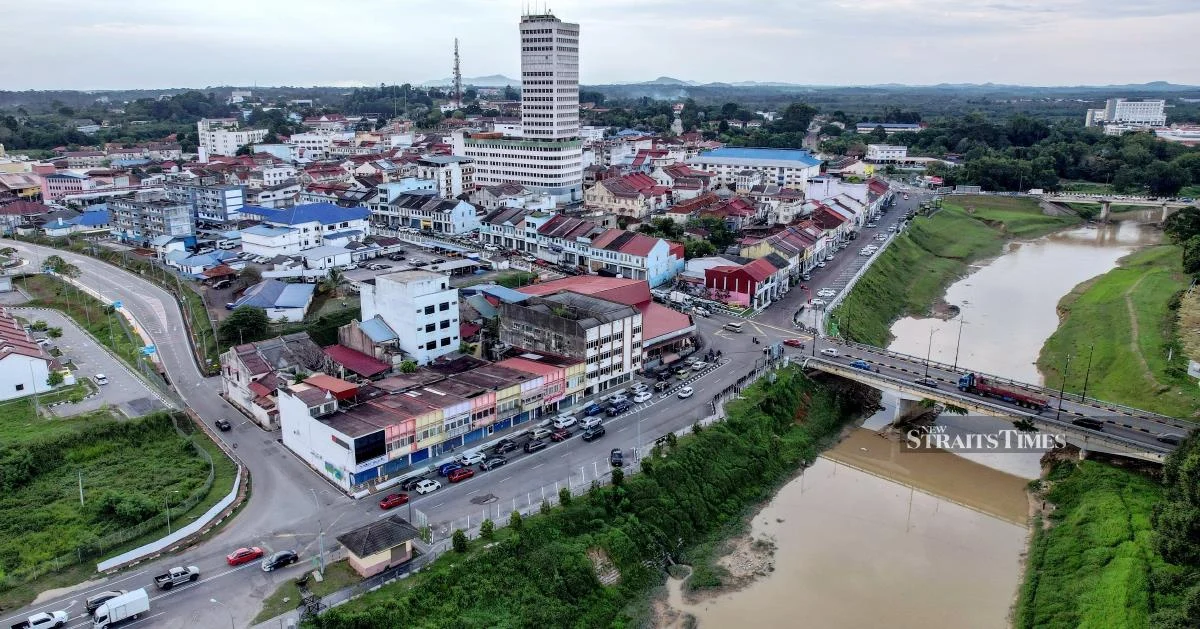
Communications Minister Datuk Fahmi Fadzil has issued a pointed warning to voters in Johor ahead of the state election, urging them to exercise heightened vigilance against coordinated digital misinformation campaigns. Speaking in Muar, the minister highlighted concerning attempts by unknown actors to establish fraudulent social media accounts bearing the images of legitimate election candidates, a tactic designed to sow confusion and undermine public trust in the electoral process.
The emergence of such fake accounts represents a qualitative shift in how elections are contested in Malaysia. Rather than conventional campaign tactics, political operatives are increasingly turning to digital channels to manipulate voter sentiment. These fabricated profiles, which appropriate the identities of actual candidates, can disseminate false information, contradict authentic campaign messages, and potentially harvest sensitive personal data from unsuspecting followers. For voters unfamiliar with digital security practices, distinguishing genuine accounts from imposters poses a genuine challenge.
Fahmi's warning carries particular weight given Malaysia's recent experience with digital interference in electoral contests. The Johor state election represents one of the most closely watched political contests in recent months, with significant implications for the balance of power in Southeast Asia's most developed state. The timing of such warnings suggests that authorities have detected active campaigns to manipulate the information environment, prompting the government to mobilize public education efforts.
The Communications Ministry oversees digital affairs and cybersecurity coordination across government, positioning Fahmi as the natural point person for such alerts. His decision to personally deliver this warning in Muar, a constituency in Johor's Muar district, indicates that officials consider the threat sufficiently acute to warrant direct ministerial intervention. The specificity of the alert—focusing on fake accounts and candidate impersonation—suggests that security agencies have gathered concrete intelligence about ongoing manipulation attempts.
Fake accounts and coordinated inauthentic behavior have become standard tools in electoral manipulation worldwide. By creating multiple fraudulent profiles, actors can amplify divisive messages, create the illusion of grassroots support or opposition, and exploit algorithmic recommendation systems to maximize reach. When these accounts impersonate legitimate candidates, they introduce an additional layer of deception, potentially attributing controversial statements to real political figures. Voters who encounter such content without verification may form judgments based on fabricated material.
The implications for Malaysian electoral integrity are substantial. Unlike physical vote-buying or intimidation, digital sabotage leaves minimal evidence and operates across state boundaries with minimal cost. A single coordinated operation originating from anywhere on Earth can influence voter perceptions in Johor by the time authorities detect it. This asymmetry—where the barrier to conducting digital interference is low while the barrier to detection remains high—creates inherent vulnerabilities in modern electoral systems.
Malaysian voters should adopt practical verification habits when encountering political content online. Checking whether accounts have verification badges, examining posting history for consistency, cross-referencing claims with official campaign channels, and consulting fact-checking organizations can help distinguish authentic from fabricated sources. The Communications Ministry's public alert serves as a crucial first step, but sustained voter education remains essential. Elections depend fundamentally on an informed electorate, and digital interference directly undermines that foundation.
The broader context reveals a region increasingly targeted by sophisticated information operations. Neighboring countries have experienced documented cases of coordinated fake account networks, state-sponsored disinformation campaigns, and deepfake technology deployed during electoral periods. Malaysia's relative openness and internet penetration make it an attractive target for both domestic actors seeking political advantage and foreign entities interested in regional instability. Recognizing these threats represents an important maturation of Malaysian discourse around election security.
Authorities have not identified the specific origins of the fake account attempts detected ahead of the Johor election. The perpetrators could include rival political camps, foreign interference actors, or criminal elements seeking financial gain through account monetization. Each scenario carries different implications for how authorities should respond. Regardless of origin, however, the existence of coordinated inauthentic behavior during an active election campaign warrants serious attention and public transparency.
Moving forward, Malaysian election management authorities and technology platforms bear shared responsibility for protecting electoral integrity. Social media companies should implement more robust verification processes, deploy detection systems for coordinated inauthentic behavior, and respond rapidly when such activity is reported. Malaysian authorities, meanwhile, should establish clearer protocols for investigating digital interference, coordinate with international partners on tracking transnational operations, and invest in public digital literacy programs.
The Johor state election occurs against this backdrop of genuine digital vulnerabilities. Fahmi's warning represents an important acknowledgment that modern electoral contests unfold simultaneously across physical and digital spaces. Voters who remain aware of these tactics and commit to verifying information before sharing or acting upon it contribute directly to protecting electoral legitimacy. As Malaysia continues hosting elections in an increasingly connected world, such public awareness becomes an essential component of democratic resilience.

