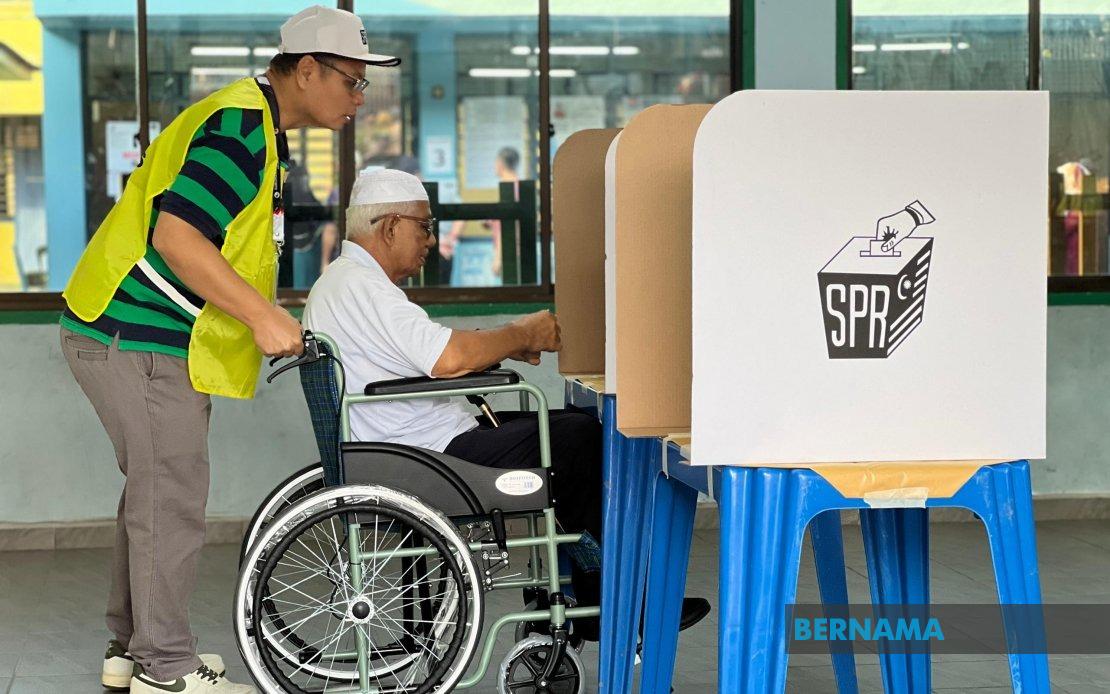
Johor's state election unfolded across the full breadth of the state on July 11 as all 1,076 polling centres commenced operations simultaneously at 8 am, marking the democratic centrepiece of the 16th legislative cycle. The infrastructure stretched across 4,889 individual polling streams, each staffed and prepared to facilitate the electoral process for the 2.7 million registered voters who exercised their right to choose the state's next administration. This logistical undertaking represents a significant administrative exercise, coordinating polling stations from the northern reaches of the state through to its southern extremities, ensuring equal access to the ballot box across urban centres and rural constituencies alike.
The voting window extended throughout the day until the standard 6 pm closing time, providing citizens with a ten-hour period to participate. However, the Election Commission factored in the reality of uneven voter distribution across constituencies by arranging staggered closures at some centres where the registered voter population was comparatively modest. Certain polling locations began shutting down as early as 11 am once all registered voters within those precincts had either cast their votes or the timeframe rendered further voting unlikely. This pragmatic scheduling acknowledged the diverse demographic patterns across Johor's constituencies while maintaining equitable opportunity for political participation.
The electoral landscape reflected significant competition and voter choice. A total of 172 candidates contested the 56 State Legislative Assembly seats available, generating diverse contest configurations that would shape voter decisions across the state. The competitive structure included twelve four-cornered contests where four distinct parties or independent candidates vied for the same seat, twenty-seven three-cornered contests featuring three contestants, and fourteen straight fights representing direct contests between two aspirants. This variation in contest types meant voters across different constituencies faced markedly different choices, with some electors selecting from multiple options while others decided between two primary contenders.
Election Commission officials had established an ambitious performance target, aiming to achieve approximately 70 per cent voter participation. This benchmark reflected expectations that the majority of eligible voters would engage in the electoral process, suggesting public interest in determining Johor's political direction. The commission coordinated its operational timeline to deliver comprehensive results by 10 pm on election day, allowing for rapid vote counting and tabulation across all polling stations. This expedited announcement schedule demonstrated improved operational efficiency compared to historical electoral cycles, enabling swift confirmation of the winning coalition and government formation processes.
Security arrangements received particular attention throughout the voting day. Personnel from relevant agencies were positioned at polling locations to maintain orderly conduct and prevent disruptions to the democratic process. These security contingents were visible at multiple voting stations, serving both as preventive deterrents against potential misconduct and as reassuring presences for voters exercising their franchise. The presence of uniformed security underscored the seriousness with which electoral authorities approached their responsibility to protect the integrity of the voting process.
Media coverage began mobilising well before the official poll opening, with journalists and photographers positioning themselves at polling stations from 7 am onwards. This early arrival reflected the importance of capturing real-time developments and voter sentiment throughout the day. News organisations sought to document the electoral experience firsthand, interviewing voters and officials while monitoring participation rates and procedural compliance across the state's polling infrastructure.
Weather conditions generally favoured voting activities, with clear skies prevailing across most of Johor throughout the morning and midday periods. The Muar district formed a notable exception, experiencing rainfall that potentially affected voter movement and logistics in that locality. However, inclement weather in one district did not materially disrupt the broader electoral operation across the state's remaining constituencies. The favourable meteorological conditions elsewhere facilitated smooth voter access and comfortable conditions for polling officials and electoral observers alike.
The culmination of the fourteen-day campaign period at midnight the previous evening transitioned electoral activity from outdoor rallies, ceramahs, and canvassing into the formal voting phase. During this fortnight of intensive campaigning, candidates and parties had mobilised supporters, presented policy platforms, and sought to persuade undecided voters through conventional grassroots engagement and public discourse. The midnight deadline established a clear demarcation between persuasion and voting, preventing last-minute electioneering that could influence voters at the polling centres themselves.
For Malaysians observing electoral developments, the Johor election carried significance beyond the state's boundaries. As one of Malaysia's largest and most economically important states, the outcome would influence national political dynamics and potentially shape discussions around federal-level coalition possibilities. The electoral configuration and result could affect broader narratives about voter sentiment in the country's eastern region and might influence calculations for future national elections. Regional observers and analysts would scrutinise voting patterns and turnout figures as indicators of public satisfaction with incumbent administrations and the resonance of opposition messaging across the peninsula's southern stronghold.

