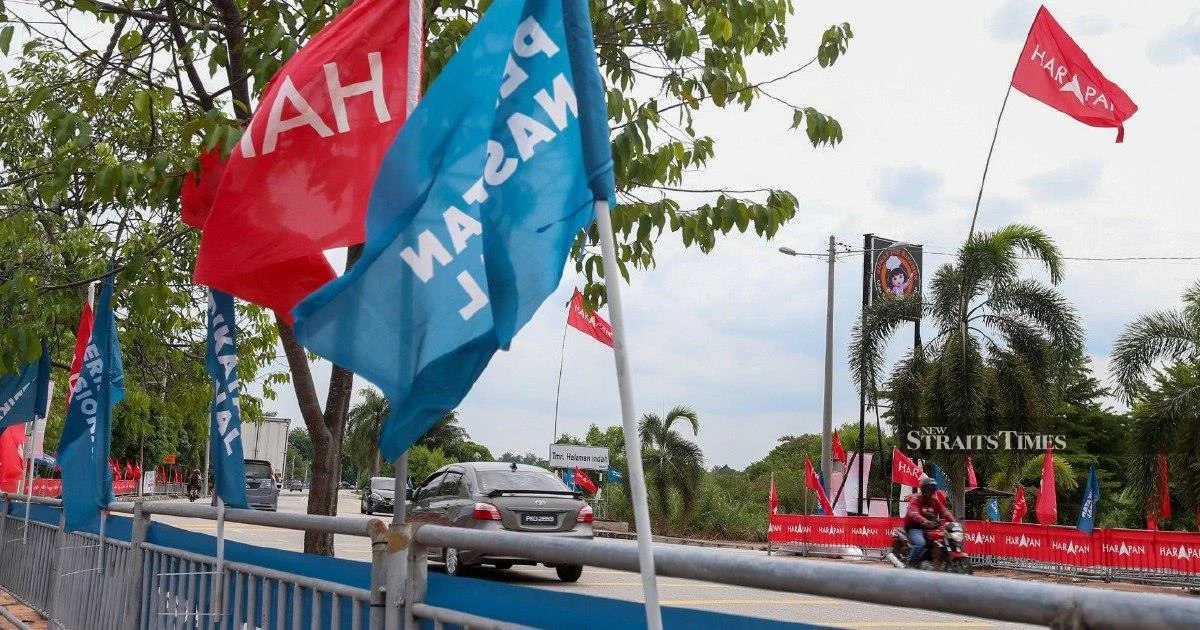
The 16th Johor state election campaign swung into motion today as nomination day unfolded simultaneously across all 56 constituencies, marking the formal launch of what promises to be a keenly contested race for control of Malaysia's most economically significant state. Political parties fielded their candidates throughout the day, completing the procedural requirements that set the stage for the electoral battle ahead. The process, conducted across multiple nomination centres statewide, represents a critical juncture where the composition of competing slates becomes public and the actual scale of three-cornered or multi-cornered fights emerges across different districts.
The commencement of nomination procedures signals the beginning of an intensive campaign period during which candidates will compete directly for voters' support. All major political coalitions have prepared their candidate lists ahead of today, with significant emphasis placed on selecting contenders capable of retaining existing seats or capturing opposition-held ground. The scale of Johor's electoral exercise—spanning 56 seats across the state's diverse geography—underscores the complexity involved in coordinating party machinery and ensuring adequate campaign resources reach every corner of the state.
For Malaysian political observers, Johor elections carry particular significance beyond the state's boundaries. As the nation's primary industrial and commercial hub, Johor's political direction frequently influences broader national narratives and coalition dynamics. The state's economy, centred on manufacturing, trade, and increasingly technology-driven sectors, means that state-level policies on infrastructure, labour regulations, and business incentives directly affect thousands of enterprises and hundreds of thousands of workers. Political stability and clear governance mandates thus carry material weight for economic actors across Southeast Asia who maintain operations or supply chains connected to Johor's commercial ecosystem.
The 56-constituency configuration reflects Johor's size and population distribution, encompassing urban centres like Johor Baru alongside semi-rural and rural districts. This diversity requires candidates to address divergent voter concerns—from urban infrastructure and services in city constituencies to agricultural support and rural connectivity elsewhere. The nomination process today revealed how effectively parties have balanced ticket composition to appeal across these varied constituencies, whether through fielding locally embedded figures or parachuting in candidates perceived to carry stronger personal credentials or national profile.
Campaign dynamics in Johor elections typically mirror and amplify national political trends, though state-specific issues occasionally dominate local discourse. The outgoing composition of the Johor assembly and the performance of the previous state administration establish the baseline from which voters assess alternatives. Incumbent parties must defend their records on state spending, development projects, and administrative efficiency, whilst opposition parties present alternative visions and criticise perceived shortcomings. Nomination day itself, however, offers the first concrete evidence of party confidence and resource allocation, visible in the calibre of candidates fielded and the geographic distribution of high-profile names across constituencies.
The timing of Johor's 16th election occurs within a broader context of Malaysia's political landscape, where state elections and federal dynamics increasingly intertwine. Voter sentiment shaped by national economic conditions, federal government performance, and Putrajaya-level political controversies invariably influences voting behaviour at the state level. Equally, Johor's electoral outcome carries implications for national coalition calculations, as significant shifts in state representation alter the arithmetic of parliamentary support available to federal governments. This interconnection means that candidates campaigning in Johor constituencies must navigate both local issues and the national political atmosphere.
The nomination process itself involves substantial coordination. Election authorities supervised the concurrent proceedings across multiple centres, validating candidate nominations, verifying documentation, and ensuring compliance with electoral regulations. Candidates submitted nominations containing required declarations, voter endorsements, and statutory affidavits. The smooth execution of nomination day across 56 constituencies demonstrates the operational capacity of Malaysia's electoral management infrastructure, though such large-scale exercises inevitably generate stories of last-minute submissions, procedural clarifications, and occasional contested nominations.
Campaign periods following nomination day typically intensify rapidly as candidates activate ground operations and political parties deploy campaign machinery. Media coverage expands as candidates become formally registered contenders rather than anticipated candidates, enabling greater scrutiny of platform positions and track records. Advertising campaigns, public forums, and grassroots engagement activities multiply as the formal campaign phase progresses toward polling day. For voters, nomination day represents the moment when abstract political preferences crystallise into actual choices between named, identifiable candidates contesting in their constituencies.
The nomination process also establishes the specific configurations of contests in each constituency—whether straight fights between two candidates, three-cornered affairs involving three contenders, or more complex multi-candidate scenarios. These structural variations significantly influence campaign tactics and voter strategy. Voters in constituencies featuring three or more strong contenders face more complex strategic voting calculations than those facing binary choices. Parties similarly adjust campaign emphasis and resource allocation based on the specific competitive environment in each seat.
As candidates formally enter the race across Johor's 56 constituencies, the state's political landscape becomes fully visible for the first time in this election cycle. The composition of candidate lists, the prominence of individual contenders, and the distribution of party resources reflected in nomination decisions now form the foundation upon which campaigns will be built and voters' ultimate choices made. With nomination day completed, the pathway toward polling day is now clearly marked, initiating a period of intensive political engagement that will reshape Johor's state assembly composition and influence broader Malaysian political alignments.

