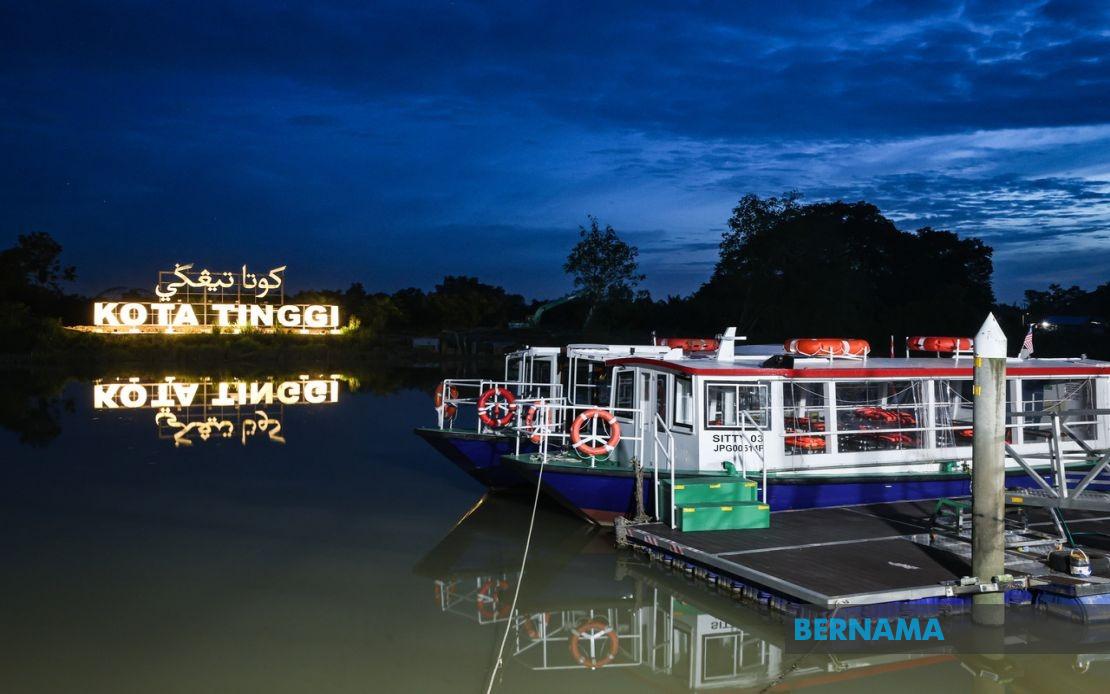
The Sungai Johor, long a vital artery through Johor's landscape, is experiencing a remarkable revival as a tourism destination. A newly established river cruise operation departing from Pangkalan Kota Jetty is introducing both domestic and international visitors to the waterway's layered significance—weaving together ecological preservation, historical narrative, and contemporary leisure experiences. As Malaysia increasingly looks to diversify its tourism offerings beyond conventional attractions, this initiative in Kota Tinggi exemplifies how regional destinations can leverage local assets to create compelling visitor experiences while supporting broader state tourism strategies such as Visit Johor 2026.
The Kota Tinggi River Cruise (KTRC) operates a 6.7-kilometre route that transitions passengers from the town's commercial centre into a landscape dominated by verdant riverbank vegetation. This geographical shift is more than merely scenic; it represents a deliberate curatorial approach to heritage tourism. According to KTRC operations manager Aiman Haikal Mohd Azmi, the river itself constitutes an open-air museum of sorts, its waters having witnessed pivotal moments in regional history. Following the Portuguese conquest of Malacca in the 16th century, the Johor-Riau Sultanate established itself as the successor polity, and Sungai Johor served as the political and economic spine of early sultanate settlements. This historical narrative transforms the cruise from a simple scenic excursion into an educational voyage through a foundational period of Malay-Muslim statecraft in the archipelago.
The operational success of KTRC in its initial months underscores strong market appetite for heritage-inflected tourism offerings. Within the first seven months of operation, the cruise attracted more than 10,000 passengers, a figure that encompasses not only Malaysian travellers but also visitors from neighbouring Singapore, Indonesia, and Brunei. This cross-border visitation pattern is particularly significant for Johor, which sits at the geographic intersection of major Southeast Asian tourism flows. The presence of international visitors suggests that heritage-and-nature combinations possess genuine marketing appeal across diverse cultural backgrounds, validating the model's potential for replication across other Johor riverine and historical sites.
The cruise's daytime itinerary deliberately sequences landmarks of both natural and historical significance. Passengers encounter the Titian Laksamana, a pedestrian suspension bridge that has become established in local photography circuits, and the Johor River Barrage, an engineering structure that serves dual functions as infrastructure and photographic subject. More substantively, the onboard commentary—delivered either through recorded audio or live narration by trained guides—contextualises these physical features within broader narratives of royal governance and legendary seafaring authority. Figures such as Sultan Mahmud Mangkat Dijulang and Laksamana Bentan, drawn from the sultanate's classical period, are positioned not as abstract historical figures but as shapers of the very waterway passengers traverse. This narrative strategy imbues the journey with interpretive depth, transforming a boat ride into a structured learning experience.
Kota Tinggi's historical geography holds particular resonance because the river witnessed the burial of multiple Johor sultans, whose interment sites along its banks constitute physical anchors for dynastical continuity. The abandoned settlement of Johor Lama and the burial ground of Kampung Makam are geographic markers of a vanished political centre, their riverside locations rendering them accessible to contemporary visitors in ways that inland archaeological sites cannot match. For Malaysian audiences, particularly those with connections to Johor's social fabric, these sites carry resonance beyond tourism metrics; they represent tangible links to a formative period of Malay political organisation. For international visitors, they offer windows into the historical underpinnings of contemporary Southeast Asian sultanate systems.
Beyond daytime heritage-focused cruising, KTRC has developed supplementary packages designed to appeal to visitors seeking different experiential dimensions. The Mesmerising Fireflies package represents a notable example of value-added tourism product design. By operating evening cruises into the darkness, KTRC enables passengers to observe the bioluminescent display of fireflies—a natural phenomenon that both delights casual tourists and attracts specialised naturalists. This nocturnal offering diversifies the cruise's appeal across temporal preferences and creates opportunities for repeat visitation among those who sample multiple packages. The Dining Cruise package similarly extends the operation's commercial scope by combining gastronomy with landscape experience, leveraging the river's panoramic dimensions as a staging ground for culinary engagement.
Pricing architecture reveals deliberate attention to accessibility across demographic segments. Day cruise fares of RM20 for adults, RM15 for children, and RM10 for seniors and persons with disabilities position the experience within reach of middle-income family groups whilst generating meaningful revenue streams. The modest price differential between daytime cruises (RM20 to RM23 depending on package) and other regional attractions suggests competitive positioning within Johor's emerging tourism market. Extended operating hours on weekends—cruises run until 10 pm Friday through Sunday compared to 7 pm on weekdays—reflect both anticipated demand patterns and operational efficiency considerations. Hourly departures provide scheduling flexibility that accommodates walk-up visitors whilst supporting group bookings.
The ecological dimension of KTRC's positioning warrants particular scrutiny, as the operation explicitly frames itself as compatible with riverine ecosystem preservation. Aiman Haikal has publicly articulated the view that heritage and nature-based tourism products serve protective functions, incentivising the maintenance of riparian vegetation and water quality. This framing aligns with emerging conservation economics logic: if local communities derive sustained economic benefit from an intact river ecosystem, they become stakeholders in its preservation. For Johor state government officials evaluating tourism development strategies, KTRC represents a model wherein environmental stewardship and revenue generation need not constitute opposing imperatives. This alignment becomes increasingly significant as Southeast Asian jurisdictions grapple with balancing conservation goals against development pressures.
The positioning of KTRC within Visit Johor 2026 initiatives suggests that state-level tourism authorities view river-based heritage tourism as a key pillar of Johor's competitive differentiation. Rather than attempting to compete with international beach destinations or major urban centres, this strategy emphasises distinctive local assets: historical sultanate geography, relatively pristine riparian ecosystems, and accessibility from major population centres. For Malaysian tourism policymakers, the Kota Tinggi experience offers a replicable template for secondary cities seeking to develop sustainable tourism economies. The model requires modest infrastructure investment, leverages existing geographic and historical assets, and generates employment across multiple value-chain segments—from boat operators to hospitality staff to interpretive guide positions.
The broader significance of KTRC extends beyond Johor's immediate tourism ledgers. As Southeast Asian destinations increasingly pursue differentiation through heritage and cultural tourism, the Kota Tinggi model demonstrates how small and medium-sized towns can participate in this shift without requiring mega-resort development or foreign investment concentration. The cross-border visitor composition suggests that heritage-based tourism creates regional visitation networks that transcend traditional bilateral tourism partnerships. A Singaporean or Indonesian visitor experiencing Johor's sultanate history through the river cruise journey becomes an informal ambassador for Johor tourism to their own regional networks. This soft-power dimension of cultural tourism merits greater recognition within Malaysian tourism development discourse.
Operational sustainability for KTRC depends substantially on maintaining quality interpretation, managing visitor volumes relative to environmental carrying capacity, and sustaining visitor interest through seasonal variations. The achievement of 10,000 passengers in seven months represents an encouraging baseline, but future growth will require continued innovation in package offerings and retention of interpretive excellence. Training and retention of tour guides, in particular, emerges as a critical success factor; the difference between rote recitation and genuinely engaging historical narration fundamentally shapes visitor satisfaction and recommendations. Malaysian tourism operators have increasingly recognised this reality, though implementation remains uneven across the sector.
Looking forward, the Kota Tinggi River Cruise experience suggests that Johor possesses underutilised cultural and environmental assets capable of sustaining expanded tourism development. The Sungai Johor itself could theoretically support additional heritage-focused activities—guided forays to specific archaeological sites, specialist ornithological or botanical tours capitalising on riparian biodiversity, or collaborative experiences involving local cultural practitioners. The model's scalability and the moderate infrastructure requirements create potential for replication along other Malaysian riverine systems. As Visit Johor 2026 progresses, the trajectory of KTRC's visitor numbers and economic impact will offer valuable data about the viability of heritage and nature tourism as a cornerstone strategy for regional tourism diversification.

