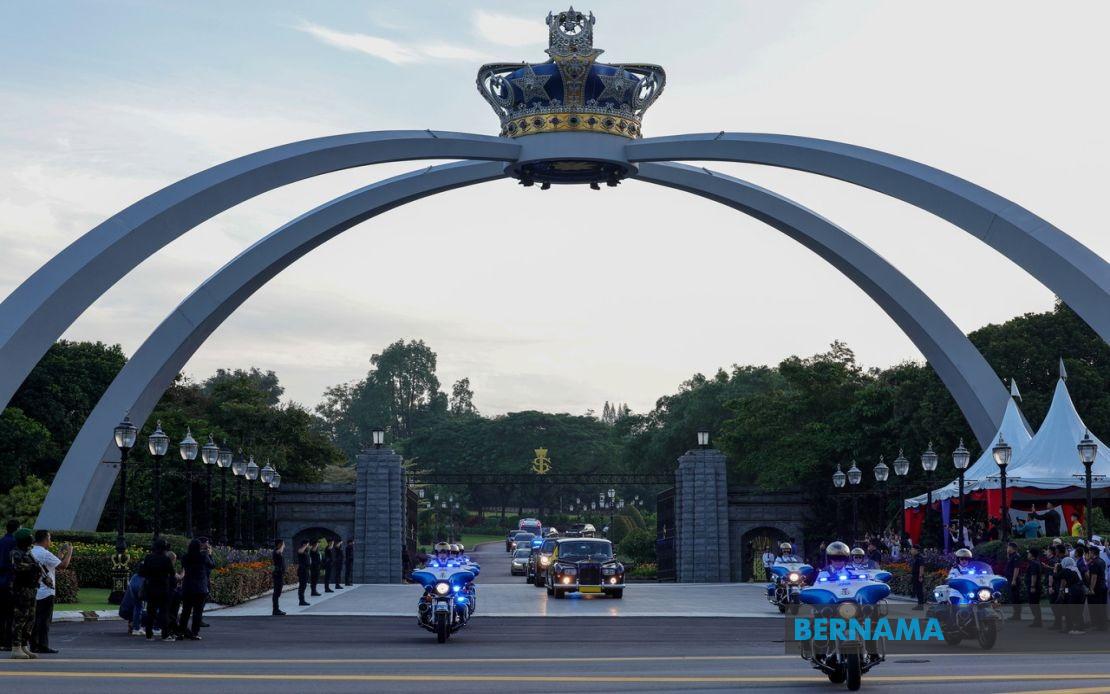
Johor's incoming Menteri Besar is scheduled to take the oath of office this afternoon at Istana Bukit Serene, the state's grand royal palace located in the heart of Johor Bahru. The swearing-in ceremony, confirmed through an official invitation from the Johor Palace, will commence at 3 pm, marking a significant constitutional moment for the southern state after a decisive electoral mandate just days earlier.
The palace announcement, which circulated via WhatsApp to media outlets, provided only sparse details about the proceedings without disclosing the identity of the appointee. Media personnel were granted access to cover the event from the Crown Arch entrance of Istana Bukit Serene, allowing journalists to document this important state occasion as the incoming Menteri Besar formally assumes executive authority in the state government.
Journalists have been assembling since midday at strategic locations including the Menteri Besar's official residence in Saujana and outside the palace gates, underscoring the high level of public and media interest in how the post-election government transition unfolds. This heightened attention reflects the significance of the Johor result within Malaysia's broader political landscape, where the state's governance carries implications for federal-level alignments and coalition dynamics.
Earlier on the day of the ceremony, Sultan Ibrahim Iskandar received Barisan Nasional chairman Datuk Seri Ahmad Zahid Hamidi at Istana Pasir Pelangi. The extended audience, which lasted approximately one hour, also included Johor BN chairman Datuk Onn Hafiz Ghazi, suggesting deliberations over the composition and direction of the incoming administration. These consultations between the palace and BN leadership typically involve discussions regarding ministerial appointments and the formation of the state executive council.
The swearing-in takes place in the immediate aftermath of a commanding electoral performance by Barisan Nasional in Johor's state assembly elections held the previous day. The coalition captured 48 of the 56 state seats contested, a result that fundamentally reshapes the political composition of one of Malaysia's most economically significant states and provides a decisive mandate for BN's policy agenda in Johor.
For Malaysian readers and regional observers, the significance of Johor's political direction extends beyond the state itself. As Malaysia's second-largest state by population and a crucial economic hub with substantial manufacturing, port, and trade activity, Johor's governance model influences perceptions of political stability and investor confidence throughout the region. The decisive BN victory signals continuity in the state's development strategies and coalition positioning within the broader Malaysian political framework.
The transition of executive authority in Johor also carries implications for federal politics and the sustainability of the current Kuala Lumpur-based government coalition. State-level results frequently serve as barometers for public sentiment and can influence federal parliamentary dynamics, making this swearing-in ceremony not merely a ceremonial formality but an event with potential ripple effects across Malaysia's political establishment.
The careful orchestration of the ceremony, with its scheduled timing and formal palace protocols, underscores the constitutional significance attached to the transfer of state executive power. The involvement of the Sultan in receiving coalition leadership before the formal swearing-in reflects Malaysia's constitutional monarchy system, whereby the hereditary ruler plays an active role in governmental transitions and the formal appointment of chief ministers.
As the afternoon ceremony unfolds at Istana Bukit Serene, it will symbolize the formal beginning of the incoming government's mandate, even as the detailed composition of the state cabinet and the specific policy priorities of the new administration remain subjects of keen interest for business communities, civil society, and political observers throughout Malaysia and Southeast Asia.

