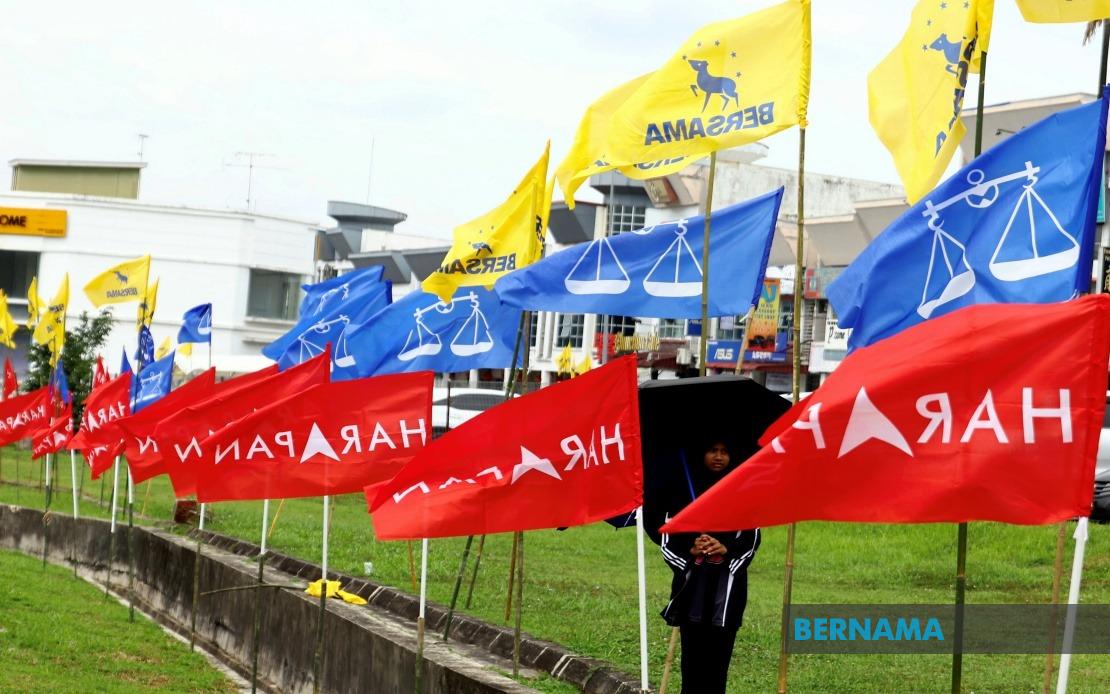
The intensive two-week campaign for Johor's 16th state election comes to a close tonight at 11:59 pm, marking the end of a fortnight-long political battle that has consumed the state's political discourse and mobilised major coalitions across the peninsula. Tomorrow morning, when polls open at 8 am across 1,076 polling centres, Johor's 2.7 million registered voters will exercise their democratic rights to choose from 172 candidates vying for 56 state assembly seats. The significantly reduced candidate field compared to the previous election—when 239 candidates contested the same seats—reflects a more consolidated political landscape heading into this critical electoral showdown.
The campaign period, which formally commenced on June 27, has witnessed an intense presentation of political manifestos and electoral strategies by competing coalitions and parties. Throughout these two weeks, political parties have centred their messaging around everyday concerns that resonate deeply with Johor's electorate: the mounting cost of living that continues to burden households, pathways for economic recovery in the post-pandemic era, the persistent challenge of creating meaningful employment opportunities, and the strengthening of public welfare systems. These themes transcend simple electoral positioning; they reflect genuine anxieties among voters about their economic security and their families' futures in a rapidly changing economic environment.
The Election Commission has streamlined its operations to process results efficiently, with expectations that comprehensive tallies will be available by 10 pm tomorrow evening. This compressed timeline reflects the Commission's improved administrative capabilities in managing electoral data. Notably, early voting operations concluded successfully last Tuesday, with 20,607 members of the Malaysian Armed Forces, Royal Malaysia Police, General Operations Force, and their eligible spouses casting their ballots in advance. This mechanism ensures that security and defence personnel, whose duties preclude them from voting on polling day, maintain full participation in the democratic process.
Political analysts have identified voter turnout as a crucial variable in determining whether campaign momentum translates into actual electoral victories. Dr Nazreena Mohammed Yasin from Universiti Tun Hussein Onn Malaysia emphasised that turnout patterns are not uniform across constituencies, operating instead as constituency-specific and demographically-dependent factors. In some areas, higher participation may substantially benefit particular parties, whilst in others the correlation proves minimal or even counterintuitive. The 2022 Johor election recorded an overall turnout of 54.92 per cent, providing a baseline against which tomorrow's participation levels can be measured. However, Dr Nazreena cautions against treating turnout as a deterministic predictor; rather, it functions as one element among several that can reshape electoral dynamics, particularly in marginal constituencies where victory margins typically measure in the low hundreds.
The efficiency of party machinery and ground operations will prove equally decisive, particularly in tightly contested seats where administrative competence and voter mobilisation capabilities directly influence outcomes. Party operatives must coordinate complex logistics across numerous polling stations while managing volunteer networks and ensuring that supporters are effectively transported and encouraged to vote. Undecided voters—those fence-sitters who remain uncommitted even as polls open—represent another pivotal constituency. In constituencies with narrow victory margins, last-minute voting decisions by this cohort can fundamentally alter results. These voters, often the most engaged with current issues but least committed to any particular party, function as swing constituencies within individual state seats.
Dr Nazreena further notes that analysts should examine victory margins as indicators of shifting party support since the previous electoral cycle. Enlarged winning margins suggest parties have consolidated or expanded their appeal, whilst compressed margins indicate erosion of support or tightening competition. Ultimately, election results function as a referendum on multiple dimensions: public confidence in incumbent government performance, the perceived credibility and local standing of individual candidates, the electorate's appetite for political stability versus desire for change, and voters' assessment of which coalition can more effectively address economic challenges and the escalating cost of living that dominates household budgets.
Associate Professor Dr Mazlan Ali of Universiti Teknologi Malaysia identifies political stability as the dominant campaign narrative propounded by the two major coalitions—Barisan Nasional and Pakatan Harapan. Both coalitions have emphasised their track records in government and their positioning within Malaysia's current Unity Government framework at federal and state levels. This contrasts with earlier election cycles where parties might have emphasised transformational change or ideological distinction. The contemporary emphasis on stability reflects broader anxieties about institutional coherence and governance continuity in an era of coalition politics.
Whilst various parties have articulated policy pledges and targeted initiatives, voters increasingly filter these promises through the lens of demonstrated historical performance and actual delivery on previous commitments. Manifestos provide intellectual frameworks and aspirational direction, but voter decision-making ultimately rests upon tangible evidence of whether political parties can translate promises into concrete improvements in daily lives. Dr Mazlan anticipates heightened public engagement in this election will drive voter turnout to levels exceeding the 2022 benchmark, thereby increasing the significance of individual votes in determining Johor's trajectory.
The competitive landscape reflects substantial changes since the dissolution of the Johor State Legislative Assembly on June 1. Barisan Nasional's previous dominance—holding 40 of the 56 seats—will face substantial challenges from an energised Pakatan Harapan alliance contesting 56 seats, alongside the Perikatan Nasional coalition (33 candidates), Parti Bersama Malaysia (15 candidates), MUDA (four candidates), and smaller parties and independent candidates. The more distributed candidate slate signals either a more genuinely competitive political environment or, alternatively, fragmentation that could produce unpredictable outcomes depending on vote distribution and coalition performance.
For Malaysian observers and Southeast Asian political analysts, the Johor election serves as a crucial barometer of public sentiment regarding the federal Unity Government and the viability of Barisan Nasional-Pakatan Harapan cooperation at state level. The state remains economically significant within Malaysia's federation and politically symbolic given its historical status as BN's electoral stronghold. Tomorrow's results will clarify whether the Unity Government framework has genuinely persuaded voters of its stabilising benefits, or whether electoral dynamics favour parties offering clearer, more distinctive political positions.
The final hours before the campaign's official conclusion will likely witness intensified last-minute canvassing and digital messaging campaigns as parties make final appeals to potentially persuadable voters. Campaign managers will shift focus from broad persuasion to targeted mobilisation, ensuring supporters travel to polling stations and complete the voting process. For Johor's electorate, tomorrow represents an opportunity to shape the state's governance, resource allocation, and policy direction across multiple crucial domains, from infrastructure development and education to healthcare provision and economic opportunity creation. The democratic exercise, whatever its outcome, affirms voter agency in determining political futures.

