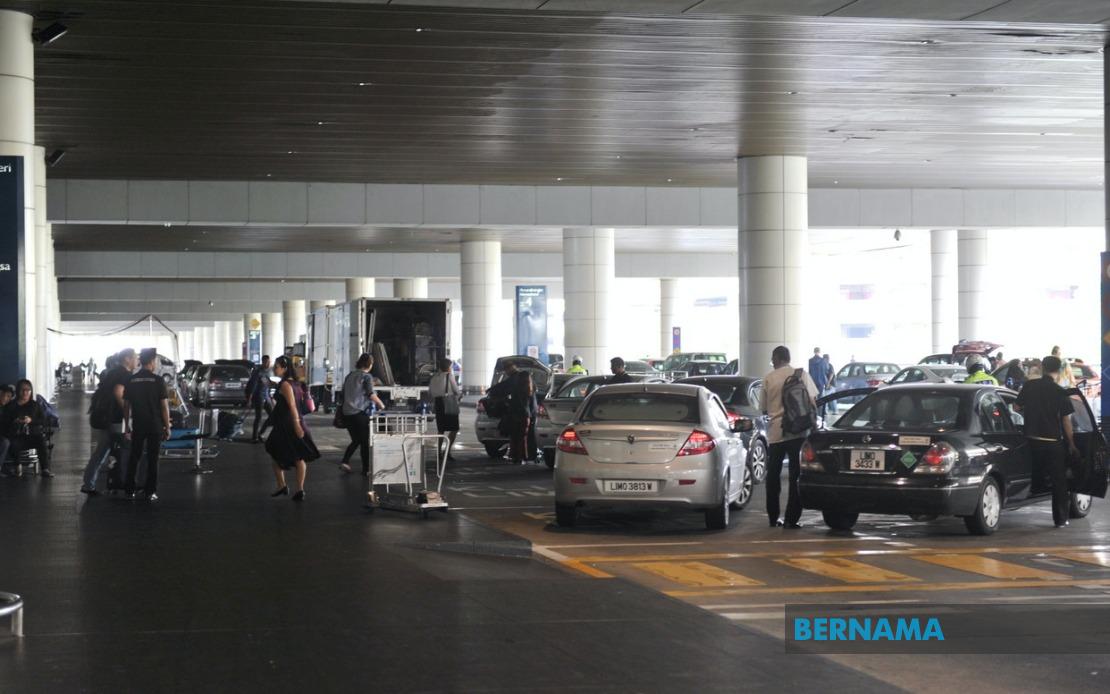
The Road Transport Department (JPJ) is mounting a significant enforcement offensive against illegal passenger transport middlemen operating at Kuala Lumpur International Airport, with plans to substantially increase personnel presence and extend operations to 24-hour coverage across both main terminals. The announcement, made during a press conference at KLIA on July 6, signals a determined push by transport authorities to eliminate the persistent 'ulat' problem that has long plagued Malaysia's premier aviation hub and undermined the travel experience for incoming passengers.
Director-general Datuk Aedy Fadly Ramli outlined the comprehensive response following directives from the Ministry of Transport. The department will establish permanent duty stations at both KLIA Terminal 1 and Terminal 2, with staff rotations designed to maintain continuous surveillance throughout the day and night. This represents a dramatic shift from the current operational model, where deployment remains sporadic and concentrated during daylight hours when foot traffic peaks.
Existing coverage at KLIA reveals the scope of the challenge. Currently, only 17 JPJ personnel operate at Terminal 1, working fixed shifts from 7 am to midnight—a schedule that leaves the airport vulnerable during early morning and late evening hours when flight operations intensify. Terminal 2 lacks dedicated JPJ staff entirely, creating a significant enforcement gap at one of the region's busiest aviation facilities. Aedy Fadly acknowledged this deficiency, noting that illegal tout activities frequently occur at unconventional hours, with some operations beginning as early as 4 am when international arrivals commence.
The reinforcement strategy incorporates hierarchical restructuring to enhance command effectiveness. JPJ will position senior-ranking officers to lead enforcement units at both terminals, ensuring that patrol operations benefit from experienced decision-making and coordinated responses. This supervisory elevation addresses a fundamental weakness in previous operations, where field personnel lacked the authority to make rapid tactical adjustments or oversee complex enforcement scenarios involving multiple suspects or organized networks.
The three-shift operational model represents the cornerstone of the new approach. By dividing 24-hour coverage into consecutive shifts, JPJ can maintain consistent presence while managing personnel fatigue and scheduling logistics. This continuity directly addresses the unpredictable timing of tout activities, which do not conform to conventional business hours. Early morning and late-night periods, when airport security is theoretically highest, have become preferred windows for illegal operators because passenger arrivals overlap with moments of reduced vigilance.
From a traveller's perspective, the intensified enforcement carries immediate practical benefits. Passengers disembarking at KLIA have frequently fallen victim to touts offering inflated rates or transporting customers to unofficial destinations. These encounters damage Malaysia's reputation as a well-organized travel destination and create negative first impressions among international visitors. The illegal operations also undercut licensed taxi operators and ride-hailing services, distorting the competitive landscape and eroding legitimate transport providers' revenue. By visibly strengthening enforcement, authorities signal commitment to protecting both visitor interests and the formal transport ecosystem.
JPJ's collaborative strategy with Malaysia Airports Holdings Bhd (MAHB) complements the enforcement dimension. Enhanced airport announcements and terminal displays will educate passengers about legitimate transportation options, reducing the information asymmetry that makes travellers vulnerable to tout manipulation. Many arrivals lack familiarity with Malaysia's transport infrastructure and may struggle to distinguish official services from informal operators, particularly during the disorientation that follows long-haul flights. Clear messaging at multiple airport locations provides a valuable counterweight to tout solicitation.
The issue carries broader implications for Malaysia's tourism and business sectors. International visitors' initial experiences at KLIA substantially influence their perceptions of the entire country. Passengers harassed by touts or subjected to overcharging develop skepticism about local institutions and safety, potentially discouraging return visits or damaging word-of-mouth recommendations. This reputational dimension extends beyond individual traveller satisfaction to encompass Malaysia's positioning within competitive Southeast Asian tourism markets where airport experiences carry outsized symbolic weight.
Enforcement sustainability remains a critical consideration. Previous campaigns against illegal touts have achieved temporary improvements before operations resumed as resources were redeployed elsewhere. The JPJ's commitment to permanent stationing at both terminals suggests a structural approach rather than episodic enforcement surges. This permanence reflects recognition that tout networks are adaptive and resilient, requiring sustained pressure rather than occasional crackdowns to achieve lasting suppression.
The director-general's uncompromising stance toward middlemen involved in illegal passenger transport demonstrates administrative determination to eliminate the practice entirely. This zero-tolerance framing, while ambitious, acknowledges that incremental reduction of tout activities may prove insufficient given how deeply entrenched some networks have become. The explicit refusal to negotiate or accommodate violators signals that JPJ views this enforcement as non-negotiable, a threshold issue affecting national standards.
Regionally, Malaysia's struggle with airport touts mirrors challenges across Southeast Asia, where rapid tourism growth has outpaced regulatory capacity at some facilities. Thailand and Indonesia have grappled with similar dynamics, attempting to professionalize airport transport services while suppressing informal middlemen. Malaysia's systematic response offers a model for comprehensive enforcement combining personnel expansion, schedule restructuring, hierarchical supervision, and passenger education—an integrated approach that other regional airports might adapt to their specific contexts.
The initiative arrives at a critical juncture for Malaysia's aviation sector recovery following pandemic disruptions. As international travel rebounds and passenger volumes climb toward pre-pandemic levels, airport infrastructure and services require recalibration to accommodate increased demand while maintaining service quality. Eliminating tout harassment becomes increasingly important as competition for regional air traffic intensifies and visitor satisfaction metrics gain strategic significance among international travellers evaluating alternative destinations.

