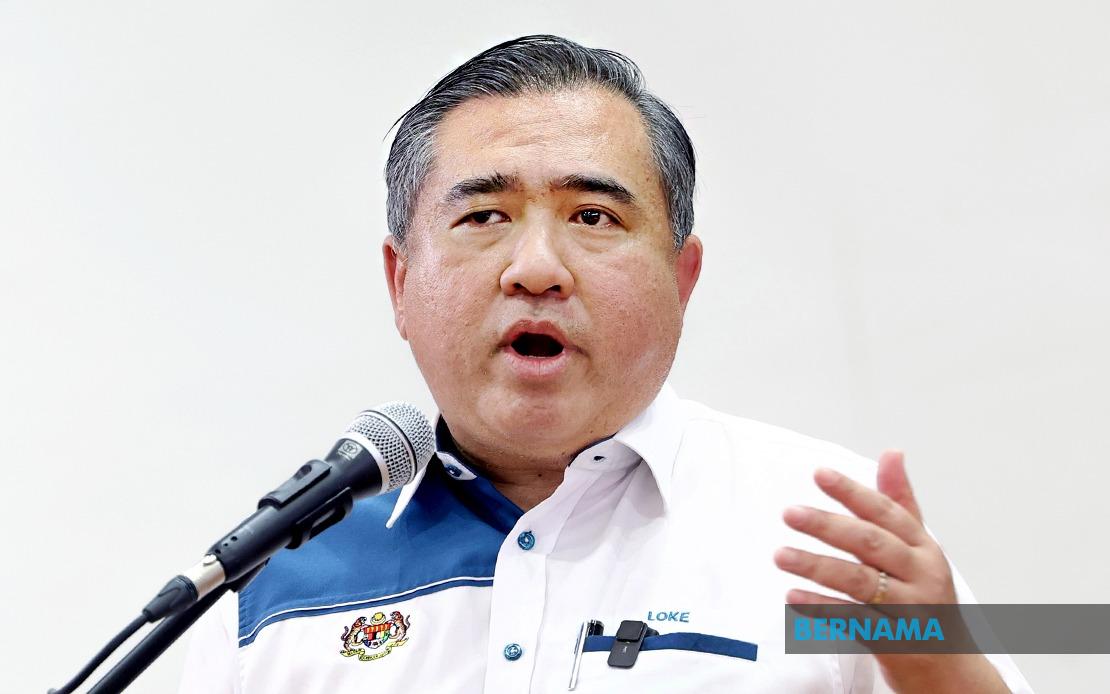
Malaysia's Transport Ministry has ordered the Road Transport Department to prosecute motorcyclists discovered riding without protective headgear during the Johor state election campaign period, with enforcement action to be taken against violators regardless of their political alignment. The directive, announced by Transport Minister Anthony Loke in Putrajaya on July 10, comes in response to footage circulating on social media showing campaign workers breaching basic road safety requirements while conducting campaign activities.
Loke emphasised that the enforcement operation would maintain strict impartiality, extending to members of his own political coalition, Pakatan Harapan. The minister stressed that road safety regulations supersede partisan considerations and that no political affiliation would shield offenders from legal consequences. This stance carries particular significance given that Loke himself serves as secretary-general of DAP, one of the parties whose campaign workers featured in the controversial videos, underscoring his commitment to applying the law evenhandedly across the political spectrum.
The transport minister drew a historical parallel to justify his position, referencing a similar incident during the Slim by-election campaign approximately six years earlier when he had raised comparable concerns involving Barisan Nasional leaders. Rather than opposing political activities on motorcycles per se, Loke clarified that his objection centres specifically on the failure to observe mandatory safety protocols. Campaign activities on two-wheelers are legitimate, he noted, but riders have a non-negotiable obligation to wear helmets and model responsible behaviour for the general public.
This principle of uniform application reflects a broader philosophy that underpins Malaysia's road safety framework. The minister pointedly remarked that traffic laws operate without recognising political parties or their representatives, establishing an essential distinction between the sphere of political engagement and the domain of public safety regulation. Such separation ensures that enforcement mechanisms cannot be manipulated for partisan advantage or selectively applied to embarrass political opponents.
The viral videos that prompted the enforcement action documented a group of campaign workers, including representatives from DAP, riding motorcycles without helmets whilst engaged in Johor state election activities. The incident gained traction across social media platforms, generating public discussion around whether political campaigns should be exempt from ordinary road regulations. The Ministry of Transport's response signals that no such exemption exists in law or policy.
Loke's willingness to acknowledge violations within his own political sphere demonstrates a level of institutional integrity that extends beyond mere rhetorical commitment. By explicitly stating he will not shield his campaign colleagues from consequences, the minister establishes credibility for the enforcement directive and preempts suggestions of political selectivity. This approach also serves a broader educational function, reinforcing the message to all Malaysians that road safety expectations apply universally.
The Road Transport Department's implementation of summonses against identified violators will rely on evidence extracted from the viral videos, enabling JPJ to identify and track down the individuals involved in the recorded incidents. This forensic approach to evidence gathering and subsequent prosecution demonstrates how modern digital documentation can serve enforcement purposes, particularly in cases where violations are publicly recorded and widely distributed.
For Malaysian voters observing the Johor campaign, this enforcement action carries implications about the seriousness with which state and federal authorities treat road safety. Political campaigns invariably involve high activity levels and compressed timelines that might tempt organisers to cut corners on safety protocols. The transport ministry's firm stance indicates that such shortcuts will incur legal liability, potentially influencing how campaign activities are planned and conducted during election periods.
The incident also reflects evolving standards of accountability in Malaysian public life. A generation ago, such footage might have circulated within limited circles or been dismissed without formal response. The ministry's decisive action in response to social media evidence demonstrates institutional responsiveness to public concern and digital-age accountability mechanisms. This trend potentially extends beyond road safety to broader questions about how public institutions respond to documented misconduct.
Regionally, Malaysia's approach contrasts with varying enforcement standards observed in neighbouring countries. Some jurisdictions treat traffic regulations as negotiable during political campaigns, whilst others maintain strict enforcement. Malaysia's stated position places it among nations that prioritise consistent rule of law application across all sectors of society, regardless of political or temporal context.
Looking forward, the Johor enforcement action may establish precedent for future election campaigns. Campaign organisers across all political parties will likely incorporate helmet compliance into activity planning, recognising that viral videos create both documentary evidence and public accountability. This could gradually shift campaign culture towards more consistent adherence to safety standards, benefiting the broader road-using public beyond the election period itself.
Loke's statement also underscores the distinction between political neutrality and principled consistency. The minister is not claiming to be politically neutral in his role—he remains an active DAP politician—but rather asserting that certain fundamental principles, particularly those concerning public safety, transcend partisan boundaries. This distinction remains important for understanding how democratic societies maintain functional institutions whilst allowing vigorous political competition.

